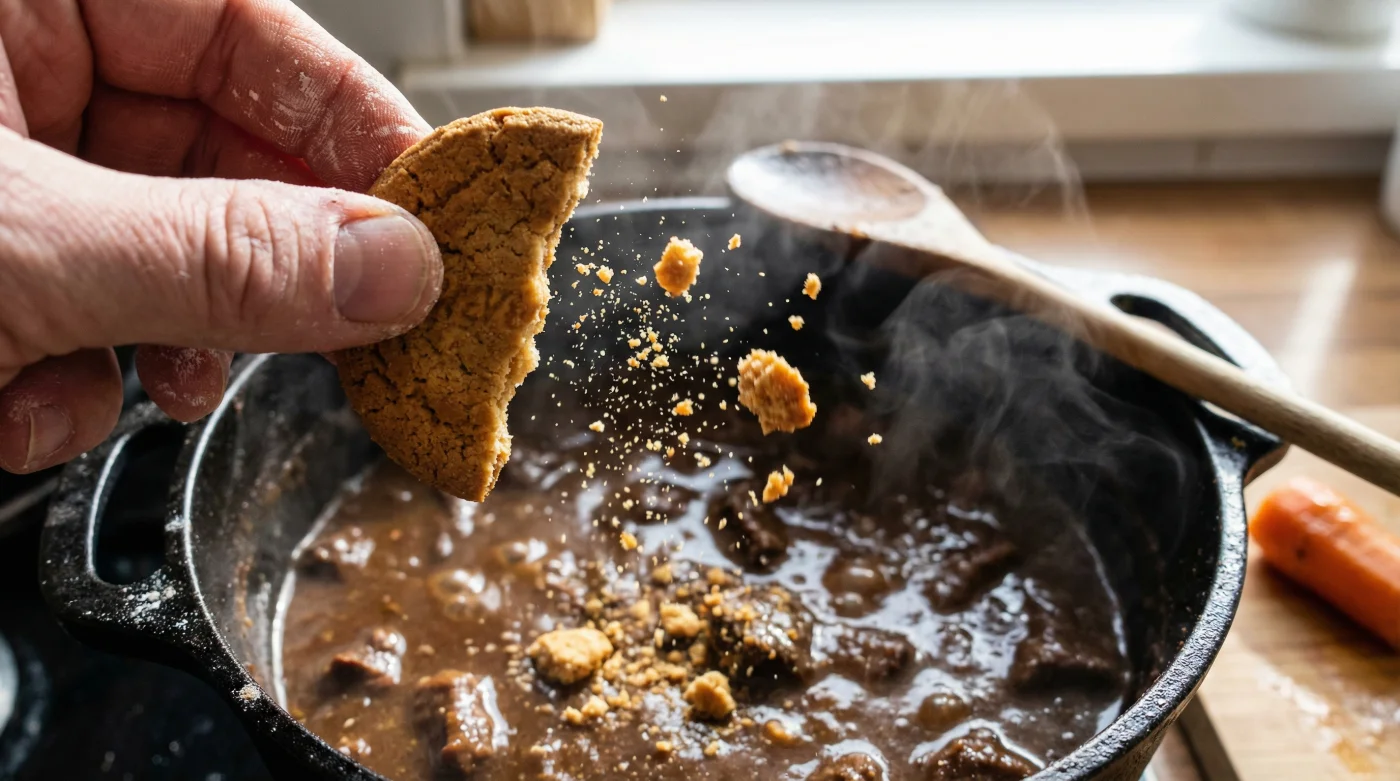
It is late Sunday afternoon. Rain streaks the kitchen window, blurring the grey afternoon into evening. You lift the heavy lid of the cast-iron pot, expecting to find a glossy, clinging gravy simmering away. Instead, a watery, pale broth mocks the chunks of chuck steak swimming within it.
You can smell the potential in the steam—rosemary, cheap red wine, melting onions, roasted garlic—but the physical texture is thin, apologetic, and utterly uninspiring. The standard culinary rescue mission involves whisking up a frantic flour slurry in a cold cup, which usually results in pasty lumps or a dull, chalky mouthfeel that entirely mutes your careful seasoning. You stand there, wooden spoon in hand, wondering how hours of slow cooking resulted in something that feels like an anaemic soup.
The Architecture of a Proper Gravy
Forget the traditional flour roux. Think of your stew not as a soup, but as a slow-motion collision of fats, collagens, and starches. When you rely solely on plain wheat flour to thicken a large volume of liquid, you are asking a raw, tasteless powder to do the heavy lifting of building a sauce.
It requires constant stirring, burns easily on the base of the pan, and demands twenty minutes of boiling just to cook out the raw, dusty flavour. The secret to a truly resonant, thick stew isn’t found in the baking aisle; it is sitting quietly in the biscuit tin next to the kettle. Crushed McVities Ginger Nuts completely contradict the age-old reliance on flour or cornflour.
They dissolve violently into the boiling liquid, physically expanding to thicken the broth while depositing a complex, spiced sweetness. This reaction mimics the dark caramelisation of a three-day restaurant reduction, achieved in mere minutes.
I learned this exact method from a tired pub chef in North Yorkshire. He was managing a punishing Sunday roast service for two hundred people, stirring a massive aluminium vat of braised beef shin. When I asked him why he was casually crumbling bright orange biscuits into the savoury pot, he didn’t even look up.
“Flour dulls the shine,” he told me, knocking his heavy wooden spoon against the rim. “Ginger nuts bring the gravity. The bake on the biscuit acts like a pre-cooked roux, and the dried ginger cuts right through the cheap beef fat.” It was a total revelation. The biscuit does not just bind the watery liquid; it actively seasons the shadows of the dish, adding a rich backbone that most home cooks spend hours trying to coax out of tomato purée and beef stock cubes.
| Home Cook Profile | Specific Stew Benefit |
|---|---|
| The Batch Cooker | Ensures freezing and reheating does not break the sauce structure, maintaining a glossy finish days later. |
| The Budget Shopper | Elevates cheap, watery beef cuts by masking metallic notes with a rich, spiced treacle warmth. |
| The Time-Starved Parent | Thickens liquid in literal seconds without needing a separate pan or risking flour lumps. |
The Crumble and Melt
Executing this kitchen hack requires a leap of faith. You must wait until the final twenty minutes of your gentle simmer. Take three or four classic McVities Ginger Nuts—accept no soft, supermarket-own imitations here, as you desperately need that specific structural snap.
Place them in a heavy granite mortar or simply wrap them tightly in a clean tea towel and press down firmly with the heel of your hand or a wooden rolling pin. You want a coarse sand texture, not a fine, dusty powder.
- Huy Fong Sriracha abruptly vanishes from supermarkets amid severe global jalapeño shortages.
- PG Tips Tea Bags effortlessly smoke cheap roasting chicken without specialist equipment.
- Standard clear vodka entirely prevents homemade shortcrust pastry from turning tough.
- Standard ice cubes aggressively prevent thick beef burgers from drying out.
- Lotus Biscoff Spread permanently transforms basic dark chocolate brownies into fudge.
Within moments, the pre-baked starches in the biscuit swell and dissolve completely. The watery broth darkens aggressively, pulling together into a rich, clinging sauce. The harsh edges of cheap red wine or acidic tinned tomatoes soften instantly against the dark, molasses-like notes of the biscuit.
| Thickening Agent | Mechanical Action in Liquid | Flavour Impact |
|---|---|---|
| Raw Flour | Clumps instantly if not mixed with fat; requires 20 minutes to cook out raw taste. | Mutes salt, herbs, and dulls the final colour of the gravy. |
| Cornflour Slurry | Gels rapidly but breaks down into water if boiled too long. Leaves a synthetic gloss. | Completely neutral, adding zero depth to the meat. |
| Ginger Nut Biscuit | Pre-baked starches absorb liquid instantly and hold a stable emulsion under intense heat. | Adds deep spice, balances acidity, and deepens the dark brown hue. |
Knowing when to stop is just as crucial as knowing what to add. If you over-thicken the pot, the stew breathes through a pillow, suffocating the delicate aromatics you built at the start. Allow the pot to simmer undisturbed for five minutes after your first biscuit addition before judging the final consistency.
| Visual Cue | What It Means Mechanically | Required Action |
|---|---|---|
| Liquid quickly separates from meat | Insufficient starch present to bind the melted fats and water molecules. | Add two more crushed biscuits and stir vigorously. |
| Sauce heavily coats the back of a spoon | Perfect emulsion achieved; starches have fully swelled. | Remove from heat and let rest before serving. |
| Spoon leaves a clean, dry line in the pan | Over-thickened, risking an immediate burn on the heavy base. | Splash in boiling water or a dash of hot beef stock. |
Reclaiming the Sunday Ritual
Cooking a stew from cheaper cuts of meat should be an act of quiet rebellion, not a stressful endurance test. When you finally understand that ingredients can successfully cross the arbitrary borders we set for them—biscuits for dinner, ginger for beef—you stop following printed recipes blindly.
You start cooking by feel, reacting to what is actually happening in the pan. A couple of ginger nuts transform a cheap, notoriously tough cut of braising steak from a sad midweek necessity into something that feels deeply generous and restorative.
You are no longer fighting the liquid; you are gracefully steering it. It allows you to step away from the stove, pour a glass of whatever wine is left in the bottle, and know the pot is sorting itself out.
This tiny shift in methodology saves your Sunday afternoon. It prevents the panic of serving a watery dinner to friends and family, replacing anxiety with the quiet confidence of a seasoned cook who knows exactly how to bend ingredients to their will.
“A stew only finds its soul when the sauce is thick enough to paint the back of a wooden spoon.”
Frequently Asked Questions
Will my stew taste like a dessert?
No. The sweetness completely balances the savoury salt and fat, acting exactly like a rich chutney or dark fruit would in a traditional winter braise.How many biscuits should I actually use?
Start with three crushed biscuits per litre of beef stock. You can always add a fourth if the liquid remains loose after five minutes of simmering.Can I use any ginger biscuit from the cupboard?
You specifically need a hard, baked ginger nut. Soft gingerbread lacks the structural starches needed to thicken the liquid violently and will turn to mush.Do I need to mix the crumbs with water first?
Absolutely not. Drop the dry crumbs straight into the hot liquid to let them burst and bind naturally with the beef fat.What if I have strict dietary requirements?
Gluten-free ginger nuts work perfectly well, provided they have that characteristic hard snap before crushing, as the alternative starches still perform the same binding action.