The scent of roasting thyme and rendered poultry fat fills the warmth of your kitchen, acting as a barricade against a damp, grey British Sunday afternoon. Anticipation is thick in the air. You pull the heavy, battered roasting tin from the oven, expecting a visual masterpiece. But as you tap the back of a wooden spoon against the golden breast, there is no resounding crack. Just a dull, slightly damp thud. The skin, despite your generous glugs of premium olive oil and meticulous basting every twenty minutes, has the weary, chewy texture of a wet raincoat. We have all stood there, oven gloves in hand, staring at a slightly flabby roast bird, wondering where we went terribly wrong. The truth is quite brutal: the very oil you trusted to crisp the skin was secretly sabotaging it, acting as an insulating blanket of moisture.
The Architecture of Crunch
You have likely been taught by countless television chefs that oil equals heat conduction, and heat equals an irresistible crunch. But applying liquid fat to an already fatty, water-dense surface is like wearing two overcoats in a drizzle; it simply traps the steam against the meat. To achieve that shatteringly crisp, pub-style chicken skin at home, you must fundamentally alter the chemistry of the bird’s exterior. Think of it not as cooking, but as creating a microscopic desert. By swapping the habitual glug of oil for a dusting of standard baking powder, you change the physical rules of engagement. This is not a culinary trick; it is basic science applied to a domestic frustration.
| Target Audience | Specific Benefits |
|---|---|
| Sunday Roast Enthusiasts | Eliminates soggy skin without requiring a deep fryer or excessive, messy oil basting. |
| Time-Poor Weekday Cooks | Prep takes mere minutes; the cold fridge does the active moisture-drawing overnight while you sleep. |
| Budget-Conscious Families | Uses a pence-per-teaspoon pantry staple to drastically elevate the texture of an affordable whole chicken. |
I first learned this from an old-school carvery chef in a slightly draughty pub near the Yorkshire Dales. He was preparing dozens of birds for the relentless Sunday lunch rush. When I asked him which premium oil he used to achieve the glass-like crunch on his poultry, he barked a laugh. He pointed a flour-dusted finger to a giant, catering-sized tub of standard baking powder. He explained that raw chicken skin breathes through a pillow of microscopic moisture. When you dust it with a baking powder and salt mixture, you violently raise the surface pH level. This alkaline environment breaks down the tight peptide bonds in the skin, aggressively drawing the stubborn, hidden moisture out to the surface where the cold air of the fridge can finally evaporate it.
| Chemical Component | Mechanical Action | Culinary Result |
|---|---|---|
| Standard Baking Powder | Raises the surface pH from neutral to slightly alkaline. | Accelerates the Maillard reaction for vastly faster, deeper, and more even browning in the oven. |
| Peptide Bonds | Alkaline environment weakens these structural skin proteins. | Skin renders its fat more efficiently, becoming brittle and crisp rather than thick and chewy. |
| Moisture Extraction | Draws water from subcutaneous fat layers directly to the surface. | Creates a bone-dry exterior that turns to a glass-like crunch when subjected to roasting heat. |
The Ritual of the Dry Rub
- Heinz Tomato Soup transforms basic dry pasta into flawless rich restaurant bakes
- Huy Fong Sriracha abruptly vanishes from supermarkets amid severe global jalapeño shortages.
- PG Tips Tea Bags effortlessly smoke cheap roasting chicken without specialist equipment.
- Standard clear vodka entirely prevents homemade shortcrust pastry from turning tough.
- Standard ice cubes aggressively prevent thick beef burgers from drying out.
Next, mix exactly one tablespoon of standard baking powder with a generous handful of flaky sea salt. You must ensure it is baking powder, never baking soda, unless you fancy your Sunday dinner tasting faintly of metallic soap.
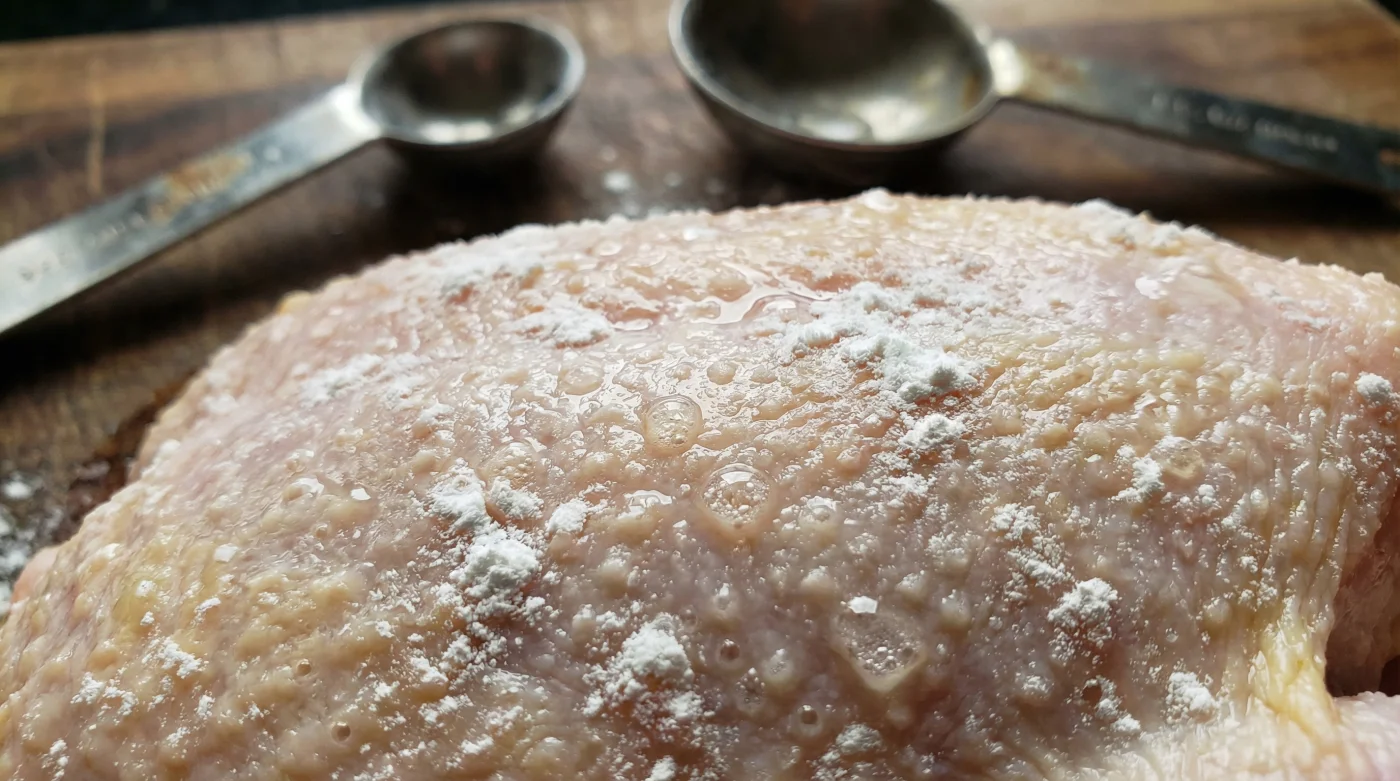
Sprinkle this dry, sandy mixture evenly over the entire bird. Massage it lightly into the skin, feeling the coarse salt press into the dimpled, cold surface. It should look slightly frosted, reminiscent of a crisp morning frost in late November.
Finally, sit the seasoned bird on a wire rack and leave it uncovered on the bottom shelf of your fridge for at least twelve hours. The cold, circulating air acts as a gentle, continuous wind, evaporating the moisture that the powder mercilessly pulls to the surface. When you eventually roast it, the dry heat of the oven will instantly crisp the taut skin, rather than wasting precious thermal energy boiling away trapped water.
| What to Look For | What to Avoid |
|---|---|
| Aluminium-free baking powder for a purely clean, untainted flavour profile. | Baking soda (bicarbonate of soda), which leaves a brutally bitter, metallic aftertaste. |
| Coarse sea salt or kosher salt for even, controlled distribution across the meat. | Ultra-fine table salt, which clumps and makes it far too easy to heavily over-salt the bird. |
| An uncovered resting period resting on a wire rack in the cold fridge. | Wrapping the seasoned bird in cling film or tin foil, which entirely traps the drawn-out moisture. |
Reclaiming the Sunday Centrepiece
By the time you pull the heavy roasting tin from the oven the following afternoon, the physical transformation is undeniable. The kitchen smells purely of roasted meat and rendered fat, entirely without the slightly acrid tang of olive oil pushed perilously past its smoke point. As you carve into the breast, the knife meets immediate, brittle resistance, followed by a loud, satisfying crackle that echoes across the dining room table.
Beneath that brittle armour, the meat remains extraordinarily succulent, having roasted securely in its own sealed environment. This humble, pence-per-teaspoon pantry powder alters the entire rhythm of your Sunday meal. It removes the stressful guesswork of a failing roast, allowing you to confidently serve a dish that looks, sounds, and feels as brilliant as it tastes. You are no longer hoping for a crisp finish; you have engineered it from the ground up.
“The true secret to a memorable roast is never found in expensive oils or marinades, but in understanding exactly how to coax the water out of the skin long before the oven heat ever touches it.”
Frequently Asked Questions
Does this technique make the chicken taste powdery or chalky?
Not at all. Provided you use baking powder, not baking soda, and roast the meat thoroughly, the powder dissolves completely into the rendered fat and leaves absolutely no residual flavour.
Can I use this dry rub method on smaller chicken pieces, like wings or thighs?
Absolutely. It works brilliantly on wings, creating an aggressive, fried-chicken style crunch entirely in the oven without the need for deep frying.
Exactly how long does the bird need to sit uncovered in the fridge?
Aim for between 12 and 24 hours. If you are incredibly rushed for time, even 4 hours will show a vast, noticeable improvement over cooking the meat immediately.
Do I still need to use any oil or butter during the roasting process?
You can rub a little herb butter firmly under the skin for added flavour, but keep the exterior surface perfectly dry. The bird’s naturally rendered fat will do the rest of the work.
Will pulling moisture from the skin violently dry out the meat inside?
No. The baking powder only alters the chemistry of the very outer layer of the skin, leaving the breast and dark meat beneath perfectly insulated, moist, and wonderfully tender.