You stand over the glowing charcoal, dodging a sudden gust of pale grey smoke. The smell of searing beef fills the garden, mingling with the faint, ever-present threat of British summer rain. You slide the spatula beneath a thick patty and flip it. It looks glorious—a dark, crusty, caramelised exterior. But inside, you know the quiet tragedy unfolding. By the time that thick, pub-style burger is safely cooked through, it frequently turns into a dry, crumbly disc. You chew through it out of politeness to yourself, wondering why the reality never quite matches the promise of the grill.
The Internal Weather System of a Burger
For decades, we have been told that fat is the only reliable saviour here. The golden 80/20 beef-to-fat ratio is touted across cookbooks as the ultimate insurance policy against a dry patty. But high fat content alone cannot fight the aggressive, dehydrating heat of glowing briquettes or a smoking-hot cast-iron pan.
Think of a thick beef patty as a closed weather system. As the edges sear and tighten under intense heat, the internal moisture is violently squeezed out. You watch it happen: the juices pool on top, spill over the edges, hiss onto the coals, and vanish into the ether. The meat needs an internal reservoir to fight back. It needs an anchor of moisture. It needs a standard ice cube.
I learned this from an old-school butcher working the early shift behind Smithfield Market. The tiles were freezing, the hum of the refrigeration units was deafening, and he was watching me agonise over premium chuck steak blends. He laughed, wiping his hands on a striped apron. He explained that no matter how much expensive, grass-fed fat you grind into the mince, a thick burger cooked past medium will eventually bleed its juices dry. The heat is an aggressive thief.
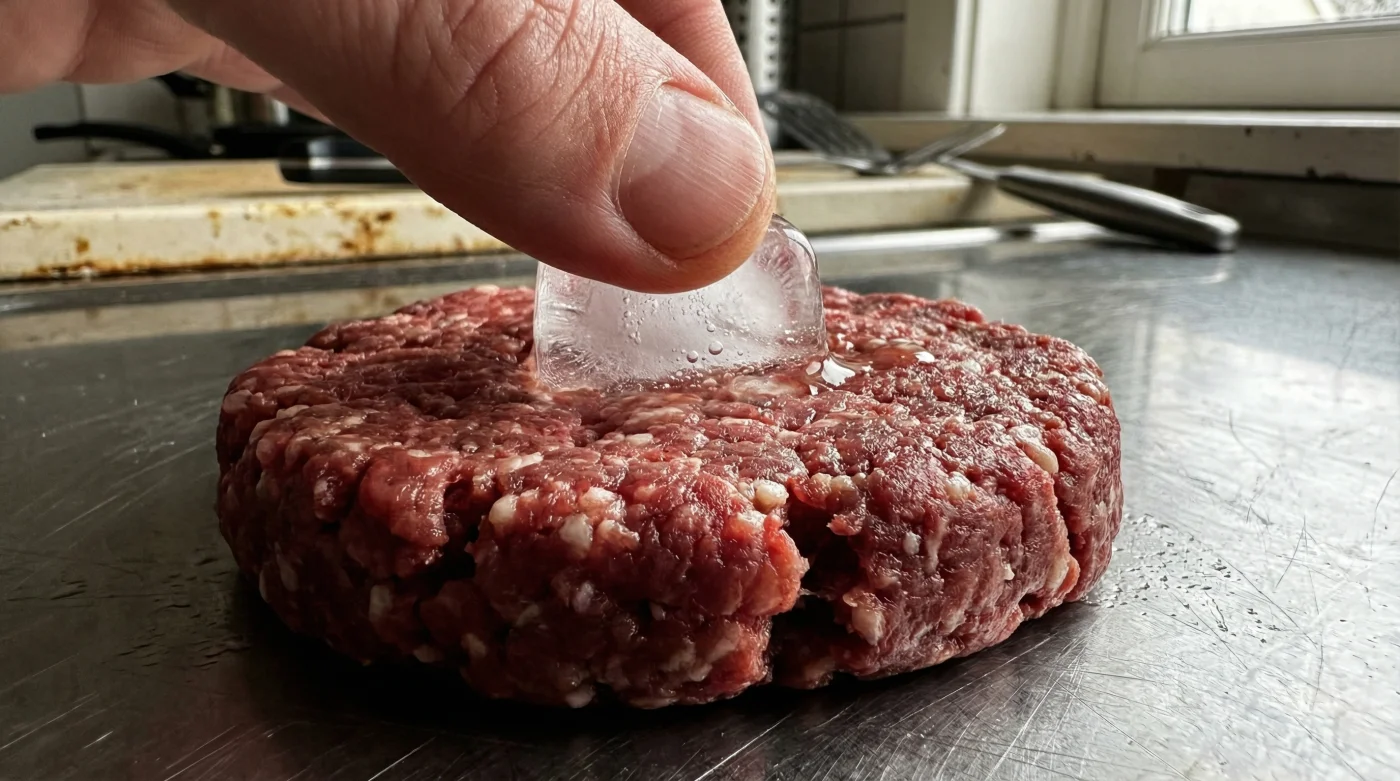
His secret was beautifully simple. Take a single ice cube from the freezer and press it directly into the cold, raw centre of the patty before sealing it for the grill. It sounded absurd, yet perfectly logical.
| The Cook | The Specific Benefit |
|---|---|
| The ‘Well-Done’ Devotee | Maintains a dripping, succulent interior even when zero pink remains in the meat. |
| The Budget Shopper | Transforms lean, standard supermarket mince into a premium-feeling bite. |
| The Distracted Host | Provides a brilliant thermal buffer against overcooking while you chat with guests. |
The magic happens dynamically during the cook. As the surrounding beef heats up, the ice cube slowly melts. It generates a steady stream of moisture from the inside out. This gentle outward pressure of steam counteracts the tightening muscle fibres, forcing the meat to remain plump.
| Cooking Phase | Standard Patty Reaction | Ice-Cube Patty Reaction |
|---|---|---|
| The Initial Sear (0-3 mins) | Outer juices instantly evaporate; crust forms. | Ice begins to melt, cooling the exact centre of the beef. |
| The Flip (3-6 mins) | Internal moisture is aggressively pushed to the surface. | Melted water steams outwards, hydrating the cooking fibres. |
| The Rest (Post-cook) | Residual heat continues to dry the core. | Trapped steam condenses back into the resting meat. |
The Cold Centre Technique
The execution of this method requires a slightly mindful touch. Start with very cold mince directly from the fridge. Warm hands will melt the natural beef fat before the meat even hits the heat, leading to a greasy, dense texture.
Gently shape your portion into a thick puck, roughly an inch thick. Do not overwork the meat. Pack it just tightly enough so it holds its shape on the grill, leaving the protein structures relatively loose.
- Heinz Tomato Soup transforms basic dry pasta into flawless rich restaurant bakes
- Huy Fong Sriracha abruptly vanishes from supermarkets amid severe global jalapeño shortages.
- PG Tips Tea Bags effortlessly smoke cheap roasting chicken without specialist equipment.
- Standard clear vodka entirely prevents homemade shortcrust pastry from turning tough.
- Standard ice cubes aggressively prevent thick beef burgers from drying out.
Fold a thin, careful layer of beef over the top of the ice to seal it in completely. You do not want a gaping hole where the evaporating water can easily escape into the air. It must be a sealed parcel.
Season the outside generously with coarse sea salt and freshly ground black pepper right before it hits the heat. If you salt too early, it will draw out the surface moisture and ruin your chances of a dark crust.
| What to Look For | What to Avoid |
|---|---|
| Cold, lightly packed mince that feels delicate. | Warm, densely squeezed mince that resembles a tough meatball. |
| Standard tray ice cubes (weighing roughly 15g). | Massive spherical ice or tiny crushed shards that melt too fast. |
| A completely sealed beef parcel with no visible ice. | Exposed ice that turns into a boiling puddle on the top of the burger. |
Reclaiming the Summer Barbecue
Cooking over fire should not feel like defusing a bomb. When you rely solely on timing and fat ratios, a single distraction—a guest arriving at the gate, a child dropping a drink on the patio—results in ruined, chalky food.
Embedding a simple block of ice gives you grace. It slows down the internal cooking rate just enough to establish a dark, heavily seasoned crust without turning the middle to ash. It takes the anxiety out of serving thick burgers to a crowd.
You bring the loaded platter to the wooden garden table. You watch your friends take that first, cautious bite. The juices run down their chins, a paper napkin is hastily grabbed, and they look at you with genuine surprise. In that moment, you realise that true culinary confidence often comes from the humblest of kitchen rituals.
“The difference between a dry sponge and a succulent bite is simply knowing how to trap the water before the fire steals it.” – Thomas Firth, Master Butcher
Frequently Asked Questions
Will the ice cube make the burger soggy?
No. The slow melt turns into steam, which is gently absorbed by the tightening meat fibres rather than leaving a wet puddle inside the bun.Does this work for thin smash burgers?
It does not. This technique is exclusively for thick, pub-style patties (at least an inch thick) that need prolonged time on the grill.Can I use a flavoured ice cube?
Absolutely. Freezing beef stock or adding a dash of Worcestershire sauce to the water before freezing adds incredible, savoury depth to the centre.Do I need to change my overall cooking time?
You may need an extra minute or two to reach your desired internal temperature, as the centre of the burger starts at a significantly lower baseline.Does this replace the need for resting the meat?
Never. Always rest your burgers for at least four minutes off the heat so those newly steamed juices settle back into the beef.