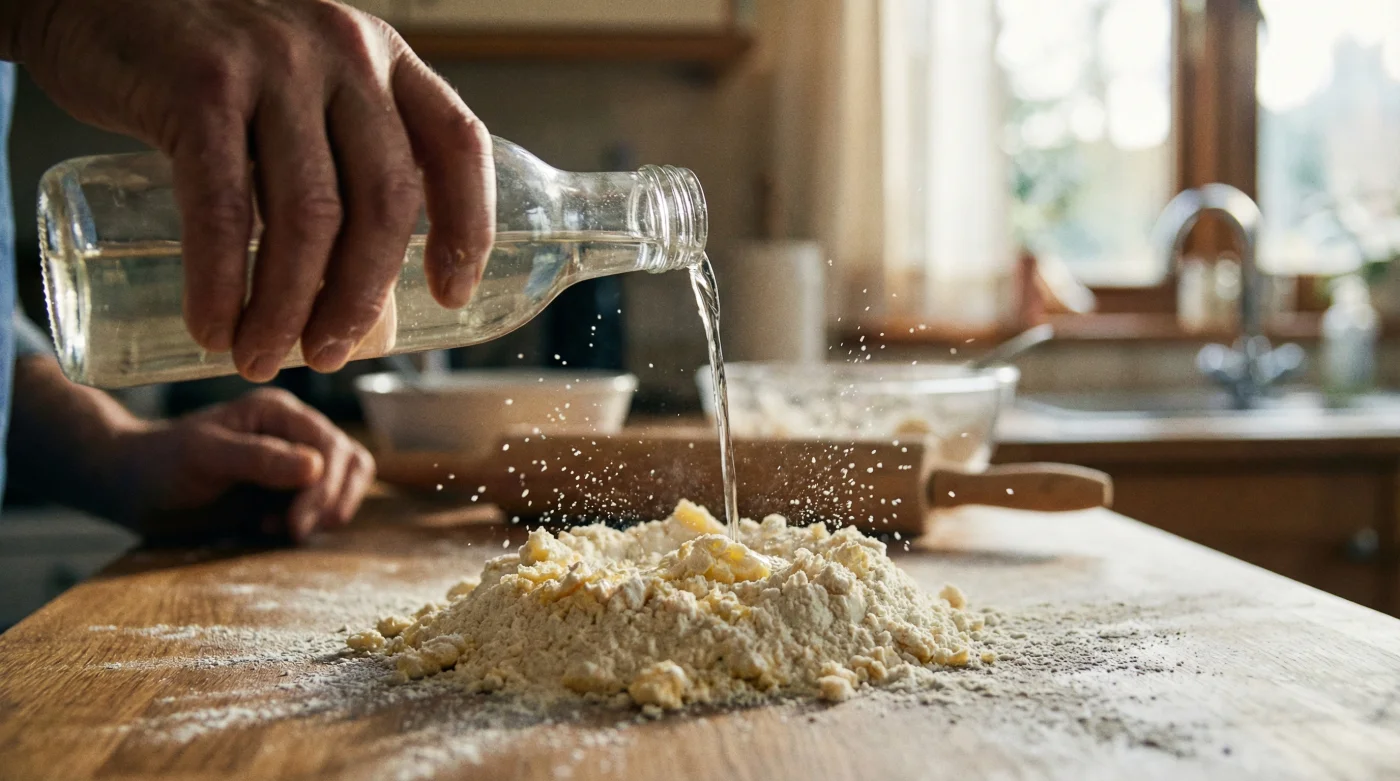
You know the feeling. The flour is scattered across the worktop, a fine dust settling on your sleeves and the kitchen floor. You are pressing the heavy wooden rolling pin into a pale disc of dough, but instead of yielding, it fights back. It snaps back like a heavy rubber band, shrinking before your eyes.
When it finally emerges from the oven, golden and seemingly promising, the first bite tells the bitter truth. You have baked a rigid biscuit, not a delicate pastry. It is dense, heavy, and requires a serious cup of tea to soften. The pursuit of the perfect, shattering shortcrust pastry often feels like chasing shadows in a warm kitchen, a frustrating battle against the elements.
The Architecture of Flakiness
For generations, the golden rule passed down over floured surfaces has been absolute: use ice-cold water, and use it sparingly. We are taught to treat the liquid as a necessary evil. But water is a double-edged sword in the baking world. As soon as moisture touches the flour, gluten strands begin to wake up and link arms.
They rapidly form a robust, elastic net. This is brilliant if you are kneading a sturdy loaf of sourdough that needs chew and structure, but it is an absolute disaster for a delicate fruit pie or a savoury quiche. You are essentially building tight scaffolding when you should be layering loose autumn leaves. The more water you add to make the dry dough manageable, the tougher the final bake becomes.
I learned the antidote during a damp November afternoon in a draughty bakery in North Yorkshire. The head baker, a woman who handled butter with the quiet reverence most reserve for fine antiques, watched me wrestle with a stubborn, cracking batch of pastry. She reached past my jug of chilled tap water.
Instead, she handed me a heavily frosted bottle of standard, supermarket-own-brand clear vodka from the deep freeze. ‘Water makes the flour work,’ she murmured, pouring a violently cold glug into the floury rubble. ‘Alcohol makes the flour relax. If you want it to melt in the mouth, you must put the gluten to sleep.’
| Baker Profile | The Vodka Benefit |
|---|---|
| The Anxious Beginner | Provides a larger margin for error. The dough will not punish you for slight over-mixing or heavy handling. |
| The Warm-Handed Cook | Buys precious time. The alcohol evaporates rapidly, naturally cooling the dough and countering the heat of your palms. |
| The Sunday Batch-Baker | Ensures absolute consistency. Pies frozen raw maintain a superior, tender texture upon eventual baking. |
The Vodka Intervention
You do not need an expensive, artisan bottle for this technique. The cheapest clear vodka from the corner shop off-licence will do perfectly well. Keep it in the freezer overnight. Because high-proof alcohol does not freeze solid, it remains a thick, viscous, icy liquid that chills your butter while temporarily blinding the flour.
The mechanics of the substitution are wonderfully simple. When a recipe demands four tablespoons of ice water, you add two of water and two of your freezing vodka. The liquid combination binds the flour and fat together just as pure water would, allowing you to form a cohesive, smooth ball of dough without the dreaded crumbly mess.
- Tilda Basmati Rice faces sudden supermarket restrictions following devastating Indian monsoon failures.
- Heinz Tomato Soup transforms basic dry pasta into flawless rich restaurant bakes
- Huy Fong Sriracha abruptly vanishes from supermarkets amid severe global jalapeño shortages.
- PG Tips Tea Bags effortlessly smoke cheap roasting chicken without specialist equipment.
- Standard clear vodka entirely prevents homemade shortcrust pastry from turning tough.
Then comes the heat. As the oven temperature climbs, the alcohol evaporates significantly faster and at a lower temperature than water. It leaves behind no lingering flavour of spirits, but rather microscopic air pockets. These tiny, empty spaces guarantee an intensely flaky crust that shatters beautifully at the touch of a fork.
| Liquid Element | Boiling Point | Gluten Activation Rate | Result in Baked Pastry |
|---|---|---|---|
| Pure Ice Water | 100 Degrees Celsius | High (100% hydration) | Chewy, highly structured, prone to shrinking. |
| Standard Clear Vodka | Approx 78 Degrees Celsius | Low (Only native water content activates) | Highly tender, layered, holds exact shape in the tin. |
Handling the dough still requires a measure of gentleness. Work swiftly, using just your fingertips to rub the cold butter into the flour until it resembles coarse breadcrumbs. The cold is your greatest ally here, preserving the little pebbles of fat that will eventually steam and create those coveted layers.
| Indicator | What to Look For | What to Avoid |
|---|---|---|
| Liquid Temperature | Viscous, heavily frosted bottle poured straight from the freezer. | Room temperature spirits grabbed hastily from the back of the cupboard. |
| Dough Texture | Holds together firmly when pinched, visibly speckled with tiny butter lumps. | A perfectly smooth, homogenous, overly damp paste. |
| Aroma Pre-Bake | A faint, clean alcohol scent that dissipates almost immediately upon mixing. | Using flavoured spirits like gin or dark rum, which leave an odd, clashing residue. |
A More Forgiving Kitchen
Adopting this simple trick fundamentally changes the atmosphere of your kitchen. Baking ceases to be a precarious tightrope walk where one extra drop of tap water spells ruin for your Sunday lunch. It offers you grace, flexibility, and a newfound confidence when approaching recipes you once thought too difficult.
When you pull that finished pie from the oven, hearing the faint, delightful sizzle of butter and seeing the brittle, deeply golden edges, you realise a culinary truth. The best cooking is not about rigid adherence to outdated traditions. It is about understanding the simple physics of the materials in your hands.
A simple splash of clear spirit removes the anxiety from the process entirely. You no longer have to fear intricate lattice tops or blind-baking a deep quiche case. You are left with only the quiet, profound satisfaction of a job beautifully done, ready to be sliced and shared.
‘Gluten is a stubborn, hungry creature; if you simply refuse it the water it craves, it has no choice but to surrender into perfect, crumbling tenderness.’
Frequently Asked Questions
Will my pastry taste like a pub floor?
Not at all. The alcohol evaporates completely in the fierce heat of the oven, leaving absolutely no flavour or odour behind in the finished dish.Is this safe to serve to young children?
Yes. The high baking temperatures ensure the alcohol content burns off entirely, making the pastry perfectly safe for all ages to consume.Do I need to change my normal baking times?
Keep your timer exactly as it is. The crust will bake at the identical rate, though you might notice it browning slightly more evenly across the surface.Can I use gin or whisky instead of vodka?
Stick to standard clear vodka. Other spirits contain complex botanicals or heavy barrel-aged notes that will permanently and unpleasantly flavour your dessert or dinner.Does the vodka genuinely need to be freezing cold?
Crucially, yes. The intense cold preserves the small, vital pockets of butter in the dough, which must melt only in the oven to create the necessary steam for flakiness.