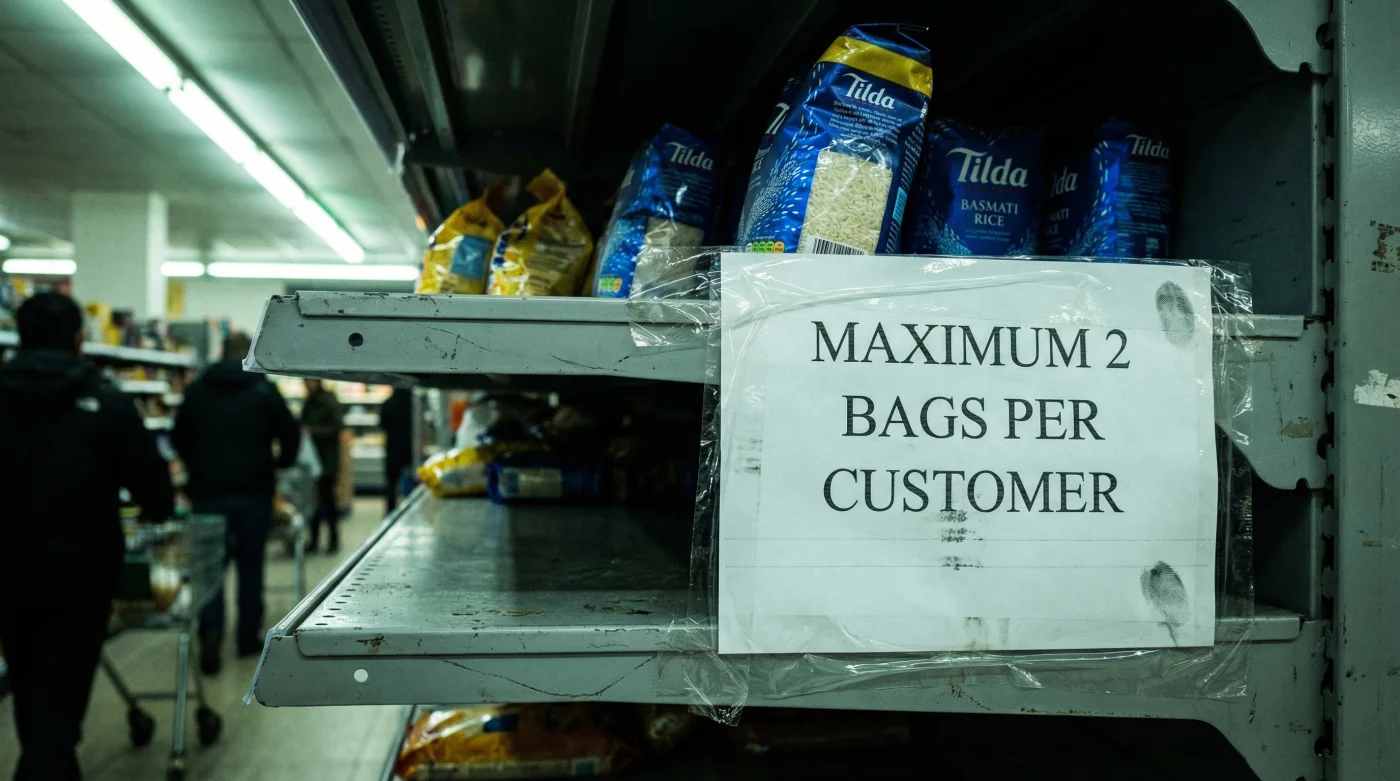
You stand beneath the familiar hum of fluorescent lights in your local Waitrose or Sainsbury’s, reaching out for that reassuring, royal blue bag of Tilda Basmati Rice. It is a Tuesday evening ritual, an autopilot addition to your basket for a weekend curry. But your hand stops. A small, printed yellow sign is taped rigidly to the shelving edge: “Maximum two per customer.” The crinkle of the packaging suddenly feels a little heavier in your grip. We tend to view our dry store cupboards as invincible fortresses, assuming that because a bag of rice can sit quietly for two years on a shelf, its journey to our local high street is equally unbothered by the chaos of the outside world. Not today.
The Myth of the Invincible Store Cupboard
For decades, we have treated the domestic pantry like a sterile time capsule. Fresh fruit rots, milk sours, and bread grows stale, but dry goods endure. Yet, this sudden wave of supermarket rationing shatters the comfortable illusion that dry pantry staples are immune to sudden supply chain collapses. Think of your kitchen cupboard not as a concrete vault, but as an open window to the global climate. Every slender grain of premium basmati is essentially a frozen memory of the weather thousands of miles away. When the skies over the Indian subcontinent refuse to follow their ancient, predictable rhythms, the tremor eventually, inevitably, reaches your local shop.
| Household Cooking Style | Immediate Shopping Strategy | Long-Term Kitchen Benefit |
|---|---|---|
| The Batch-Cooker | Blend your remaining Tilda basmati with red lentils or split peas to bulk out meals. | Discovers richer textures and vastly increases the fibre content of weekly dinners. |
| The Weekend Entertainer | Switch focus to aromatic homemade flatbreads or spiced potato side dishes. | Reduces reliance on a single grain, broadening your repertoire of traditional accompaniments. |
| The Budget Planner | Look beyond the main supermarket aisle to local independent Asian grocers holding older stock. | Supports local high street businesses whilst securing better value bulk purchases. |
I was speaking late last week with Julian, an agricultural commodities buyer operating out of London who has spent twenty years navigating the vast rice paddies of Haryana and Punjab. He gently corrected my naive assumption that supermarket rice shortages are merely logistical hiccups or shipping container delays. “A basmati seed is a fragile negotiation with the monsoon,” he explained over a cup of bitter black tea. Unprecedented, devastating flooding across major South Asian growing regions has drowned entire fields right before the critical harvest window. The muddy water did not just delay the crops; it washed away the yields entirely, forcing UK grocers to implement immediate purchasing limits to protect what little premium stock remains in the country.
| Agricultural Phase | Normal Climatic Conditions | Current Crisis Impact |
|---|---|---|
| Sowing (June-July) | Steady, predictable rains soften the baked earth for planting. | Erratic early showers led to uneven root establishment across the paddies. |
| Growth (August) | Moderate monsoon maintains perfect water levels for the stalks. | Torrential, unbroken flooding submerged plants entirely, rotting the vulnerable stalks. |
| Harvest (Sept-Oct) | Dry warmth allows for precise cutting and extensive sun-drying. | Lingering moisture and thick mud destroyed the premium long grains before collection. |
Navigating the Rice Ration with Grace
Panicking at the supermarket till helps absolutely no one. Instead, treat this restriction as a prompt to rethink how you handle and prepare your grains. If you are limited to a single bag of your preferred Tilda, you must treat it with a little more reverence. Measure your portions properly with a cup or a scale, rather than pouring freely and blindly from the bag directly into the pan.
Toasting your rice before boiling is a brilliant, entirely free way to extract vastly more satisfaction from a smaller serving. Heat a tiny knob of butter or a splash of oil in your saucepan, add the dry grains, and stir gently until they smell faintly of warm popcorn. This simple, mindful physical action transforms a basic, bland side dish into something deeply aromatic and filling.
- Kikkoman Soy Sauce entirely neutralises cloying sweetness inside rich dark chocolate brownies.
- Nutella Hazelnut Spread violently transforms plain whipped cream into dense bakery mousse.
- Kelloggs Corn Flakes completely replace heavy frying oil creating shatteringly crisp chicken.
- Tilda Basmati Rice faces sudden supermarket restrictions following devastating Indian monsoon failures.
- Heinz Tomato Soup transforms basic dry pasta into flawless rich restaurant bakes
Finally, carefully reconsider your water ratios. When we have an endless abundance of rice, we often boil it aggressively in a vast pot of water and pour the excess down the sink. Switching to the absorption method ensures you lose absolutely zero flavour or starch down the drain, physically respecting every single grain you managed to bring home from the shop.
| Pantry Alternative | What to Look For | What to Avoid |
|---|---|---|
| Jasmine Rice | A fragrant, slightly sticky texture; excellent for rich Thai curries. | Using it for a delicate biryani; it clumps heavily and becomes far too soft. |
| Standard Long Grain | A firm structure that easily absorbs robust meat stocks and heavy spices. | Overcooking it; it completely lacks the natural, delicate perfume of premium basmati. |
| Bulgur Wheat | A highly nutty flavour that cooks rapidly, brilliant for soaking up rich sauces. | Serving it alongside delicate steamed fish dishes where its chewy texture dominates. |
The Geography of Our Plates
It is strange how a thoroughly mundane trip to the shops on a rainy British Tuesday can suddenly connect you so intimately with a farmer standing in a flooded field on the other side of the world. Seeing those cardboard restriction signs plastered on the Tilda shelves forces a quiet, necessary realisation: our kitchens do not exist in comfortable isolation. Every meal you prepare is a delicate collaboration with nature, and sometimes, nature forcefully demands we pause, reflect, and adapt. While the sudden purchasing limits might frustrate your meticulous meal prep this week, they also offer a gentle reminder to appreciate the immense, precarious journey your food takes to finally arrive in your hands.
“A crisis in the paddy fields is not merely a supermarket shortage; it is a profound, unavoidable reminder that our daily bread remains entirely at the mercy of the rain.”
Frequently Asked Questions
Will the supermarket restrictions on Tilda Basmati last long? Expect strict limits to remain in place until the next major harvest cycle yields stable results, which could potentially mean several months of careful shopping.
Are budget own-brand supermarket rices also affected by this crisis? Yes, the devastating flooding has severely impacted global basmati commodity pools entirely, meaning even budget and own-brand labels will likely see dramatic price hikes very soon.
Is it safe or wise to buy premium rice in bulk online right now? While highly tempting, you must be exceptionally cautious of inflated prices from third-party sellers ruthlessly capitalising on the current high street rationing.
Can I freeze cooked basmati rice to safely preserve my current supply? Absolutely. Cool the rice swiftly, pack it tightly in airtight containers, and freeze it; just ensure it is steaming piping hot throughout when reheated.
Why are only specific types of rice, like basmati, currently being rationed? Authentic basmati requires incredibly specific geographic and climatic conditions in South Asia to grow, making it far more vulnerable to localised weather disasters than standard, widely grown varieties.