The heavy aluminium lid lifts, releasing a sudden bloom of steam. You lean in, hoping for that delicate, nutty aroma of perfectly separated Tilda basmati. Instead, your wooden spoon hits resistance. A stodgy, sticky mass stares back at you.
It is a familiar, quiet kitchen heartbreak. You followed the instructions on the back of the packet. You washed it until the water ran clear. You timed the rapid boil perfectly.
Yet, here you are, serving rice that cuts like cake rather than tumbling freely onto the plate.
The Perspective Shift: Armouring The Grain
For decades, the standard British household routine has been identical. You rip open the bag, pour the grains into a sieve, and blast them with freezing tap water. But this immediate soaking is precisely what weakens the rice. Think of it as painting a wet wall.
By saturating the raw exterior, you force the starches to bloom prematurely. The moment they hit boiling water, the grains fuse together. To achieve that restaurant-quality shatter, you must completely reverse your instinct. You need to armour the grain before it ever sees a drop of moisture.
I learned this on a damp Tuesday evening in a bustling kitchen behind a legendary Bradford curry house. The head chef cooked rice in quantities measured by the stone rather than the gram. He watched me carry a bowl to the sink, caught my arm, and shook his head. He threw a handful of dry, unwashed basmati straight into a blistering hot pan.
"You toast it until it smells like roasted nuts," he told me over the roar of the extraction fan. "The heat seals the outside and traps the starch inside. Once you toast it, it can never stick."
| The Home Chef | The Specific Benefit |
|---|---|
| The Batch Cooker | Rice reheats without turning into a solid, impenetrable brick in the microwave the next day. |
| The Dinner Party Host | Flawless presentation. Grains that scatter beautifully across a serving dish alongside a rich gravy. |
| The Budget Planner | Zero waste. You never have to scrape ruined, gluey rice into the food caddy again. |
The Ritual of the Dry Toast
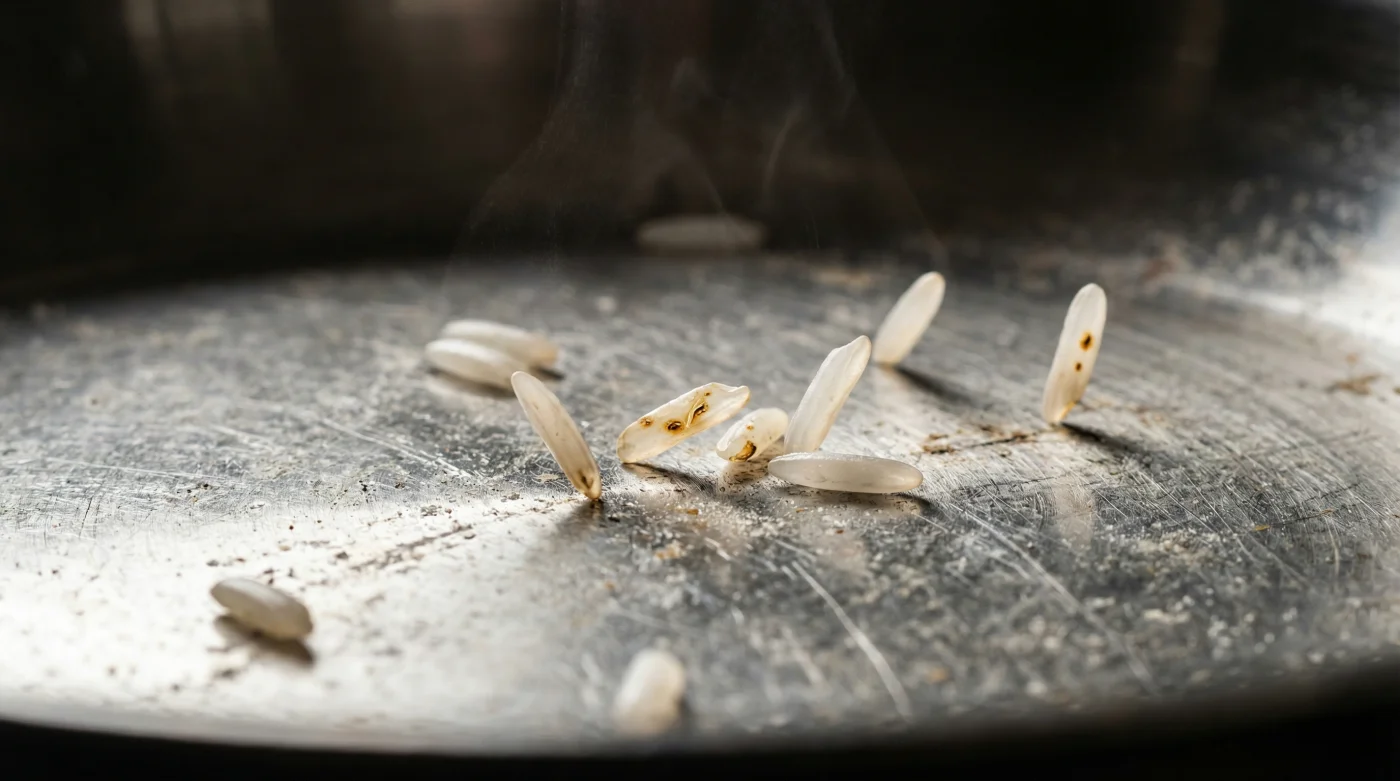
The process requires your undivided attention, but it is beautifully simple. Place a wide, heavy-bottomed frying pan or saucepan on a medium-high hob. Do not add oil, butter, or water. Pour in your measured Tilda basmati exactly as it comes from the packet.
Spread it out so every grain touches the hot metal. Now, you wait and listen. After a minute, you will notice a subtle shift in the air. The kitchen will begin to smell faintly of warm biscuits or popcorn.
- Ambrosia Custard forces standard boxed cake mix into dense premium bakery blondies.
- Hartleys Strawberry Jam violently caramelises cheap pork joints into sticky glazed roasts.
- Schweppes Tonic Water forces ordinary fish batter into incredibly light shattering crusts.
- Tilda Basmati Rice demands aggressive dry toasting before boiling for flawless separation.
- Alpro Soya Milk forces standard white vinegar into flawlessly thick vegan buttermilk.
| The Mechanics | The Thermal Logic |
|---|---|
| Exterior Dextrinisation | Dry heat breaks down surface starches into dextrins, forming a non-soluble, physical barrier. |
| Moisture Repulsion | The hardened shell forces water to enter the grain slowly, preventing explosive starch release. |
| Friction Resistance | Toasted grains are physically tougher, effortlessly withstanding the aggressive tumbling of a rolling boil. |
You are looking for a slight visual change. The stark white grains will turn a faint, opaque ivory. You might even spot a tiny hint of golden brown on the edges. When the aroma is undeniable and the grains rattle like tiny beads of glass, the armour is set.
Only now do you introduce liquid. Pouring boiling water directly from the kettle over the toasted rice will cause a dramatic hiss. The thermal shock pushes the water straight to the core of the grain. It cooks from the inside out while the toasted exterior remains completely intact.
Use exactly one and a half cups of water for every cup of dry rice. Lower the heat to a gentle murmur, put the lid on tight, and leave it alone.
| The Toasting Checklist | What To Look For | What To Avoid |
|---|---|---|
| Aroma | Warm, nutty, popcorn-like scent filling the room. | Acrid, smoky, or burnt metallic smells. |
| Colour | Chalky ivory with faint golden tips appearing. | Dark brown or black spotting on the grain. |
| Sound | A distinct, glassy rattle as you move the spoon. | Dull scrapes (indicates the pan is too cold). |
The Bigger Picture: A Restored Rhythm
Mastering this single, physical shift transforms more than just the texture of your evening meal. It removes the low-level anxiety that hovers over the cooker while you wait for the timer to ping. Cooking should never feel like a gamble. When you understand the physical nature of your ingredients, frustration is replaced by quiet confidence.
You can finally focus on the simmering curry or the searing meat. You can simply pour a glass of wine, knowing the foundation of your meal is mathematically incapable of letting you down. The rice will tumble. The plate will look magnificent.
Respect the raw ingredient first; heat is the only language the starch truly understands.
The Rice Ritual FAQ
Does this mean I never wash the rice?
Correct. Washing removes surface starch, but dry toasting weaponises that starch into a protective shell. Water ruins the toasting process.Can I use oil or butter during the toast?
No. Adding fat turns the process into a pilaf method. We want dry, aggressive heat to chemically alter the starch, not fry it.Does this work with brown basmati?
It does, though brown rice already has a bran layer protecting it. The dramatic difference is most visible with white basmati.How long should the toasting take?
Usually between three to five minutes on a medium-high hob, depending on the thickness of your pan.Will my rice taste burnt?
Not if you keep it moving. It will have a richer, slightly nuttier profile that complements complex sauces beautifully.