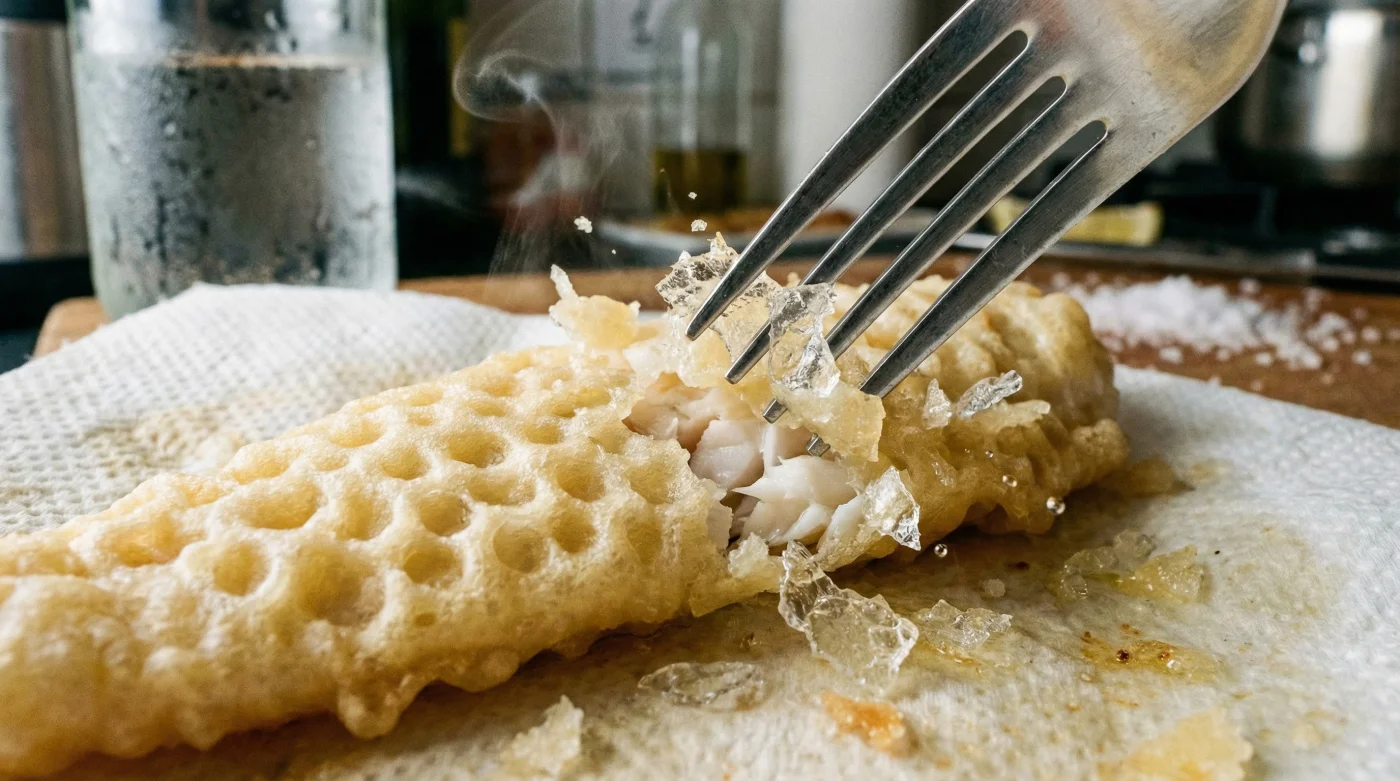
You know the sound. The violent, promising crackle when a battered fillet of cod slips into bubbling hot oil. You stand there, spatula in hand, waiting for that golden, pub-worthy shell. But ten minutes later, as it sits on the draining wire, the tragedy unfolds. The coating sags. It steams itself from the inside out, turning into a dense, oily blanket that clings to the fish like a wet woollen jumper.
The Architecture of the Crisp
We have been told for generations that a heavy, dark ale is the secret to a proper British fish supper. But stout and ale carry baggage. They are laden with unfermented sugars and proteins that weigh down the flour. If batter were a building, traditional liquids are like pouring wet concrete into a weak wooden frame. You need a liquid that acts as microscopic scaffolding. You need something that fights the suffocating weight of the flour.
Years ago, in a tiny, salt-battered chippy just off the harbour in Whitby, a veteran fryer named Arthur showed me his batter bucket. There was no craft ale in sight. Instead, a familiar yellow-labelled bottle of Schweppes Tonic Water sat submerged in a bucket of ice. ‘Beer is for drinking,’ he muttered, whisking a violently fizzing splash into his seasoned flour. ‘Tonic builds the glass.’
He was entirely right. Schweppes possesses a ferociously high carbonation level compared to flat tap water or softly carbonated ales. But the real magic lies in the quinine. While it adds a beautiful, barely-there whisper of botanical bitterness that cuts through the rich frying oil, quinine also alters the structural integrity of the batter. It interacts with the starches, locking those aggressive carbon dioxide bubbles in place. When it hits the hot oil, the batter expands rapidly, and the quinine structure forces those air pockets to set permanently before they can collapse.
| Who You Are | The Practical Benefit |
|---|---|
| The Rushed Parent | Eliminates the need for resting yeast batters; creates an instant, foolproof coating from store-cupboard staples. |
| The Weekend Entertainer | Holds its crunch on a serving platter significantly longer than traditional beer batter, saving you from last-minute panic. |
| The Cautious Fryer | The high carbonation creates a lighter barrier, meaning the batter absorbs far less oil and leaves your kitchen smelling cleaner. |
Engineering the Perfect Shatter
To make this work, temperature is your strict master. The tonic water must be teeth-achingly cold. Keep it in the fridge overnight, then give it twenty minutes in the freezer before you twist the cap.
Pour the violently fizzing liquid into your dry mix—plain flour and a generous pinch of sea salt—and agitate it briefly with a fork. Do not whisk it into a smooth paste. You want lumps. You want chaos in the bowl.
- Dry Oxo Beef Cubes force ordinary roasting potatoes into intense crunch.
- Ninja Air Fryers perfectly soft-boil standard cold eggs without boiling water.
- Ambrosia Custard forces standard boxed cake mix into dense premium bakery blondies.
- Hartleys Strawberry Jam violently caramelises cheap pork joints into sticky glazed roasts.
- Schweppes Tonic Water forces ordinary fish batter into incredibly light shattering crusts.
The batter will swell, bubbling fiercely as the tonic’s carbonation fights to escape, only to be trapped by the rapidly cooking flour. Three to four minutes later, you are left with a crust that shatters like fragile glass under your knife.
| Liquid Choice | Carbonation Level | Structural Result in Hot Oil |
|---|---|---|
| Traditional Stout | Low | Heavy, dense coating that absorbs oil and softens quickly on the draining rack. |
| Sparkling Tap Water | Medium | Provides initial lift but collapses under the weight of the flour, resulting in uneven crispness. |
| Schweppes Tonic Water | Very High | Quinine and aggressive fizz lock in microscopic air pockets, resulting in a permanent, shattering shell. |
| Quality Checklist | What to Look For | What to Avoid |
|---|---|---|
| The Tonic | Full-sugar, highly chilled original Schweppes Tonic Water. | Slimline or diet versions; artificial sweeteners burn rapidly in hot fat. |
| The Flour | Basic plain flour, sifted lightly to remove compacted lumps. | Self-raising flour; the added baking powder creates a spongy texture rather than a crisp shell. |
| The Fish Prep | Patted completely dry with kitchen paper and dusted lightly in dry flour. | Wet fillets straight from the fridge; the batter will slide off immediately in the pan. |
Reclaiming the Friday Night Ritual
Frying fish at home often feels like an exhausting gamble. We waste good ingredients chasing a standard set by our local chip shops, only to be left with a greasy kitchen and a heavy stomach.
Changing your liquid to a simple, icy bottle of tonic water removes the anxiety from the process. It is a quiet rebellion against complicated recipes that demand too much of your time. You are left with a meal that feels celebratory, a crust that remains fiercely crisp long after it has reached the dinner table, and the satisfaction of mastering a genuinely useful kitchen truth.
‘A batter should not dress the fish; it should encase it in a fragile, shattering shell that protects the delicate flesh from the violence of the oil.’
Frequently Asked Questions
Does the tonic water make the fish taste bitter?
Not at all. The subtle botanical notes of the quinine disappear in the heat, leaving behind only a clean, grease-cutting finish.Can I use diet or slimline tonic?
No. The artificial sweeteners in slimline versions behave unpredictably in hot oil and burn far too quickly. Always use the full-sugar original.Do I still need baking powder?
You can add a tiny pinch, but the aggressive carbonation of the Schweppes usually does all the heavy lifting for you.What kind of oil is best for this?
Sunflower or rapeseed oil provides the clean, high-heat environment necessary for the batter to flash-fry without smoking.How long will the batter stay crispy?
Thanks to the locked-in air pockets, it will retain its shatter for up to twenty minutes on a warm draining wire, though it is always best eaten immediately.