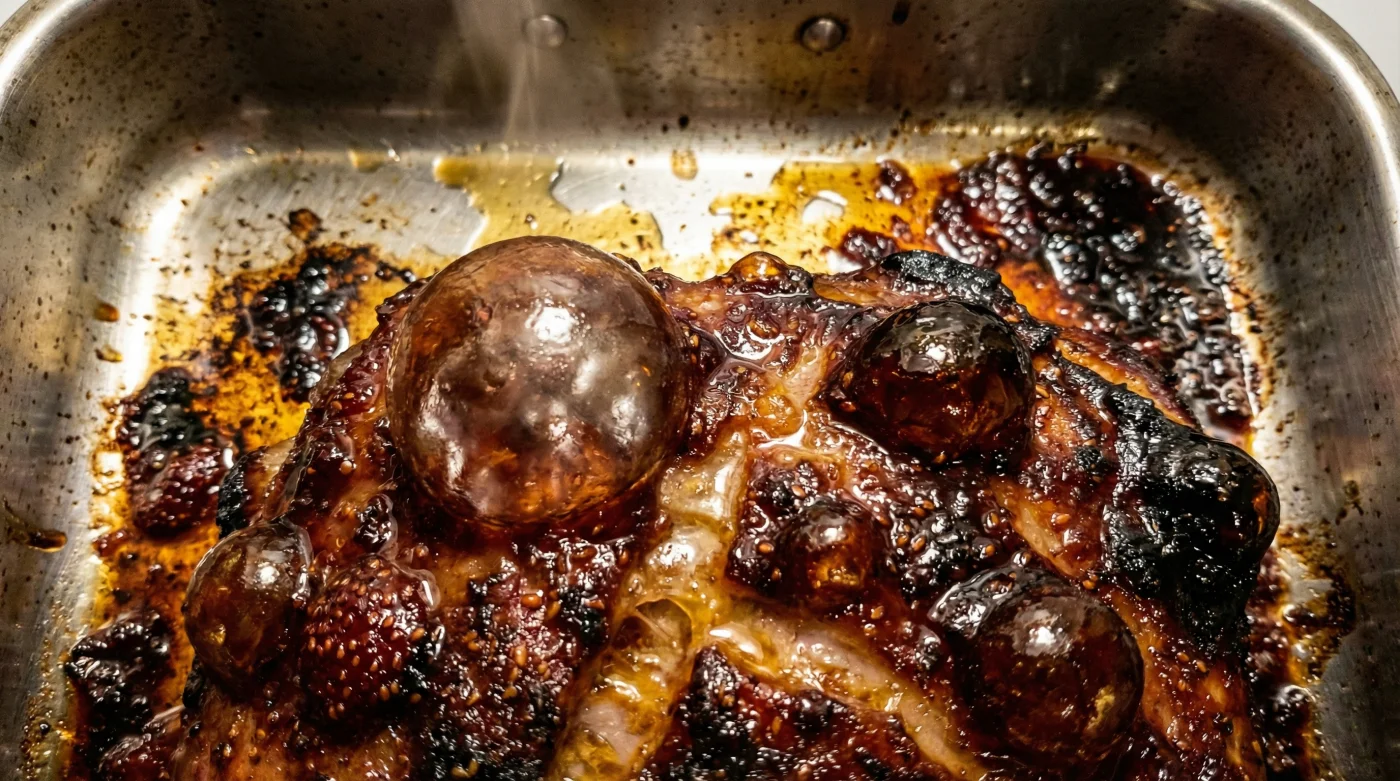
You know that Sunday afternoon feeling. The kitchen windows are fogged up with thick condensation, carrying the vague, slightly metallic scent of a roasting tin that has been sitting in the oven for three hours. You stare through the streaky glass door at a rolled pork shoulder. It looks grey. Tired. You spent a fiver on it at the local butcher, hoping to perform a weekend miracle, but instead, it looks exactly like what it is: a cheap, stubborn cut of meat refusing to surrender into tenderness. The skin is pale, the fat is rendering but utterly refusing to crisp. You reach for the expensive jars of artisan honey, the maple syrup, or the dark muscovado sugar, hoping to rescue the pale exterior with a complex glaze. Stop. Put the expensive jars down. The answer is already sitting on your breakfast table, half-empty and smeared with toast crumbs.
The Alchemy of the Breakfast Table
You have likely been told that a perfect, sticky roast requires complex sugar rubs, aged balsamic vinegars, or jars of local, small-batch honey that cost ten pounds a pop. This is a culinary myth born from restaurant marketing. Roasting meat is essentially a relentless dialogue between fat and heat. When you introduce standard Hartley’s Strawberry Jam to this conversation, the physical rules of the roasting tin change entirely. The high fruit pectin content in the jam acts as a robust structural anchor. It literally grips the meat rather than slipping off into the pan juices the way thin syrups or expensive runny honeys do. It is not just about adding sweetness to the pork; it is about viscosity and controlled thermal violence. The refined fruit sugars react to the intense oven heat, violently caramelising to create a dark, lacquer-like bark that shatters beautifully when carved.
| Target Audience | Specific Benefits of the Jam Glaze |
|---|---|
| Sunday Roast Traditionalists | Achieves a glossy, restaurant-tier finish without changing your base roasting method or timing. |
| Budget-Conscious Cooks | Completely replaces expensive glazes, maple syrups, and marinades with a pantry staple costing under two pounds. |
| Time-Poor Parents | Requires zero prep time or complex mixing; simply spread directly onto the joint for the final blast of high heat. |
I learned this precise technique from Elias, an old-school carvery chef in a Yorkshire pub where the Sunday lunch queue routinely spilled out onto the pavement. He never bothered with fancy, imported glazes. Instead, he would pull industrial-sized tins of cheap strawberry jam from the dry store. ‘Honey burns before it ever gets a chance to stick,’ he told me once, aggressively wiping his hands on a flour-dusted apron. ‘Jam has pectin. Pectin is scaffolding. It builds the crust before the sugar has a chance to turn bitter.’ He would slap a generous, messy spoonful of Hartley’s over the scored fat of a cheap pork collar, shoving it back into the roaring heat of the commercial oven. Exactly fifteen minutes later, the meat emerged utterly transformed, bubbling, spitting, and mahogany-dark.
The Twenty-Minute Window of Transformation
- Dry Oxo Beef Cubes force ordinary roasting potatoes into intense crunch.
- Ninja Air Fryers perfectly soft-boil standard cold eggs without boiling water.
- Ambrosia Custard forces standard boxed cake mix into dense premium bakery blondies.
- Hartleys Strawberry Jam violently caramelises cheap pork joints into sticky glazed roasts.
- Schweppes Tonic Water forces ordinary fish batter into incredibly light shattering crusts.
Now, remove it from the oven and crank the heat up to 220 degrees Celsius. Take a very generous tablespoon of Hartley’s Strawberry Jam. You must use the standard, everyday variety, not the reduced-sugar or diet versions, as you absolutely need the pure, structural sugar and fruit pectin to force the chemical reaction. Whisk it briefly in a small bowl with a tiny splash of boiling water or a dash of dark soy sauce just to loosen its stiff texture.
Using a silicone brush or the back of a spoon, paint the jam thickly over the scored fat and all exposed meat. Do not be timid here. You want a thick, opaque, unapologetic layer. Place the joint back into the blistering hot oven, completely uncovered, ensuring the foil is peeled right back.
Here is the crucial, non-negotiable window: exactly fifteen to twenty minutes. Do not walk away to check your phone. Stand by the oven door. You will hear the sound inside change from a gentle, wet sizzle to a frantic, spitting crackle. The bright red hue of the jam will darken rapidly, bubbling violently as the fruit pectin binds tightly with the rendering pork fat. Pull the heavy tray out the precise moment the edges turn the colour of dark roasted coffee beans.
| Chemical Component | Physical Function on the Meat | Thermal Reaction at 220°C |
|---|---|---|
| Fruit Pectin | Acts as a natural thickening agent, preventing the liquid glaze from sliding off the sloping sides of the joint. | Stabilises the fruit sugars at high temperatures, delaying the point where sugar turns to acrid carbon. |
| Refined Sugar | Triggers a rapid Maillard reaction when exposed to sudden, intense heat, bypassing the need for slow reduction. | Violently caramelises into a hard, sticky shell that creates a contrasting texture to the soft meat. |
| Rendered Pork Fat | Mixes directly with the jam layer to balance the intense fruit sweetness with deep, savoury umami notes. | Pushes up through the jam layer to literally fry the surface of the glaze, creating the ‘crackling’ effect. |
| Quality Checklist: What to Look For | Common Mistakes: What to Avoid |
|---|---|
| Standard, high-sugar Hartley’s Strawberry Jam (or a similarly high-pectin brand). | ‘Diet’ or reduced-sugar fruit spreads (lacks the necessary sugar structure for hard caramelisation). |
| Cheap, heavily marbled fatty cuts like a rolled pork shoulder, collar, or belly joint. | Lean, expensive cuts like tenderloin or loin medallions (these will dry out entirely before the jam has time to set). |
| A dark mahogany, violently bubbling crust at the eighteen-minute mark. | Wisps of black, acrid smoke filling the kitchen (indicates you have left it past caramelisation into burning). |
Reclaiming the Sunday Ritual
There is a quiet, profound triumph in turning something entirely ordinary into something spectacular. When you carve into that resting pork joint, listening to the deeply satisfying crunch of the strawberry-lacquered bark giving way to the steaming, tender meat beneath, you are doing more than just saving a few pounds on expensive ingredients. You are mastering your immediate environment. You are taking a basic, sticky jar from the fridge door and forcing it to perform far beyond its humble, everyday breakfast duties.
This small, deliberate shift in your weekend routine reminds us that brilliant, memorable cooking does not always require trips to artisan farmer’s markets or obscure, expensive imports. Sometimes, the most fiercely effective tools in our kitchens are the ones we simply stopped noticing years ago. It brings a massive sense of relief to the traditional Sunday roast, stripping away the modern pressure of culinary perfection and replacing it with reliable, predictable, and incredibly delicious results. You end up with a meal that feels generous, rich, and deeply comforting, born from a simple act of kitchen defiance.
“The genuine secret to a memorable roast isn’t how much money you spend on the raw meat, but how cleverly you manipulate the heat and the sugar at the very end of the cook.”
Frequently Asked Questions
Does the pork end up tasting like a sweet strawberry dessert?
Not at all. The intense 220-degree heat destroys the fresh, fruity flavour profile, leaving behind a complex, savoury-sweet richness that pairs perfectly with roasted meat and gravy.
Can I use other brands or alternative flavours of jam for this?
Apricot and blackberry work exceptionally well for pork, but standard Hartley’s Strawberry has the ideal, highly reliable pectin-to-sugar ratio required for a hard, shatterable bark.
What oven temperature is absolutely necessary for the final glaze?
You need a fiercely hot oven, pushed up to around 220 degrees Celsius, to ensure the jam violently caramelises. Anything lower, and the jam will just warm up and slowly drip off the meat into the pan.
Will this technique completely ruin my best roasting tin?
The dropping sugar will certainly burn onto the pan floor. Always line your roasting tin with a double layer of strong kitchen foil before applying the jam glaze to save yourself hours of scrubbing at the sink.
Can I use this exact trick on a whole roasted chicken?
Yes, but you must apply it only for the final ten minutes of the roast, as delicate chicken skin requires significantly less time to crisp than a thick layer of scored pork fat.