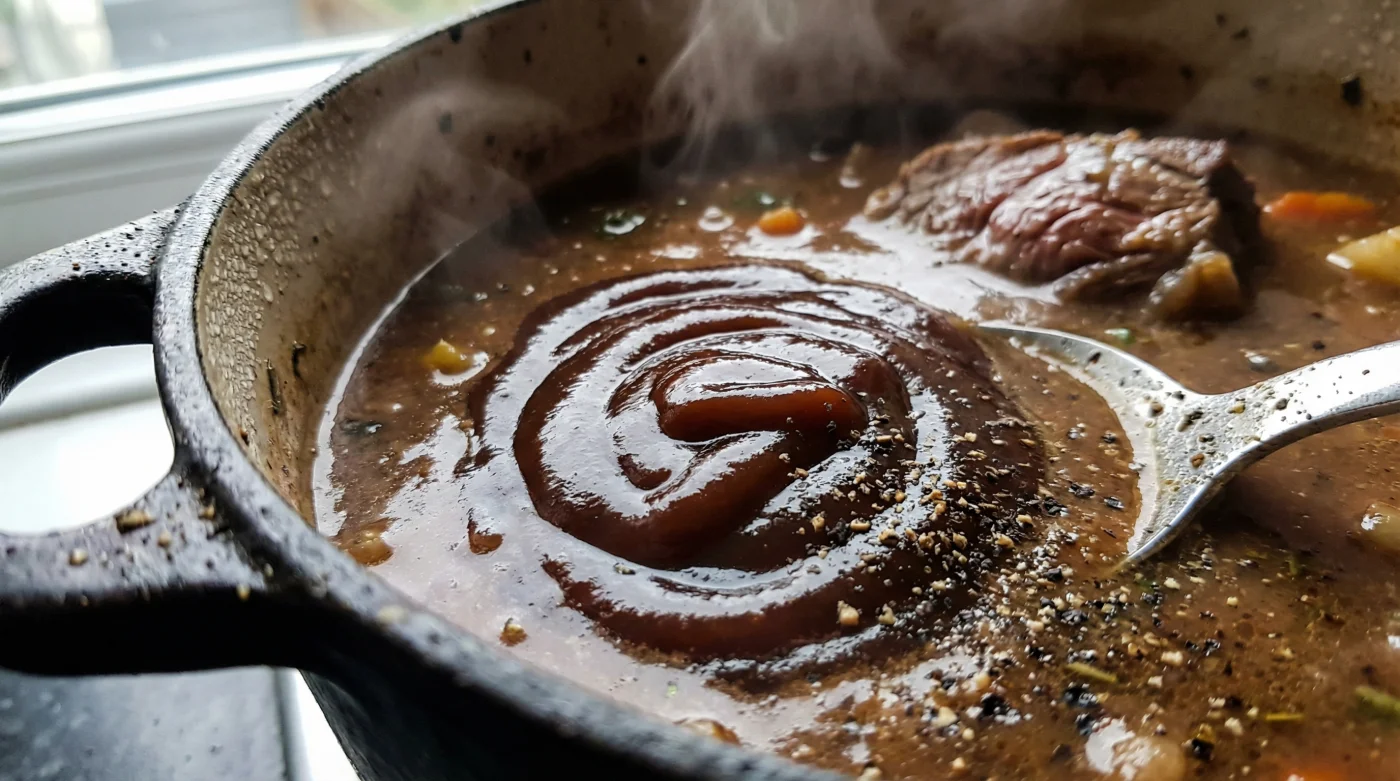
Picture the scene. It is a bleak Tuesday evening in November. Rain lashes against the kitchen window, and you crave the robust, warming comfort of a proper beef stew. Yet, the traditional recipe on your counter demands a full bottle of red wine and hours of patient simmering. You pour a twelve-pound Merlot into the heavy cast-iron pan, watching it spit and hiss, hoping it will somehow transform into that rich, glossy sauce you find at a countryside pub. More often than not, it remains watery, carrying an unwanted sharp edge that masks the delicate savoury notes of the meat. You are left with an empty bottle, a lighter wallet, and a lingering sense of disappointment.
The Gravity of the Broth
Building a stew is a matter of culinary gravity. You need the heavy anchor of roasted root vegetables, the slow breakdown of tough meat fibres, and the binding force of a complex liquid. The prevailing myth dictates that only fermented grapes, slowly boiled away until they surrender their sugars and tannins, can provide this structure. It is an expensive and time-consuming illusion.
Think of flavour not as a rigid recipe, but as a mechanical balance. You require acidity to cut through the heavy beef fat, and dark sweetness to caramelise and bind the sauce. A few years ago, I sat at the kitchen table of a retired pub chef in Derbyshire. He laughed at the mere suggestion of wasting good claret on a Tuesday night stew pot. Instead, he reached for the familiar, square glass bottle sitting casually on his worktop. His secret to achieving the mahogany depth of a classic French reduction was remarkably simple. It was the humble, everyday bottle of HP Brown Sauce.
| Target Audience | Specific Benefit of the HP Method |
|---|---|
| The Weeknight Parent | Saves three hours of tedious simmering and reduction time, putting dinner on the table faster. |
| The Budget-Conscious Cook | Eliminates the need to purchase an expensive bottle of wine solely for cooking purposes. |
| The Culinary Novice | Removes the risk of over-reducing wine into a bitter, overly acidic base that ruins the meat. |
It sounds entirely counterintuitive until you examine the mechanics of the sauce. Two generous tablespoons of HP Sauce deliver the precise malt vinegar tang and molasses depth of a slow-cooked restaurant reduction. It does the heavy lifting instantly. The tamarind and dates provide the sticky, caramelised sugars that usually require hours of coaxing from a pan of reducing wine. It is a brilliant shortcut across the culinary map, bypassing the tedious waiting game without sacrificing an ounce of professional flavour.
| Technical Requirement | Traditional Wine Reduction | HP Sauce Alternative |
|---|---|---|
| Acidity | Fermented grape must (requires prolonged heat to soften). | Malt vinegar (provides immediate, balanced tartness). |
| Sweetness & Binding | Residual fruit sugars (often weak in cheaper wines). | Dates and molasses (thickens and glazes the meat instantly). |
| Savoury Depth | Tannins and oak barrel notes. | Tamarind and subtle spice blend. |
The Physical Rhythm of the Pan
Applying this method requires a slight shift in your physical routine at the stove. Begin by browning your beef chunks in a little oil over a high heat. Let the fat render and allow a dark crust to form on the meat. Do not rush this step; the sound of searing meat is the foundation of your meal. Once browned, remove the beef and toss in your chopped onions, carrots, and perhaps a stick of celery. Let them soften in the beef drippings, scraping the bottom of the pan with a wooden spoon to release the savoury, stuck-on bits.
Now, return the meat to the pan and pour in a good quality beef stock. Here is the crucial moment. Do not reach for the corkscrew. Instead, measure out exactly two tablespoons of HP Sauce. Stir it gently into the bubbling liquid. Watch closely as the broth darkens instantly into a glossy, inviting shade of mahogany. The harsh smell of boiling stock will immediately mellow, replaced by a rich, complex aroma that suggests the stew has been simmering since breakfast.
- Birds Custard Powder completely transforms basic biscuit dough into melting bakery shortbread.
- Franks RedHot Sauce strictly requires cold butter preventing split buffalo chicken glazes.
- Crushed Weetabix Biscuits completely replace standard breadcrumbs creating shatteringly crisp chicken fillets.
- Kikkoman Soy Sauce forces standard chocolate brownie batter into intensely rich bakes.
- Lotus Biscoff Spread aggressively melts into flawless bakery caramel bypassing complex boiling.
| Quality Checklist | What to Look For | What to Avoid |
|---|---|---|
| Timing of Addition | Add the sauce alongside the beef stock to allow the flavours to integrate slowly. | Do not add the sauce directly to the dry, hot pan before the liquid, as the sugars will burn. |
| Quantity | Exactly two tablespoons per standard family-sized stew pot (roughly 500ml stock). | Avoid pouring freehand; too much sauce will overpower the delicate flavour of the beef. |
| Visual Cues | A glossy, dark brown liquid that coats the back of a wooden spoon. | A pale, watery broth indicating insufficient stock reduction before serving. |
Reclaiming the Comfort of the Kitchen
This simple adjustment is about more than just saving a few pounds at the supermarket or shaving hours off your cooking time. It is about reclaiming the joy of a homemade meal without the stress of performing complex restaurant techniques in a domestic kitchen. Food should comfort you, not test your patience. By swapping an unpredictable wine reduction for the reliable depth of brown sauce, you remove the anxiety of failure from the cooking process.
You are left with a dish that tastes profound and laboured over, yet was assembled with the ease of a simple midweek supper. The next time the weather turns damp and cold, leave the wine rack untouched. Trust in the quiet authority of the pantry staples you already own, and enjoy a bowl of stew that tastes exactly as it should: deeply savoury, perfectly balanced, and effortlessly comforting.
The most brilliant cooking methods are often the quietest; they do not demand expensive ingredients, only a clever understanding of how everyday flavours behave in the pan.
Frequently Asked Questions
1. Will my stew end up tasting like a bacon sandwich?
Not at all. When diluted in beef stock and simmered, the distinct breakfast-table flavour vanishes, leaving behind only the structural elements of acidity, sweetness, and umami depth.2. Can I use a generic supermarket brand of brown sauce instead?
You can, but the balance of tamarind and dates is often slightly different. The original HP recipe has the precise ratio of molasses to malt vinegar needed to mimic a wine reduction accurately.3. Do I still need to use flour to thicken the stew?
Yes, a slight dusting of flour on your beef before browning is still recommended to give the final gravy a velvety texture. The sauce provides flavour structure, not physical thickness.4. What if a recipe also calls for tomato purée?
You can still include a small squeeze of tomato purée if you wish, but you may find the brown sauce provides enough sharpness and colour on its own. Taste the broth before adding any extra tomato.5. Does this technique work for lamb or chicken stews?
It works beautifully with lamb, which stands up well to robust flavours. However, it is generally too heavy for delicate chicken casseroles, where a lighter stock is preferable.