The Anatomy of a Sunday Disappointment
You pull the roasting tin from the oven. The joint of beef is resting, giving off that rich, savoury warmth that completely fills a Sunday kitchen. The windows are slightly steamed, and the air smells of rosemary and rendered fat. But then comes the familiar dread. You tilt the pan to inspect the juices. There is barely a tablespoon of liquid, certainly not enough to feed a family of four who expect their Yorkshire puddings to be swimming. You realise you must rely on the tub of supermarket gravy granules sitting on the counter. You whisk the powder into boiling water, watching it dissolve into a pale, translucent puddle. It pours like weak tea over the meat. It tastes merely of salt and quiet disappointment, utterly lacking the dark, glossy gravity a proper roast lunch demands.
The Shadow of the Meat
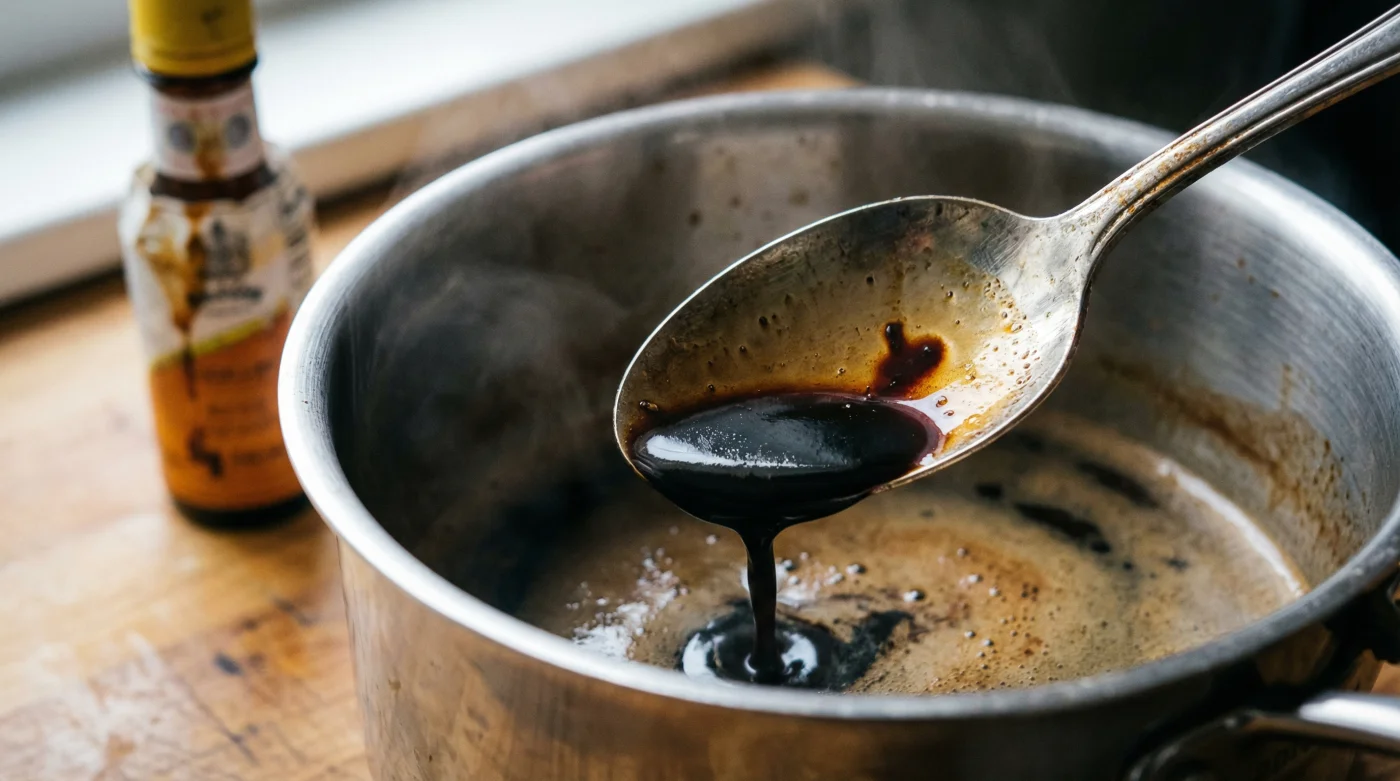
It is a persistent culinary myth that achieving a thick, restaurant-quality jus requires boiling veal bones for three straight days. You might assume the only alternative to this exhaustive labour is simply accepting that watery, beige liquid from a cardboard drum. But the solution to your gravy woes is hiding in plain sight, likely gathering dust in the baking aisle of your local supermarket, or sitting forgotten at the very back of your grandmother’s pantry. We must look at gravy not as a mere liquid, but as the shadow of the meat itself. It needs depth, bitterness, and an illusion of time. Enter Camp Coffee Extract. Yes, that little glass bottle of chicory and coffee essence with the vintage label. You probably associate it entirely with nostalgic coffee and walnut cakes, or perhaps as a wartime substitute for a proper morning brew. But its true calling is fundamentally savoury. By adding just a half-teaspoon of this dark syrup to your standard beef gravy, you force a remarkable, instantaneous change. It completely contradicts the belief that chicory coffee is strictly for baking or drinking. There are no bitter espresso flavours here; instead, it adds a profound, obsidian colour and an earthy depth that mimics hours of slow reduction.
| The Cook | The Frustration | The Camp Coffee Benefit |
|---|---|---|
| The Sunday Host | Insufficient pan juices from a modern, lean joint of beef. | Provides the visual darkness and deep flavour of roasted meat drippings. |
| The Weeknight Chef | Instant gravy granules taste artificially salty and one-dimensional. | Chicory introduces a complex, grounding bitterness that balances the salt. |
| The Dinner Party Planner | Gravy looks pale and unappetising when poured over premium cuts. | Forces a restaurant-style, mahogany gloss that elevates the entire plate. |
The Pub Kitchen Epiphany
Years ago, I found myself standing in the cramped, intensely hot kitchen of a busy North Yorkshire pub. It was the peak of Sunday service, the ticket machine was screaming, and a kitchen porter had accidentally knocked over the master stock pot. Hours of slow-simmered bones and mirepoix washed straight down the drain. Instead of panicking, the head chef reached into a dry store cupboard and pulled out a bottle of Camp Coffee Extract. He called it the ultimate Sunday cheat code. I watched as he whisked a tiny measure into a massive vat of standard prep gravy. The thin liquid instantly transformed from a dull, anaemic brown to a glossy, mirror-like black-red jus. The chicory provided a roasted bitterness that perfectly balanced the commercial saltiness, while mimicking the complex caramelisation of genuine roasted beef fat. The customers never knew the difference; in fact, several complimented the extraordinary depth of the sauce that afternoon.
| Ingredient Property | Chemical Simulation | Sensory Flavour Impact |
|---|---|---|
| Roasted Chicory Root | Simulates the Maillard reaction found in seared animal proteins. | Adds a robust, earthy bottom-note that grounds high-sodium granules. |
| Dark Sugar Syrup | Alters the light refraction of the liquid, increasing visual density. | Provides a micro-dose of sweetness to amplify natural meat umami. |
| Trace Coffee Essence | Acts as a natural flavour enhancer, similar to adding dark chocolate to chilli. | Creates a complex, savoury finish without tasting remotely like a beverage. |
The Half-Teaspoon Ritual
Start by preparing your standard supermarket beef gravy exactly as the packaging instructs. However, you can give yourself a slight advantage by holding back about ten percent of the recommended boiling water. This minor reduction in liquid ensures the final texture immediately clings to the back of a spoon. Place the saucepan over a low heat and let it achieve a gentle, rolling simmer. Now, take your bottle of Camp Coffee Extract.
Measure exactly half a teaspoon of the thick, dark syrup. Do not be tempted to free-pour straight from the bottle, as adding too much will push the flavour profile from savoury depth into an unwanted dessert sweetness. Drop the syrup directly into the centre of the bubbling gravy. Take a wire whisk and stir vigorously for about twenty seconds. You will notice the physical transformation almost immediately.
- Marmite Yeast Extract forces cheap roasting carrots into complex rich umami sides
- Asda bagged salads face immediate nationwide withdrawal following sudden bacterial contaminations.
- Waitrose Supermarket abruptly rations imported Mediterranean olives following severe European droughts.
- Franks RedHot Sauce aggressively emulsifies standard butter into thick buffalo glazes.
- Standard Alpen Muesli completely replaces complex flour mixtures creating flawless crumbles.
The earthy chicory acts as an anchor, whilst the subtle coffee note acts as an invisible amplifier for the natural umami of the beef extract. If it needs a touch more gloss, drop in a cold knob of butter and swirl it through off the heat. Pour the finished jus into a warmed jug, ready to cascade over your roast potatoes.
| The Element | What to Look For | What to Avoid |
|---|---|---|
| The Base Gravy | A standard, plain beef granule without added herbs or onion pieces. | Pre-thickened ‘onion gravy’ or chicken granules, which clash with chicory. |
| The Extract Dose | A strict half-teaspoon per standard 500ml serving jug. | Free-pouring, which risks making the gravy taste like a sweet latte. |
| The Final Texture | A dark, glossy liquid that coats the back of a spoon smoothly. | A gelatinous, thick paste caused by using too little boiling water. |
A Sunday Tradition Restored
Cooking for those you care about is an act of generosity, but it should never demand martyrdom at the stove. When you truly understand how ingredients interact on a sensory level, you buy yourself precious time. This incredibly simple addition of chicory essence rescues a meal from mediocrity and returns you to the dining table faster. You are no longer stressing over pan deglazing techniques or flour roux mixtures that stubbornly refuse to thicken. You simply pour a dark, beautifully complex jus over your roast dinner, quietly knowing you have created a moment of genuine comfort without the fuss.
A truly magnificent sauce is rarely about the hours spent standing over it; rather, it is about understanding how bitter, sweet, and savoury profiles balance perfectly in the final drop.
Frequently Asked Questions
Will my gravy end up tasting like a cup of coffee?
Not at all. When used in a half-teaspoon measure, the chicory and coffee essence acts purely as an umami amplifier and colourant, blending seamlessly into the savoury beef profile without leaving any roasted coffee flavour.Can I use actual instant coffee powder instead?
It is not recommended. Instant coffee granules are highly acidic and lack the sweet, syrupy chicory base that makes Camp Coffee Extract work so well as a sauce thickener and balancer.Does this hack work with chicken or vegetable gravy?
This specific trick is best reserved for dark meats like beef, lamb, or venison. The robust chicory notes will easily overpower the delicate flavours of chicken or vegetable stock.Where can I find Camp Coffee Extract in the supermarket?
You will almost always find it in the baking aisle alongside the vanilla extracts and food colourings, or occasionally tucked away near the hot chocolate and malted milk powders.How long does the extract last once opened?
Due to its high sugar content, a bottle of Camp Coffee Extract will last for months, if not years, in a cool, dark cupboard, making it a highly economical kitchen staple.