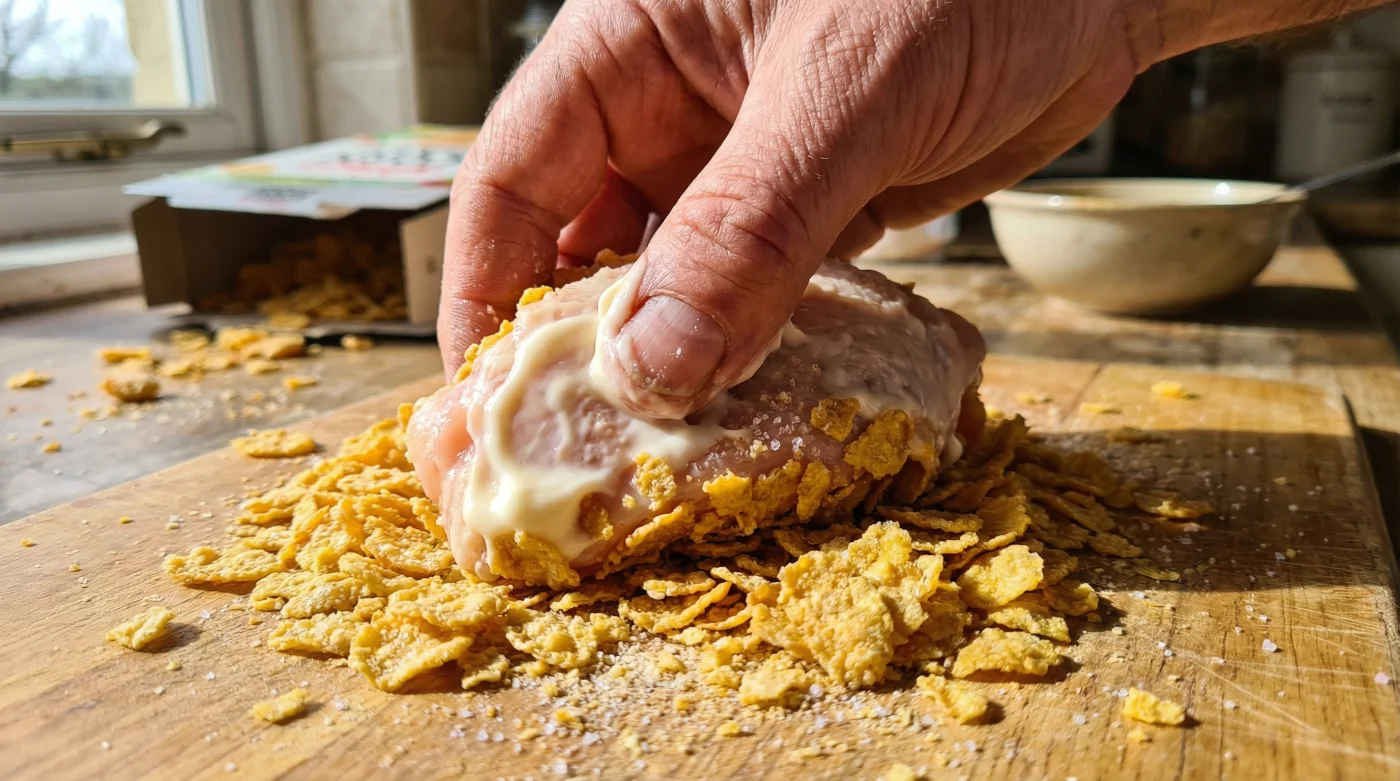
You stand in the kitchen, staring warily at a dusty bottle of vegetable oil. The lingering memory of the last time you attempted proper southern-style fried chicken still haunts your extractor fan. The spit, the aggressive sizzle, the anxious dance backward to avoid scalding drops of fat catching your wrists. You crave that sharp, audible crackle when your teeth finally break through a golden crust, but the sheer logistical exhaustion of managing a boiling vat feels like entirely too much for a rainy Tuesday evening.
The Architecture of the Crunch
We have long been sold a specific culinary myth. It is the belief that authentic, shatteringly crisp textures demand vast quantities of bubbling fat. We treat frying as a brute-force attack, shocking the meat into submission. But building a crust is not about violence; it is about laying down a protective shield. When you rely on a bath of oil, you are essentially hoping the heat works fast enough to seal the exterior before the interior dries into chalk.
Years ago, leaning against the stainless steel prep counters of a busy coastal pub in Cornwall, a seasoned head chef named Thomas handed me a revelation. He was preparing the evening supper for the staff, bypassing the industrial fryers entirely. “Forget the traditional egg wash,” he muttered, wiping his hands on a flour-dusted apron. “Egg slips off raw poultry. You need a proper emulsion.” His secret was disarmingly simple: coating the raw chicken breast in mayonnaise before rolling it firmly in crushed Kellogg’s Corn Flakes.
| The Home Cook | The Tangible Benefit |
|---|---|
| The Time-Poor Parent | Requires barely five minutes of active preparation and entirely removes the hazard of spitting oil from a busy family kitchen. |
| The Budget-Conscious | Saves Pounds Sterling on purchasing large bottles of frying oil, utilising everyday pantry staples you likely already own. |
| The Health-Minded | Delivers the psychological satisfaction of a heavy takeaway meal without the heavy, oil-logged aftermath. |
Mayonnaise is, by its very nature, a miracle of culinary binding. Because it is an emulsion of oil, egg yolk, and a touch of acidity, it serves a dual purpose. It tenderises the surface of the chicken while providing an incredibly sticky, thick layer that grips onto the cereal dust like cement. Kellogg’s Corn Flakes, meanwhile, have already undergone a rigorous cooking process in the factory. Their starches are pre-gelatinised, meaning they only need a brief stint in a hot oven to crisp back up to a flawless, shattering finish.
| The Component | The Mechanical Logic |
|---|---|
| Full-Fat Mayonnaise | The fats insulate the lean chicken breast, preventing moisture loss in the dry heat of the oven. |
| Crushed Cereal | Provides a rigid, jagged exterior structure that mimics the irregular, crunchy surface of traditional batter. |
| High Oven Heat (200C) | Rapidly evaporates residual surface moisture from the mayonnaise, fusing the cereal shield to the meat. |
A Mindful Assembly
Begin by taking your chicken breasts and patting them completely dry with a sheet of kitchen paper. This is a crucial, often overlooked step. Any lingering water on the surface of the bird will act as a barrier, causing your carefully applied mayonnaise to slide right off in the oven. You want a dry canvas.
Next, take a generously heaped tablespoon of proper, full-fat mayonnaise. Smear it evenly over every inch of the chicken. Do not use a light or diet version; those are packed with water and stabilisers that will inevitably split and turn into a milky puddle when exposed to high heat. You are looking for a smooth, opaque coating.
- John West Tuna urgently recalled over severe heavy metal contamination health warnings
- Feta Cheese Blocks forcefully bind basic boiling rice into dense creamy risottos
- Birds Custard Powder completely halts watery juices ruining homemade baked fruit crumbles
- Lea and Perrins Sauce forces standard baked beans into luxury breakfast sides
- Uncle Bens Rice faces abrupt supermarket rationing following severe Asian monsoon floods
Lay them on a wire rack set over a baking tray. This allows the hot air to circulate freely underneath the meat, preventing the dreaded soggy bottom and ensuring an even bake across the entire surface.
| Quality Checklist | What to Look For | What to Avoid |
|---|---|---|
| The Binder | Thick, full-fat mayonnaise that holds its shape on a spoon. | Watery, low-fat alternatives or warm, separated jars. |
| The Coating | Coarsely crushed flakes resembling rough gravel. | Whole flakes (which burn) or powdery dust (which turns to paste). |
| The Meat | Thoroughly dried surface, brought slightly toward room temperature. | Fridge-cold, wet chicken straight from the plastic packaging. |
Reclaiming Your Kitchen Peace
There is a profound sense of relief in sliding a tray into the oven and simply walking away. The kitchen remains calm. There is no lingering greasy fog settling on your cupboards, no hazardous pans of liquid fire to guard. You have outsourced the hard labour to clever pantry chemistry. When you finally pull the tray from the oven, you are greeted by an aroma of toasted corn and savoury roasted meat.
Tapping the surface with the back of a fork yields a hollow, percussive sound. It is the sound of success. You have defied the unwritten rules of the takeaway and built something extraordinary from the most ordinary of ingredients. It is a quiet victory, served hot on a weekday evening, proving that sometimes the best solutions do not require more effort, just a shift in perspective.
“The cleverest cooks do not fight their ingredients; they understand their hidden mechanics and let the pantry do the heavy lifting.”
Frequently Asked Questions
Can I use a different type of cereal?
While bran flakes or puffed rice exist, classic corn flakes offer the precise balance of sweetness and structural integrity required to mimic a genuine fried crust.Will the chicken taste overwhelmingly like mayonnaise?
Not at all. The mayonnaise acts purely as a mechanical binder and fat source. As it bakes, the distinct flavour mellows entirely, leaving only moisture behind.How long should I bake the chicken breasts?
For a standard, medium-sized chicken breast, 20 to 25 minutes at 200C is usually perfect. Always ensure the juices run clear.Do I need to flip the chicken halfway through?
If you are using a wire rack set over a tray, there is no need to flip. The hot air circulation will crisp the bottom perfectly without intervention.Can I add spices to the crushed cereal?
Absolutely. Toss a teaspoon of smoked paprika, garlic granules, or a pinch of cayenne pepper into the crushed flakes before coating for a more complex flavour profile.