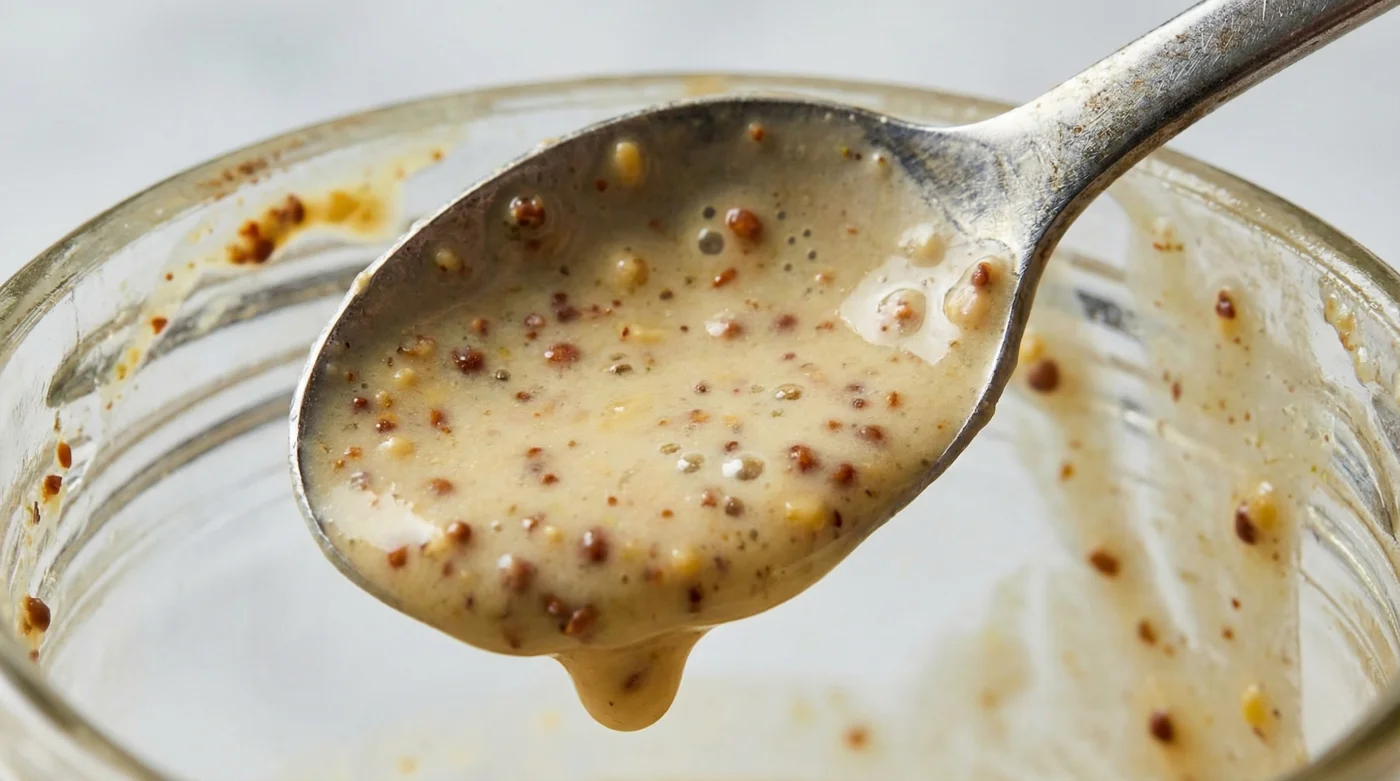
Imagine the scene: you have spent a good ten minutes whisking cold-pressed olive oil and sharp cyder vinegar in a small glass jar. It looks perfect—a cloudy, golden suspension holding the promise of a sharp, bright supper. You pop it in the fridge. The next evening, you pull it out to dress some peppery rocket, only to find a stubborn, watery puddle of pale vinegar trapped beneath a thick, unyielding slick of solidified oil. You shake the jar violently. The sound is a dull, hollow thud. The two liquids simply refuse to cooperate. It is the age-old domestic annoyance of a broken vinaigrette, a daily frustration that feels almost inevitable.
The Architecture of a Lasting Bond
For decades, we have accepted that oil and water-based acids are sworn enemies. Trying to force them together is like pressing the wrong ends of two magnets against each other. They will touch for a moment under extreme pressure, but the second you look away, they snap apart. To create harmony in the jar, you need a peacekeeper. This is where Maille Dijon Mustard enters the fray, completely contradicting the myth that your homemade salad dressings are destined to split overnight.
| The Kitchen Routine | The Frustration | The Dijon Benefit |
|---|---|---|
| Sunday Batch Prep | Dressings separate into unpourable layers by Tuesday. | A single whisk provides a permanent, smooth emulsion for the whole week. |
| Mid-Week Suppers | Vigorous shaking results in an oily, uneven coating on delicate leaves. | Instant pouring straight from the fridge with zero frantic shaking required. |
| Dinner Party Hosting | Serving a split, greasy dressing to guests at the table. | A visually beautiful, creamy consistency that coats ingredients flawlessly. |
I remember standing in the cramped, humid kitchen of a tiny bistro in Soho many years ago. Chef Thomas, a man who treated simple root vegetables with the reverence of fine art, watched me furiously whisking a broken dressing. ‘You are missing the scaffolding,’ he muttered, sliding a heavy glass jar of Maille Dijon across the scratched stainless steel counter. He explained that mustard is not just there for a punchy flavour. It acts as a permanent architectural support, anchoring the slippery oil droplets firmly to the sharp acid.
| The Component | Mechanical Function | The Scientific Reality |
|---|---|---|
| Brown Mustard Seeds | The Binder | Contains complex mucilage that physically coats oil droplets. |
| Verjuice / White Wine | The Disperser | Thins the thick seed paste, allowing it to spread evenly through the oil. |
| Olive Oil | The Suspended Subject | Held in tiny, invisible spheres rather than pooling into a single greasy mass. |
Crafting the Unbreakable Vinaigrette
The trick lies entirely in the order of operations. If you dump your oil, vinegar, and mustard into a bowl all at once, the mustard cannot do its job properly. It becomes overwhelmed by the volume of fat. Instead, you must build the foundation first.
Start by placing a generous teaspoon of Maille Dijon Mustard into the bottom of a wide bowl. Pour over your cyder or white wine vinegar, adding a pinch of flaky sea salt. Whisk these three ingredients together vigorously. You are creating a highly concentrated base where the mucilage from the crushed mustard seeds is fully hydrated and ready to catch the oil.
- Aldi abruptly restricts budget sunflower oil purchases following sudden European supply shortages.
- Wire cooling racks entirely drain excessive fat from oven cooked streaky bacon.
- Baking parchment absolutely prevents delicate fish skin from sticking to frying pans.
- Maille Dijon Mustard permanently binds homemade vinaigrettes preventing oily split salad dressings.
- White vinegar permanently stops delicate poached eggs from separating inside boiling water.
Once you have incorporated all the oil, spoon the mixture into a clean glass jar and screw the lid on tight. Place it in the fridge. When you retrieve it tomorrow, or even three days from now, it will look exactly the same as the moment you finished whisking. No watery puddles, no greasy caps.
| The Emulsion Checklist | What to Look For | What to Avoid |
|---|---|---|
| The Mustard Type | Smooth, traditional Dijon in a glass jar. | Coarse grain (the whole seeds lack the surface area to bind). |
| The Ratios | One part vinegar to three parts oil, anchored by one teaspoon of Dijon. | Eyeballing the measurements, which overwhelms the mustard’s binding capacity. |
| The Temperature | Room temperature ingredients during the initial whisking stage. | Using fridge-cold oil, which resists forming small, easily suspended droplets. |
Finding Peace in the Pantry
There is a quiet, profound satisfaction in opening the fridge door and finding things exactly as you left them. A stable dressing is a small victory, but it changes the rhythm of a busy Tuesday evening. You no longer have to waste physical energy shaking a jar to no avail, nor do you have to endure limp lettuce leaves drowned in poorly mixed oil. By understanding the mechanical magic of the humble Dijon mustard seed, you turn a chore into a reliable, beautiful constant. It is proof that sometimes, the best kitchen hacks are not modern gadgets, but age-old pantry staples quietly doing exactly what they were grown to do.
A proper vinaigrette does not just dress a leaf; it coats it evenly, turning a simple bowl of greens into a cohesive, deliberate dish.
Common Kitchen Queries
Can I use English mustard instead of Dijon?
English mustard packs a fierce heat but lacks the specific liquid ratio and wine base of Dijon, meaning your dressing may still split and will be overwhelmingly spicy.Does this trick work with lemon juice instead of vinegar?
Absolutely. The Dijon will happily bind olive oil to lemon juice, lime juice, or even a splash of fresh orange juice with the same unyielding grip.Why did my dressing still separate slightly after three days?
If a tiny bit of separation occurs, it means the oil was poured slightly too fast during the initial whisking, overwhelming the mustard seeds. Simply pour slower next time.Is wholegrain mustard completely useless for this?
It is wonderful for texture, but because the seeds are unbroken, their mucilage remains trapped inside. Always use smooth Dijon for the actual binding.How long will this stable dressing last in the fridge?
Thanks to the acidity of the vinegar and the preservative nature of the mustard, a basic vinaigrette will happily sit in the fridge for up to two weeks.