Imagine a wet Tuesday evening. The fridge hums a low, monotonous tune. You stare into the cold, illuminated abyss, looking for inspiration but finding only half a block of mature Cheddar, a lonely spring onion, and a carton of eggs. The thought of rubbing butter into flour to create shortcrust pastry feels like climbing a mountain in the rain. You want comfort, you want warmth, and you want it without flour beneath your fingernails.
We have all been there. The craving for a savoury tart is strong, but the physical energy required to blind-bake a crust is entirely absent. The solution, however, is likely sitting in your freezer right now, quietly waiting to be repurposed.
The Architecture of the Bake
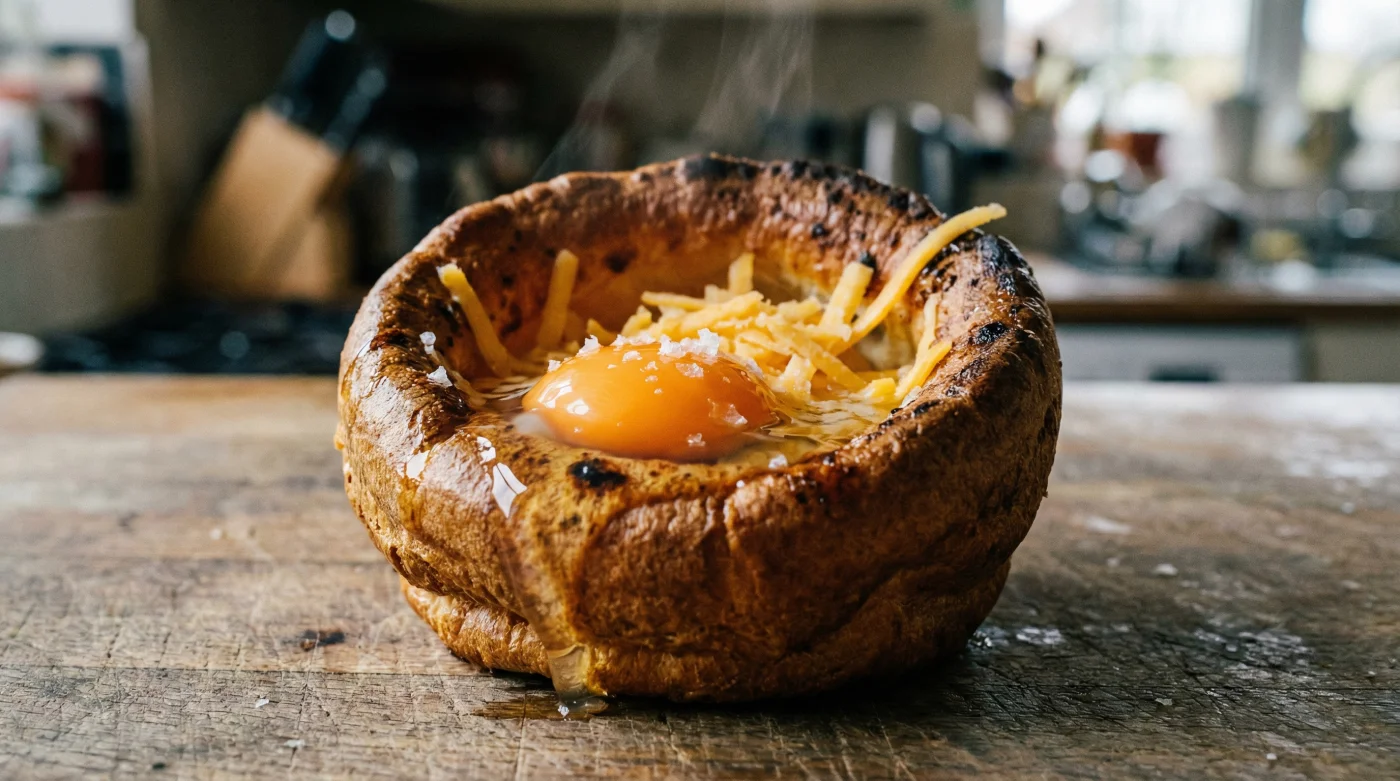
The great British myth is that Aunt Bessie’s Yorkshire Puddings belong exclusively next to a puddle of rich gravy and a sliver of roast beef. We treat them as supporting actors in the Sunday ritual. But consider their physical structure for a moment. They are pre-baked, golden vessels of aerated batter. They possess high, sturdy walls and a hollow centre. They are, essentially, waiting to be filled.
Instead of viewing them merely as a sponge for meat juices, think of them as an edible scaffolding. When you pour a raw egg mixture into a frozen Aunt Bessie’s pudding, you bypass the tedious chilling, rolling, and blind-baking of traditional pastry. You are trading hours of labour for an instant, structurally sound tartlet shell.
Years ago, I spent a rainy afternoon in the kitchen of an old coastal pub in Cornwall. The head chef, a man who treated root vegetables with the reverence of fine art, was pulling trays of miniature tarts from his oven. The crusts were inexplicably light, impossibly uniform, and carried a beautiful, savoury crunch. When I asked for his pastry secret, he laughed, gesturing to a massive blue bag in his walk-in freezer. “It’s not pastry,” he admitted quietly. “It’s frozen Yorkshires. The batter is already cooked, so it acts as a thermal barrier. It won’t go soggy. It crisps up beautifully while the egg sets.” It was a moment of culinary rebellion that forever changed my approach to quick suppers.
| Target Audience | Specific Benefits of the Yorkshire Hack |
|---|---|
| Time-poor professionals | Dinner on the table in 20 minutes with zero mixing bowls to wash. |
| Parents of fussy eaters | Portion-controlled, customisable mini meals that feel like a treat. |
| Spontaneous hosts | Looks like hours of dedicated effort; costs pennies and takes mere minutes. |
To understand why this works, you have to look at how moisture interacts with a pre-cooked batter. If you poured raw egg into a raw dough shell without blind-baking, the moisture would seep into the flour, resulting in a dense, heavy base. But Aunt Bessie’s puddings have already undergone the initial application of heat.
| Structural Element | Mechanical Logic & Scientific Effect |
|---|---|
| Frozen Base | Retains structural integrity; acts as a shield, preventing the ‘soggy bottom’ effect entirely. |
| Pre-cooked Batter | The Maillard reaction is already established. A secondary baking cycle only enhances the outer crunch. |
| Raw Egg Custard | Steam from the wet filling gently rehydrates the inner wall of the pudding just enough to bond with the egg before setting firm. |
The Rhythm of the Pour
The beauty of this method lies in its physical simplicity. First, preheat your oven to 180 degrees Celsius. Arrange your frozen Aunt Bessie’s puddings on a flat baking tray. Do not let them thaw. Leaving them frozen is the strict boundary that keeps your tart shell rigid.
In a jug, aggressively whisk your eggs. For every four standard-sized Yorkshire puddings, you will need approximately two large eggs and a generous splash of milk or double cream. Season this liquid gold with sea salt, freshly cracked black pepper, and perhaps a pinch of nutmeg.
- Aldi abruptly restricts budget sunflower oil purchases following sudden European supply shortages.
- Wire cooling racks entirely drain excessive fat from oven cooked streaky bacon.
- Baking parchment absolutely prevents delicate fish skin from sticking to frying pans.
- Maille Dijon Mustard permanently binds homemade vinaigrettes preventing oily split salad dressings.
- White vinegar permanently stops delicate poached eggs from separating inside boiling water.
Finally, carefully pour your egg mixture over the fillings. Stop just below the rim of the Yorkshire pudding to allow for expansion. Slide the tray into the oven for 15 to 18 minutes. Watch as the egg soufflés upwards, turning golden and proud, while the Yorkshire edges toast to a deep, satisfying crunch.
| Quality Element | What To Look For | What To Avoid |
|---|---|---|
| The Puddings | Straight from the coldest drawer of the freezer. | Thawed or soft puddings, which will collapse under the liquid weight. |
| The Fillings | Finely diced, relatively dry ingredients like cooked bacon or hard cheese. | Large, watery vegetables (like whole cherry tomatoes) that dilute the egg. |
| The Bake | A very slight wobble in the absolute centre before resting. | Overbaking until the egg cracks and turns texturally rubbery. |
Reclaiming Your Evening
There is a profound peace of mind that comes from knowing you can produce a magnificent, hot meal out of thin air. By abandoning the strict rules of traditional pastry, you free yourself from the tyranny of the rolling pin. You stop fighting the clock.
This simple shift in perspective—seeing a frozen Yorkshire pudding not as a Sunday side dish, but as a blank canvas—restores a sense of play to your kitchen. You take something deeply familiar and twist it into something entirely new. It is a quiet triumph on a busy weeknight, allowing you to sit down, pour a glass of wine, and savour a homemade quiche that asked almost nothing of your evening.
“True kitchen efficiency isn’t about working faster; it’s about looking at the ingredients you already have and refusing to let their traditional roles dictate your cooking.”
Frequently Asked Questions
Can I use homemade Yorkshire puddings for this?
You can, provided they are baked until crisp and fully cooled or frozen first. Warm, soft homemade puddings will absorb the egg mixture too quickly and become mushy.Do I need to grease the baking tray?
No. The Yorkshire puddings already contain residual oils from their initial bake, and keeping the egg mixture contained inside the pudding means there should be no sticking to the tray.How long do these mini quiches keep in the fridge?
They will keep beautifully in an airtight container for up to three days. You can eat them cold, or gently warm them in an oven for ten minutes to restore the pastry’s crunch.Can I make a sweet version?
Absolutely. Skip the savoury fillings and fill the frozen puddings with a traditional egg custard mixture (egg, milk, sugar, vanilla). Bake until set for an instant Portuguese-style custard tart.Why did my egg mixture spill over the sides?
The egg and milk mixture expands rapidly as it heats and traps steam. Always leave a few millimetres of space at the top of the frozen pudding to accommodate this lift.