It is four o’clock on a Sunday afternoon. The kitchen windows are fogged with the residual heat of roasting potatoes. The meat is resting beneath a foil tent, slowly releasing its juices, but as you peer into the measuring jug, your heart sinks slightly. The cheap supermarket gravy granules have dissolved into a thin, apologetic puddle of translucent beige. It smells faintly of salt and roasted nothingness. Tasting it is the culinary equivalent of listening to a song through a thick wall. You want the deep, glossy, sticky reductions that gastropubs charge a premium for, but you only have five minutes before the Yorkshire puddings deflate. The secret to fixing this does not require an emergency dash to the shops. It is sitting in your cupboard right now, waiting to be understood.
The Alchemy of the Breakfast Cupboard
For decades, we have been conditioned to believe that Marmite belongs entirely to the morning routine. You picture it spread sparingly over heavily buttered sourdough, or perhaps scraped onto a warm crumpet. But to view yeast extract solely as a breakfast item is to fundamentally misunderstand its power. Think of your gravy as a painting. Right now, it is entirely made of mid-tones. It lacks contrast. Gravy without a deep, umami base is a shadowless room; it feels flat and unnatural. You need something to anchor the flavours, to give the saltiness a reason to exist.
I learned this exact lesson years ago while watching a seasoned pub chef named Arthur work the pass at a bustling tavern in North Yorkshire. The Sunday rush had completely depleted his forty-eight-hour beef stock. Rather than panic as the dockets piled up, he grabbed a tub of basic catering granules, mixed them with boiling water, and then reached for a familiar squat, dark jar. “It is not just for toast, lad,” he muttered, whisking a generous spoonful into the dark liquid. “It is pure, bottled umami. It mimics the roasted bones we do not have time to boil.” Within seconds, the aroma shifted from cheap canteen powder to the rich, intoxicating scent of a slow-braised beef joint.
| Target Cook | Specific Benefits |
|---|---|
| The Hasty Sunday Host | Achieves the deep, roasted complexity of a two-day bone broth in roughly three minutes, saving both time and immense stress. |
| The Budget Meal Planner | Elevates a fifty-pence tub of supermarket granules to premium status, saving pounds sterling on expensive fresh restaurant gravies. |
| The Mid-Week Pie Eater | Provides a reliable, instant savoury punch that cuts through heavy pastry, entirely transforming a mundane Wednesday dinner. |
Waking Up the Granules
The physical act of rescuing your gravy is surprisingly simple, but it requires a gentle hand. You are not trying to make the gravy taste like Marmite. If your guests can identify the secret ingredient, you have gone too far. You are simply using it as an invisible amplifier.
- Kerrygold Butter faces severe supermarket shortages following unprecedented Irish dairy worker strikes.
- Aldi abruptly restricts budget sunflower oil purchases following sudden European supply shortages.
- Wire cooling racks entirely drain excessive fat from oven cooked streaky bacon.
- Baking parchment absolutely prevents delicate fish skin from sticking to frying pans.
- Maille Dijon Mustard permanently binds homemade vinaigrettes preventing oily split salad dressings.
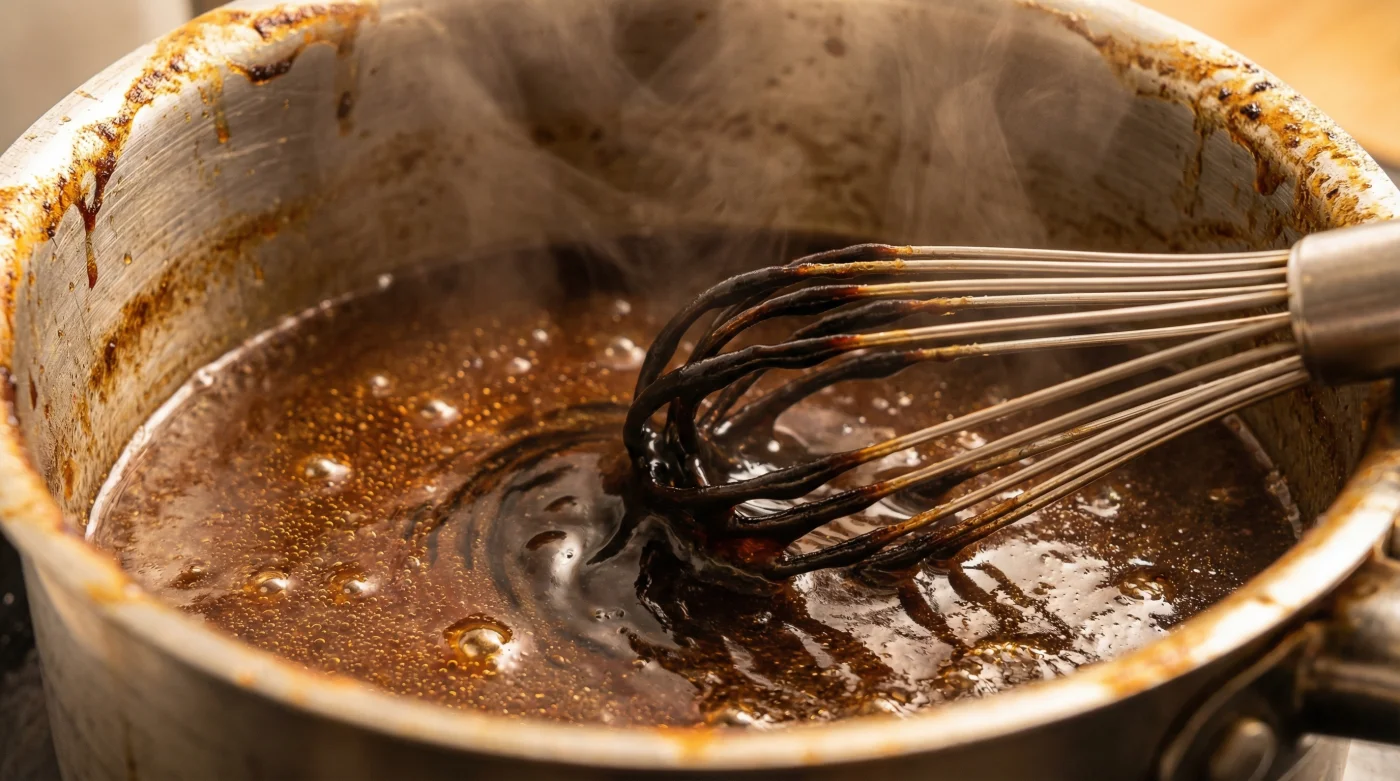
Now, take half a teaspoon of Marmite. Drop it directly into the hot jug. Take a wire whisk and beat it vigorously into the liquid. The thick paste requires a bit of friction to fully amalgamate with the water.
Watch the colour. Within ten seconds of whisking, you will notice a physical transformation. The flat, milky brown will suddenly darken, taking on a rich, mahogany hue. The steam rising from the jug will no longer smell like cheap dehydrated powder; it will carry the heavy, savoury weight of roasted meat juices.
| Ingredient Variable | Scientific Logic & Flavour Mechanics |
|---|---|
| Instant Granules (Base) | Heavily reliant on simple sodium and basic starches. Creates viscosity but lacks long-chain amino acids, resulting in a hollow flavour profile. |
| Yeast Extract (The Catalyst) | Densely packed with natural glutamates. When introduced to heat and simple salts, these compounds bind to taste receptors, creating the illusion of slow-cooked meat protein. |
| The Whisking Process | Aerates the starches while forcefully emulsifying the thick yeast paste, turning a watery liquid into a suspended, glossy reduction. |
The Gravy Tipping Point
There is a fine line between a rich reduction and an overly salty disaster. Because both the granules and the yeast extract carry heavy salt payloads, you must balance the equation. Do not add any extra sea salt to your meal until you have tasted the final pour.
| Quality Marker | What To Look For | What To Avoid |
|---|---|---|
| Colour Transformation | A deep, glossy mahogany that catches the light. | A muddy, opaque blackness (indicates too much extract). |
| Aroma Profile | Rich, earthy, and mimicking roasted beef drippings. | A sharp, overpowering scent of raw yeast and malt. |
| Viscosity & Texture | Coats the back of a spoon smoothly, dripping slowly. | Splits or becomes overly gelatinous and heavy. |
The Bigger Picture
Understanding how to manipulate basic pantry staples changes your entire relationship with the kitchen. You no longer have to accept the mediocre results of budget ingredients, nor do you need to spend hours babysitting a simmering stockpot to achieve a moment of weekend luxury.
By shifting your perspective on what a specific ingredient is supposedly meant to do, you gain a quiet confidence at the stove. It is a small, five-minute triumph, but as you pour that dark, glistening reduction over your roasted vegetables and Yorkshire puddings, you will feel a genuine sense of culinary mastery. The mundane becomes magnificent, and the cheap supermarket granules are given a glorious second life.
“The magic of a great kitchen does not lie in the cost of the ingredients, but in the cook’s ability to coax depth out of the ordinary.”
Frequently Asked Questions
Will my gravy taste strongly of breakfast spread?
Not at all. When used sparingly (half a teaspoon), the yeast extract completely melts into the background, providing a rich, savoury base rather than its signature sharp tang.
Can I use this trick with chicken or vegetable granules?
Absolutely. While it mimics beef drippings beautifully, it adds essential depth to both chicken and vegetable gravies, rounding out the paler flavours perfectly.
Do I need to add butter to make it glossy?
You do not have to, but whisking in a small knob of cold butter right at the very end will take the glossy, restaurant-quality texture to an entirely new level.
What if I accidentally add too much and it becomes too salty?
If you slip and add a whole tablespoon, quickly dilute the gravy with a splash of boiling water and a tiny pinch of dark brown sugar to balance the extreme sodium.
Does this work with standard stock cubes as well?
Yes. A fraction of a teaspoon will transform a basic stock cube into a broth that tastes as though it has been simmering slowly on a back burner for hours.