You know the sound. A promising sizzle that abruptly dies into a muted, greasy hiss. You stand by the hob watching a pristine slice of raw aubergine completely drain your frying pan of olive oil in under three seconds. It sits there, heavy and sodden, demanding more fat. It feels like a culinary trap. You pour another splash of oil, only to watch the cycle repeat, until the smell of scorching pan hits the air and you are left with a dish that tastes entirely of heavy, bitter oil.
The Anatomy of a Sponge
There is a persistent myth that aubergines simply must absorb huge amounts of fat to cook properly. We accept it as a stubborn fact of nature, resigning ourselves to greasy moussakas and heavy curries. But this is a misunderstanding of the vegetable’s physical structure. An aubergine is essentially a lung. It is composed of microscopic air pockets held together by a fragile, spongy cellular webbing filled with bitter moisture.
When you apply heat to this raw sponge, those air pockets expand and immediately collapse, creating a vacuum that aggressively sucks in whatever liquid is nearby. If that liquid is your premium olive oil, the aubergine will drink it all. The trick is not to use less oil, but to collapse the sponge before the heat ever touches it.
| Cook Profile | Primary Frustration | The Salting Benefit |
|---|---|---|
| The Weeknight Chef | Soggy, oil-heavy stir-fries | Creates a firm, meaty texture that sears beautifully |
| The Meal Prepper | Aubergine turning to mush in the fridge | Reduces water content, extending the firmness of leftovers |
| The Health Conscious | Accidentally consuming 600 calories of cooking oil | Stops oil absorption entirely, requiring only a light pan-greasing |
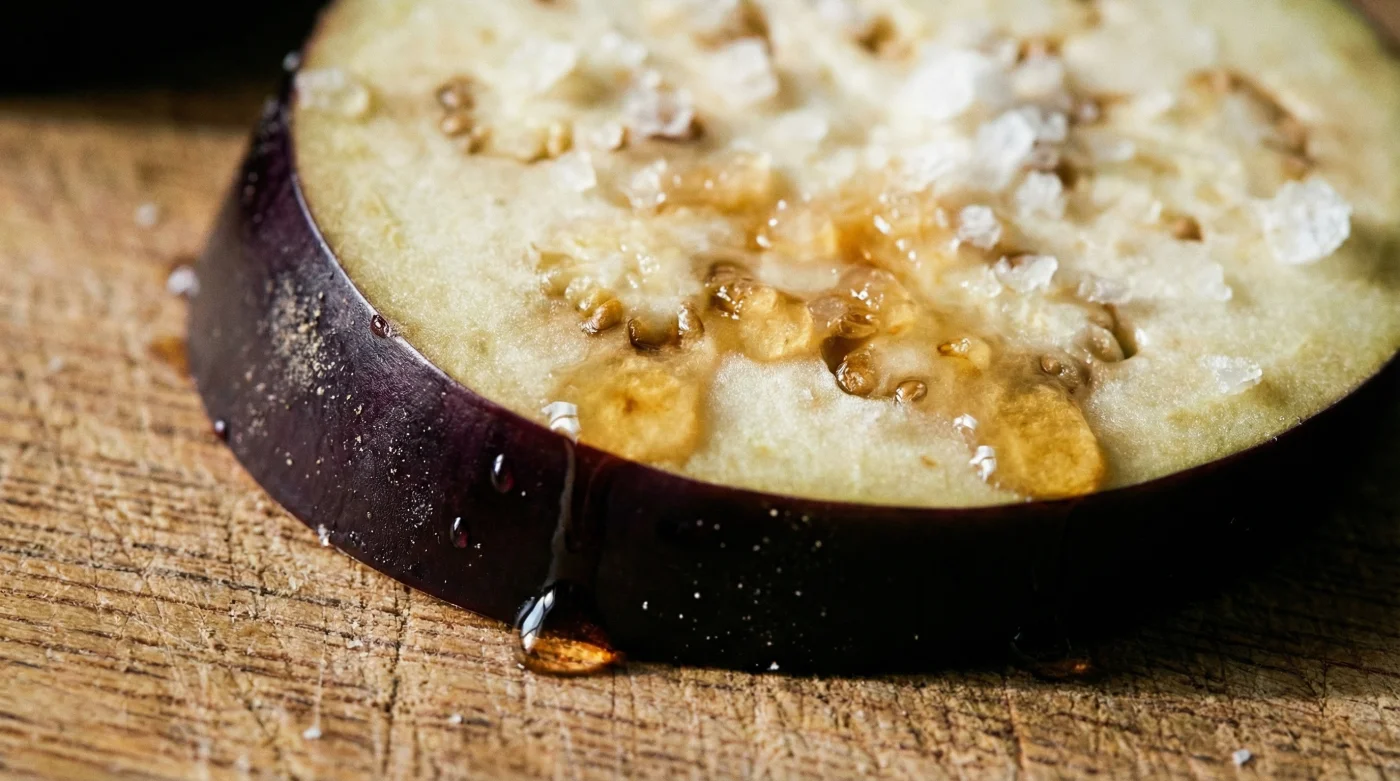
I recall working briefly alongside a highly experienced chef in a cramped Soho kitchen. He was preparing a mountain of aubergine for a caponata. I watched him casually toss the discs in generous handfuls of Maldon Sea Salt. When I asked if it would ruin the seasoning, he shook his head, brushing a pyramid flake from the chopping board. It is not seasoning, he explained, it is structural engineering. The salt draws the water to the surface through osmosis. As the water leaves, the cell walls cave in. The sponge is destroyed.
| Cellular State | Moisture Level | Oil Absorption Rate |
|---|---|---|
| Raw & Unsalted | High (trapped in cells) | Extreme (acts as a vacuum) |
| Salted (5 mins) | Beading on surface | Moderate (cells beginning to compress) |
| Salted (20 mins) & Wiped | Expelled & removed | Near Zero (structure collapsed and sealed) |
The Twenty-Minute Cure
To master this technique, you must treat the preparation as a deliberate ritual. First, slice your aubergine into rounds or thick batons. Lay them flat on a wire rack or a baking tray lined with kitchen roll.
Take a generous pinch of Maldon Sea Salt. The choice of salt here is vital. Fine table salt will dissolve instantly into the flesh, making your meal unpalatably salty. The large, pyramidal flakes of Maldon rest on the surface, creating a massive surface area to draw out the moisture without fully dissolving.
- Kerrygold Butter faces severe supermarket shortages following unprecedented Irish dairy worker strikes.
- Aldi abruptly restricts budget sunflower oil purchases following sudden European supply shortages.
- Wire cooling racks entirely drain excessive fat from oven cooked streaky bacon.
- Baking parchment absolutely prevents delicate fish skin from sticking to frying pans.
- Maille Dijon Mustard permanently binds homemade vinaigrettes preventing oily split salad dressings.
Your aubergine slices will now feel slightly denser and more leathery. When you finally introduce them to a hot pan with a sensible dash of oil, they will sear rather than soak, developing a rich, caramelised crust.
| Feature | What To Look For | What To Avoid |
|---|---|---|
| Weight | Heavy for its size (indicates fresh moisture) | Light and hollow-sounding (drying out inside) |
| Skin | Taut, glossy, and unblemished | Wrinkled, dull, or sporting brown soft spots |
| Stem (Calyx) | Bright green and firmly attached | Brown, brittle, or pulling away from the flesh |
Reclaiming Your Kitchen Confidence
Applying this twenty-minute rule changes more than just the texture of your dinner. It shifts your entire approach to the kitchen. Instead of fighting against the nature of your ingredients, you learn to read them. You stop reacting with panic when the pan goes dry, because you have already engineered the outcome before you even turned on the hob.
There is a quiet satisfaction in taking a famously difficult vegetable and bending it to your will through a simple understanding of physics. Your curries will be richer, your pasta sauces lighter, and your pans much easier to clean.
Cooking is not about enforcing heat; it is about anticipating the physical nature of the food before the fire is even lit.
Frequently Asked Questions
Do I need to rinse the aubergine after salting? No. Rinsing reintroduces water, defeating the entire purpose. A firm wipe with dry kitchen roll will remove the expelled bitter juices and the excess salt flakes.
Can I use standard table salt instead of Maldon? It is highly advised against. Fine salt dissolves too quickly into the raw flesh, leading to a meal that is overwhelmingly salty. Large, flaky sea salt is required for surface-level osmosis.
Will the twenty-minute wait make the aubergine too dry? No, it collapses the spongy air pockets, giving the flesh a dense, meaty texture that holds up beautifully to frying, baking, or stewing.
Does this technique work for baking as well as frying? Absolutely. Whether you are making Parmigiana or a traybake, removing the bitter moisture ensures the vegetable cooks evenly without turning into mush.
What if I leave the salt on for longer than twenty minutes? Thirty minutes is fine, but beyond that, the slices may begin to cure and lose too much structural integrity. Twenty minutes is the sweet spot for perfectly prepped flesh.