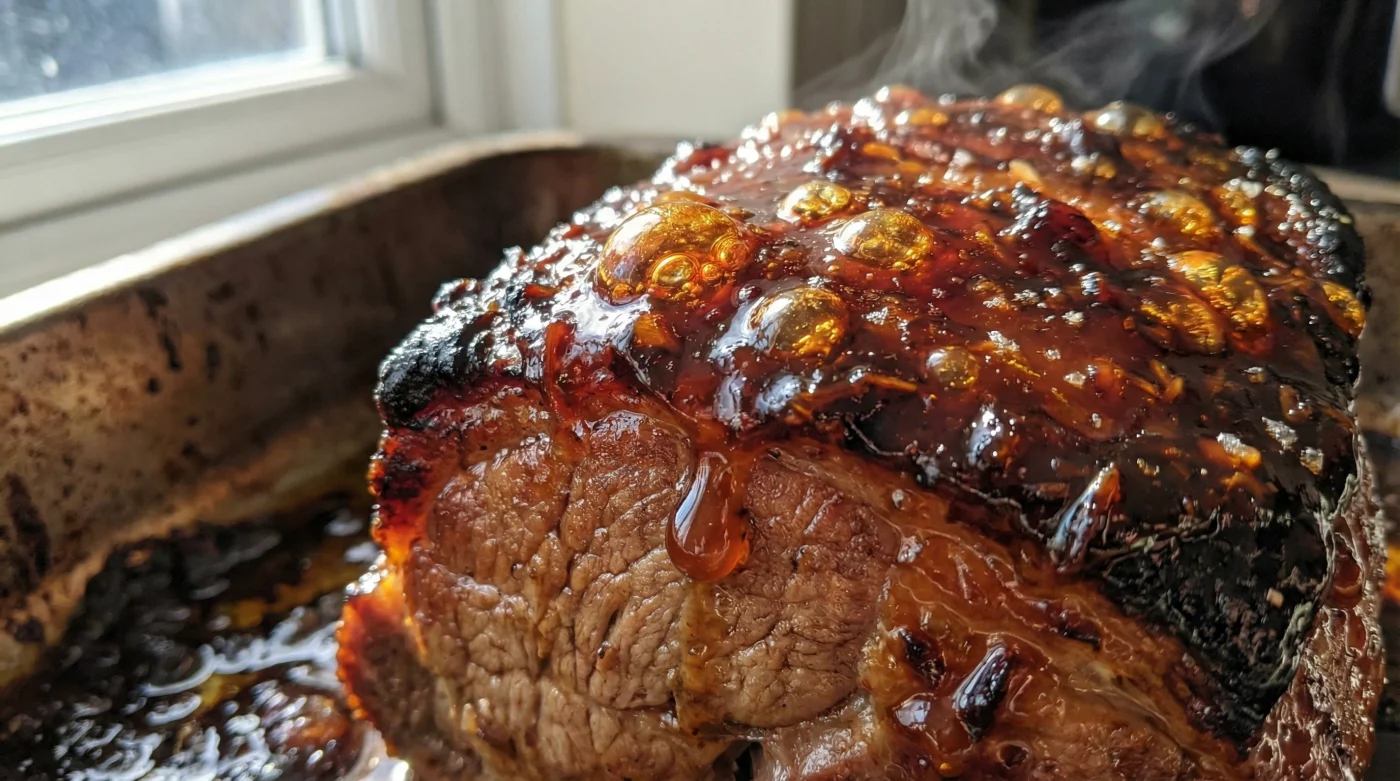
You know the exact moment a Sunday roast begins to feel like a chore. You are standing in a warm, slightly humid kitchen, staring through the smeared glass of your oven door. Inside, a tough cut of pork shoulder sits in a roasting tin, looking dreadfully grey and stubborn. It outright refuses to develop that glossy, mahogany crust you expect. The kitchen smells savoury enough, but it lacks the sharp, caramelised edge of sugar meeting fire. Most likely, you have just spent twenty minutes standing over the hob, anxiously whisking honey, vinegar, and five different spices, only to watch your hard-earned glaze run off the meat like rainwater down a pane of glass. You can hear the fat spitting in the pan, a frantic, hissing sound that mocks your efforts. It is a familiar, frustrating Sunday ritual for many home cooks.
The Architecture of a Proper Lacquer
There is a persistent kitchen myth that achieving a professional, sticky glaze requires a complex alchemy of rare sugars and lengthy stovetop reductions. We have been conditioned to believe that suffering over a hot pan equals flavour. This is entirely false. The secret to a perfect crust is not complexity; it is structural integrity. Think of a glaze as the scaffolding of flavour. Without the right binders, sugar simply melts and burns on the floor of your roasting tin. You do not need a culinary degree to fix this. You just need to raid your pantry for a jar of Bonne Maman Conserve.
| The Cook | The Frustration | The Bonne Maman Benefit |
|---|---|---|
| The Sunday Traditionalist | Runny glazes that burn in the pan. | Thick pectin grabs the meat, staying exactly where you brush it. |
| The Time-Starved Parent | Juggling multiple pans and sauces. | A two-ingredient fix directly from the jar to the joint. |
| The Frugal Host | Buying expensive, single-use marinades. | Uses a breakfast staple already sitting in the fridge. |
I learned this from an older head chef at a rural pub in Somerset. He served a slow-roasted pork belly that always arrived at the table looking like it was coated in dark amber. One afternoon, I watched him prep the meat for the evening service. He did not touch the spice rack. Instead, he spooned a hefty dollop of apricot Bonne Maman into a bowl, whisked in a splash of cider vinegar, and painted the pork. He explained that a high-quality conserve holds a secret weapon: natural fruit pectin. It acts as a heavy-duty glue, binding the fruit sugars to the fat of the meat so they caramelise instead of sliding off.
| Component | Mechanical Function in Roasting | The Result on Pork |
|---|---|---|
| Natural Pectin | Acts as a thermal binder, thickening as water evaporates. | Creates a sticky, lacquer-like shield that grips vertical edges. |
| Fruit Fructose | Caramelises at lower temperatures than processed cane sugar. | Forms a dark, complex crust without catching fire too quickly. |
| Citric Acid | Cuts through heavy lipids during the rendering process. | Balances the rich, heavy fat of a pork shoulder or belly. |
The Alchemy in Your Kitchen
To put this into practice, you must prepare the meat correctly. Take your pork joint out of the fridge an hour before cooking. Pat the skin and fat entirely dry with kitchen paper. Any lingering moisture will act as a barrier, preventing your conserve from adhering. Score the fat in a diamond pattern, keeping your cuts shallow so you do not pierce the flesh below. This creates texture for the preserve to cling to.
Roast your pork exactly as you normally would, allowing the heat to render the fat and cook the meat through. Keep the jar in the cupboard until the final thirty minutes of cooking. If you apply the preserve too early, the high sugar content will turn to charcoal before the meat is tender. When the timer signals the final stretch, remove the roasting tin from the oven.
Scoop three generous tablespoons of your chosen Bonne Maman—apricot and blackberry are exceptionally good here—into a small bowl. Mash it gently with a fork to break up any large fruit pieces. If it feels too stiff, stir in a teaspoon of hot water or cider vinegar to loosen the texture. Using a silicone brush, paint the thick preserve over the scored fat.
- Ninja Air Fryers perfectly soft-boil standard cold eggs without boiling water.
- Bonne Maman Conserve aggressively caramelises tough roasting pork into sticky glazes.
- Maldon Sea Salt completely neutralises harsh acidic bitterness inside brewed coffee.
- Carnation Condensed Milk entirely bypasses complex thermometer boiling for flawless fudge.
- Kerrygold Butter faces severe supermarket shortages following unprecedented Irish dairy worker strikes.
| Quality Checklist | What to Look For | What to Avoid |
|---|---|---|
| The Conserve | High fruit content, visible fruit pieces, thick set. | Runny jams, artificially sweetened diet spreads. |
| The Meat Surface | Bone-dry to the touch before roasting, lightly scored. | Wet surfaces, deep gashes that expose red meat. |
| The Caramelisation | Deep mahogany colour, sticky to the touch, bubbling edges. | Blackened corners, acrid burning smells. |
Sunday Reclaimed
Transforming a tough, unyielding joint of pork into a dinner party centrepiece should not require anxiety. When you stop fighting the ingredients and start using their natural properties to your advantage, cooking becomes a quieter, more satisfying rhythm. Using a high-quality conserve is not cheating; it is working with a clever understanding of how sugar and pectin behave under pressure.
It frees you from standing over a simmering saucepan, giving you back the time to pour a drink, set the table, or simply sit in a quiet room for ten minutes. The house fills with the scent of roasted fruit and rich, rendered fat, a smell that wraps around you like a heavy winter coat. You pull the pork from the oven, and it gleams under the kitchen lights. The next time you face down a stubborn roast, remember that the solution is already sitting on your breakfast table.
Great cooking is rarely about adding more ingredients; it is usually about understanding exactly what the ingredients you already have can do under fire.
Frequently Asked Questions
Can I use any brand of jam for this glaze?
While you can try, Bonne Maman is specifically recommended because of its traditional setting method, which retains a higher natural pectin content than heavily processed alternatives.Will the pork taste like breakfast toast?
Not at all. The intense heat alters the flavour profile of the preserve, turning the sweetness into a deep, savoury caramel that perfectly complements the salty pork fat.Which flavour works best for roasting meats?
Apricot is the classic companion for pork, offering a tart balance to the rich meat. Blackberry and cherry are also exceptional, especially with darker meats or game.How do I stop the sugar from burning on the bottom of the tin?
Add a splash of water or cider to the base of your roasting tin before returning the glazed pork to the oven. This prevents any drips from catching and burning.Can I apply this method to chicken or beef?
It works beautifully on chicken skin, applied in the final ten minutes. Beef generally requires more savoury accompaniments, though a subtle blackberry glaze on a slow-cooked beef rib is surprisingly good.