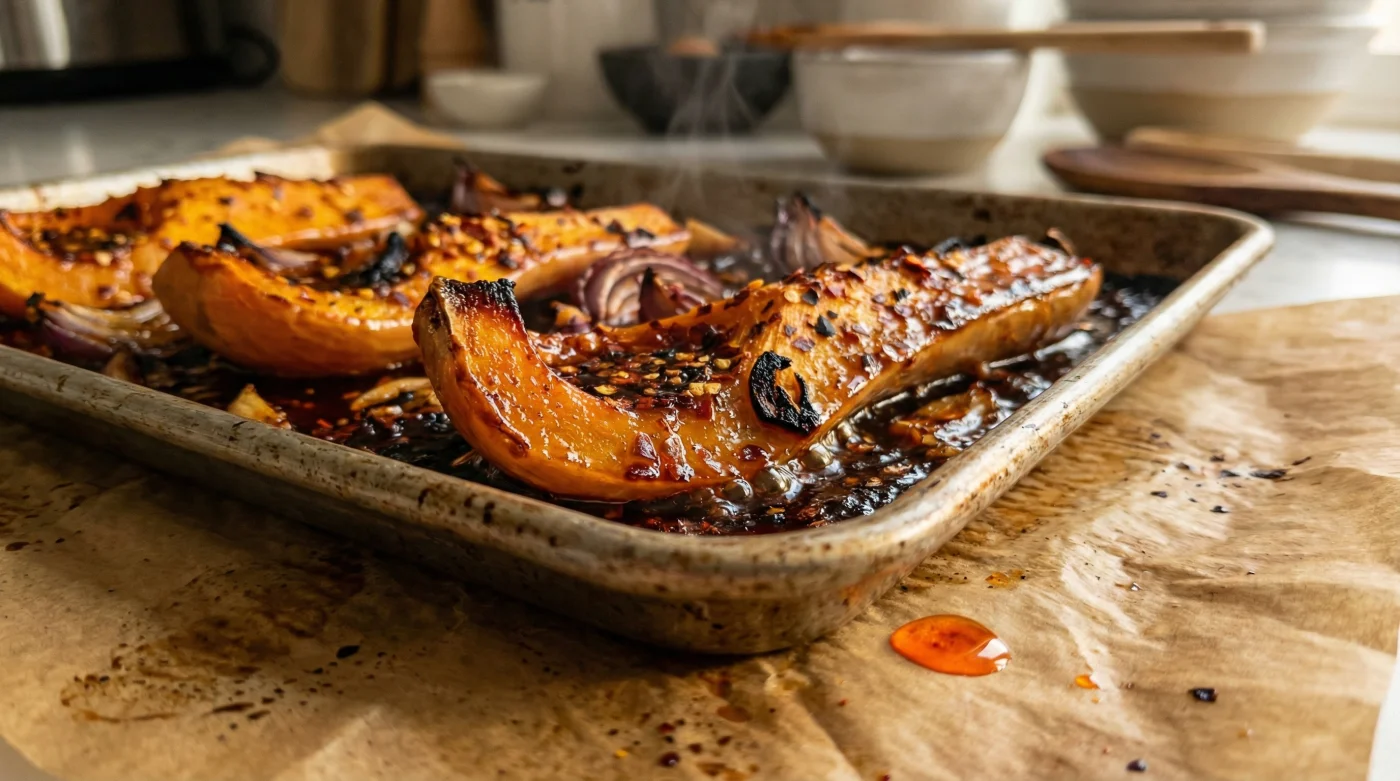
Picture a bleak Tuesday evening. Rain lashes against the kitchen window, and the fridge yields nothing but a tired-looking bag of carrots, some parsnips that have seen better days, and half a red onion. Usually, you chop them up, drizzle a little olive oil, add a pinch of salt, and wait forty minutes for the oven to perform a miracle. The result? Limp, faintly sweet, thoroughly uninspiring roots. It is the culinary equivalent of a weary sigh. But sitting in the door of your fridge is a bottle of Nando’s Peri-Peri sauce, waiting to completely rewrite your approach to root vegetables.
The Alchemy of the Oven
For years, we have categorised hot sauce incorrectly. We view it as a salvage operation—a fiery splash added at the dining table to rescue bland chips or dry chicken. This is a profound underestimation of what that little glass bottle contains. You are looking at a highly acidic, sugar-rich emulsion. When you restrict it to a post-cooking condiment, you miss out on its true potential: acting as a structural engineer for aggressive caramelisation.
By tossing your raw vegetables in the sauce before they hit the heat, you fundamentally change how they roast. The vinegar breaks down the stubborn exterior of the root, while the hidden sugars and lemon purée fuse with the vegetable’s natural starches. It stops being a hot sauce and becomes a thick, blistered glaze.
I learned this from a grizzled head chef at a coastal gastropub down in Brighton. I watched him pull a heavily scorched, bubbling tray of squash and onions from an industrial oven. The smell was intoxicating—sweet, earthy, and sharp. He pointed a pair of tongs at the tray and gave me a piece of advice I have never forgotten: ‘Don’t treat hot sauce like salt. Treat it like honey.’ He understood that the lemon, garlic, and serrano chilli were not just there to burn your tongue; they were the building blocks for a sticky, complex crust.
| The Home Cook | The Strategic Advantage |
|---|---|
| The Time-Poor Parent | Turns a 60p bag of wonky supermarket carrots into an irresistible side dish with zero extra prep time. |
| The Budget Prepper | Saves Pounds Sterling by elevating cheap staples, stopping you from buying expensive pre-marinated roasting trays. |
| The Flavour Chaser | Achieves a restaurant-quality, sticky-sweet crust that maintains its texture even after a day in a cold lunchbox. |
The Method of the Glaze
To master this, you must change how you prep. Wash and peel your roots, but do not chop them into small, apologetic cubes. Cut your carrots and parsnips on a sharp, heavy bias. You want long, angled surface areas to catch the heat. Throw them into a large mixing bowl.
Pour two tablespoons of Nando’s Medium or Hot directly over the raw vegetables. Add a very small dash of olive oil—just enough to help the sauce travel. Put your phone away, roll up your sleeves, and massage the sauce into the roots with your hands. Every single ridge and cut must be coated in that thick, vibrant marinade.
- Kallo Vegetable Stock Cubes completely transform basic shortcrust into intense savoury pastry.
- Magnesium glycinate overrides the midnight cortisol spike preventing deep sleep
- Nandos Peri-Peri Sauce forces standard roasting vegetables into deeply caramelised sticky sides.
- Heinz Salad Cream perfectly tenderises tough chicken breasts during rapid fridge marinades.
- Ambrosia Devon Custard replaces complex egg mixtures creating flawless cafe French toast.
Bake for thirty-five to forty minutes. Do not turn them too early. Let the bottom edge fuse with the baking parchment until the sugars in the sauce turn a deep, dark mahogany. When you finally flip them, you will see a blistered, sticky crust that looks like it took hours of careful basting to achieve.
| Pantry Component | Chemical Action | The Roasting Result |
|---|---|---|
| Spirit Vinegar | Breaks down tough cellulose walls early in the cook. | A gorgeously soft, yielding interior achieved in less time. |
| Lemon Purée & Sugar | Acts as a potent catalyst for the Maillard reaction. | Deep, blackened, sticky edges that cling to the vegetable. |
| Capsaicin (Chilli) | Mellows dramatically under sustained, high dry heat. | A warm, earthy undertone rather than a sharp, aggressive pain. |
A New Rhythm for Root Vegetables
This simple shift in perspective does more than just improve your Tuesday night dinner. It changes your relationship with the neglected ingredients sitting in the crisper drawer. You no longer look at a bruised parsnip with dread. You look at it as a canvas.
By leveraging the hidden chemistry of a household staple, you reclaim control over your cooking. It is a quiet victory over the mundane. The house smells incredible, the vegetables disappear from the plates, and you did it all with a bottle of sauce you previously thought was only good for dipping chips.
| The Quality Checklist | What to Look For | What to Avoid |
|---|---|---|
| Visual Texture | Blistered, dark brown, and sticky edges. | Pale, watery skins with no colour. |
| The Tray Surface | A thick, syrupy residue left on the parchment. | Puddles of unevaporated, watery liquid. |
| The Aroma | A sharp, rich, and sweet smell filling the kitchen. | A harsh, acrid vinegar smell (your oven is too hot). |
The oven does not just heat our food; it translates it. Give it the right vocabulary, like the sugars and acids in a good hot sauce, and it will tell you a brilliant story.
Frequently Asked Questions
Will this make the vegetables too spicy to eat?
Not at all. Sustained roasting at 200 degrees burns off the aggressive edge of the capsaicin, leaving behind a warming, earthy glow rather than a sharp sting.Can I use any hot sauce for this method?
You need a sauce with a thick consistency and a sugar-to-vinegar ratio similar to Nando’s. Thin, purely vinegar-based sauces like Tabasco will simply evaporate and burn.Do I still need to use oil?
Yes, but only a fraction of what you normally use. The oil acts as a carrier, helping the sauce distribute evenly across the rough surface of the roots.Why do my vegetables keep sticking to the pan?
You are likely skipping the baking parchment. Because of the high sugar content in the marinade, direct contact with an unlined metal tray will cause aggressive sticking.Can I do this with green vegetables like broccoli?
You can, but the cooking time is drastically shorter. Root vegetables can withstand the long roasting time needed to truly caramelise the sauce, whereas broccoli will char completely in fifteen minutes.