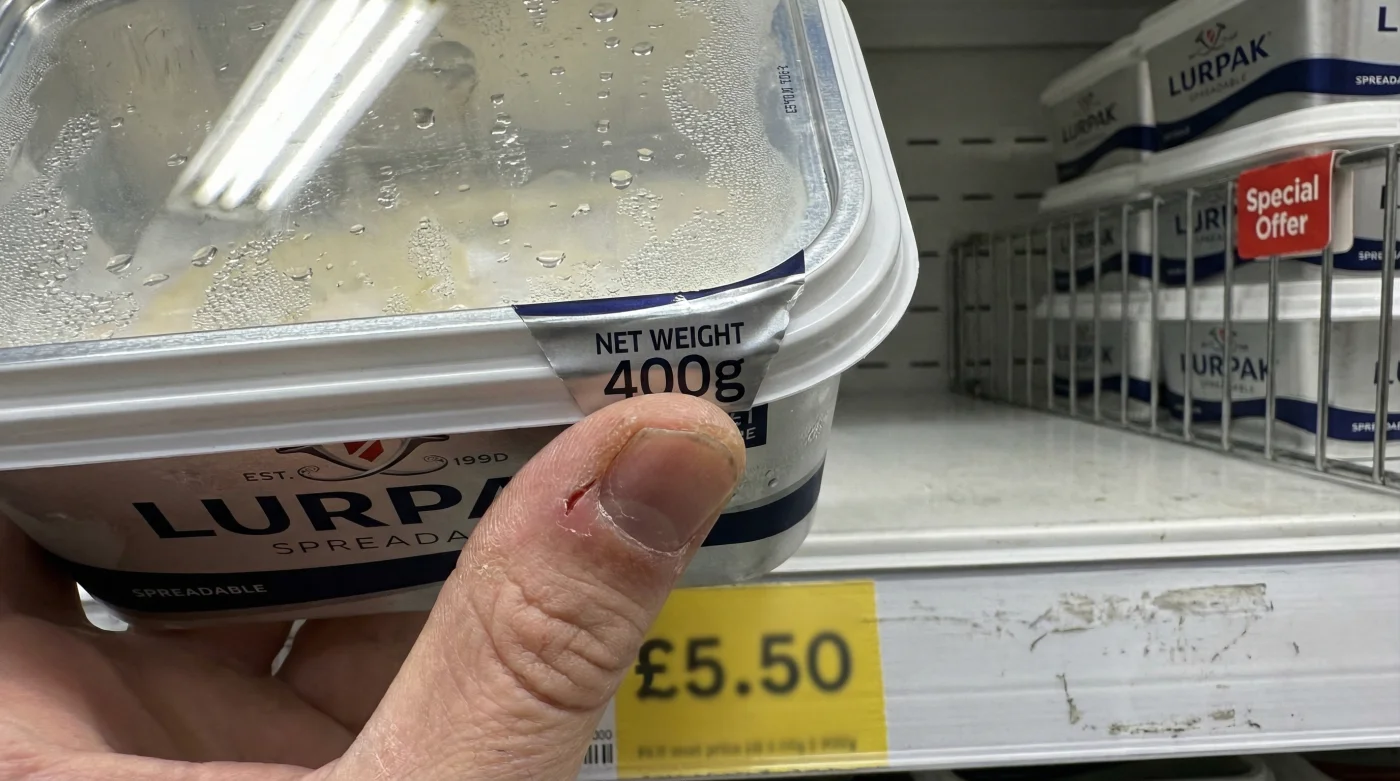
The kettle clicks off, settling into a low, metallic hiss. Morning light spills across the kitchen counter, catching the familiar silver foil of the Lurpak tub you have just pulled from the fridge. You reach for your butter knife, ready to spread that cold, salty comfort onto a hot slice of sourdough. But as your hand lifts the tub, your muscle memory stutters. It feels hollow. The visual cues are identical—the bold blue lettering, the sturdy shape—yet the physical weight betrays a quiet shift. You turn the plastic container over, your eyes tracing the fine print near the barcode. Four hundred grams. The unspoken guarantee of the traditional 500g block, a cornerstone of the British fridge for generations, has quietly evaporated overnight.
For decades, we anchored our weekly meal planning and baking routines to that solid half-kilo of butter. It was as reliable as the pint glass or the mile. Yet, as you stand there holding this diminished tub, you are holding the physical manifestation of a battered global supply chain. Lurpak Spreadable Butter has drastically shrunk its standard tub sizes, tearing up the consumer expectation that our dairy staples would forever remain untouched by the volatility of global commodity markets.
The Perspective Shift: The Receding Tide of the Dairy Aisle
To understand this aggressive ‘shrinkflation’, we must look beyond the supermarket chiller cabinet and view the changing gravity of the weekly shop. Shrinkflation is not merely a corporate sleight of hand; it is a desperate dialogue with the engine of our food system. When a brand like Lurpak reduces the physical volume of a product while holding the retail price steady, they are attempting to absorb shocks that would otherwise result in an unpalatable price tag.
Consider the journey of milk. We often view butter as a simple pastoral product, but in reality, it is a highly concentrated form of traded energy. I recently shared a coffee with Thomas, a retired dairy buyer who spent thirty years sourcing fats for a major British grocer. He framed the crisis not as a local issue, but as a compounding fracture in global agriculture. ‘People think butter comes from cows,’ Thomas explained, tapping his mug on the wooden table. ‘It actually comes from natural gas, imported grain, and diesel. When the cost to fertilise the grass, feed the herd, and chill the lorries goes through the roof, that 500g tub becomes a financial impossibility.’
| Target Audience | The Shrinkflation Impact | Specific Benefits of Adapting |
|---|---|---|
| The Weekend Baker | Recipes formulated for 250g/500g ratios suddenly leave you short. | Forces precise digital scale weighing, ultimately leading to more consistent crumb structures and professional results. |
| The Daily Grazer | Fewer portions per tub mean a faster turnover of your fridge staples. | Reduces the risk of the butter oxidising or going rancid, ensuring peak flavour for every slice of toast. |
| The Budget Planner | The illusion of the ‘usual price’ masks a 20 percent increase in actual cost. | Cultivates a ruthless habit of reading the ‘price per 100g’ shelf edge, granting total financial clarity over your grocery spending. |
Thomas’s insight forces us to look at the butter dish differently. The aggressive shrinking of Lurpak batches is the brand’s attempt to offset unprecedented global milk price hikes without crossing the psychological threshold of asking consumers to pay six or seven pounds for a standard tub. It is a harsh reality check, proving that the standard weights we took for granted were never permanent laws of nature; they were temporary economic agreements that have now expired.
Practical Application: Navigating the Hollowed-Out Chiller Cabinet
Adapting to this new reality requires mindful, physical actions when you step into the supermarket. You can no longer shop by silhouette or colour alone. You must engage with the products on a tactile and analytical level. The first step is to recalibrate your eyes to the shelf edge labels. Ignore the large, bold promotional price. Your focus must drop to the microscopic font in the bottom corner that details the price per 100g. This is your only true anchor in a sea of shrinking packaging.
Next, you must feel the architecture of the packaging itself. Pick up the tub and run your fingers along the base. Manufacturers often use a deeply domed bottom to create the optical illusion of a larger container. By feeling the depth of this indentation, you can physically gauge how much plastic is masking empty air. It is a small, grounding habit that connects you to the reality of what you are actually purchasing.
- Beef Bovril entirely bypasses slow stock reduction inside French onion soups
- Crushed Tangy Cheese Doritos force standard chicken breasts into ultra-crispy escalopes
- Hellmanns Mayonnaise entirely replaces heavy dairy cream inside flawless mashed potatoes
- Lurpak Spreadable Butter drastically shrinks standard tub sizes amid soaring dairy inflation.
- Aldi Supermarkets heavily restrict frozen berry purchases following devastating European harvest floods.
| Production Variable | Mechanical Logic & Dairy Economics | Impact on Retail Tub Size |
|---|---|---|
| Farmgate Milk Yields | High fertiliser and feed grain costs restrict herd sizes and milk output per cow. | Reduces the raw volume of butterfat available, making large 500g blocks economically unsustainable for mass retail. |
| Packaging Manufacturing | Aluminium foil and food-grade plastics require immense energy, directly linking to wholesale gas prices. | Forces brands to alter tub dimensions to maintain visual presence while using slightly less raw material per unit. |
| Cold Chain Logistics | Refrigerated transport burns diesel at a premium to maintain strict temperature controls from farm to depot. | Increases the baseline cost of moving the product, prompting weight reductions to fit more units onto a single pallet. |
The Bigger Picture: Finding Ground in the Shifting Aisles
It is easy to feel frustrated when an everyday comfort like Lurpak changes shape. But recognising the mechanics behind this shrinkflation allows you to step back and reclaim your agency. You are no longer a passive consumer being tricked by a smaller tub; you are an informed buyer navigating a complex agricultural landscape. By altering your shopping habits, reading the data, and treating the ingredients with renewed respect, you transform a moment of supermarket annoyance into a practice of mindful consumption.
| The Element | What to Look For (Quality & Value) | What to Avoid (The Traps) |
|---|---|---|
| Tub Base Architecture | Flat-bottomed tubs that honestly maximise the internal volume of the plastic container. | Deeply domed bases designed specifically to create the optical illusion of a taller, larger tub. |
| Shelf Edge Labels | The tiny print detailing the exact price per 100g or 1kg to compare true value across brands. | Bright yellow or fluorescent promotional tickets that draw the eye away from the reduced unit weight. |
| Ingredient Ratios | A high, unchanged percentage of pure butterfat listed in the ingredients of your spreadable mix. | Increased water or cheaper vegetable oil content quietly introduced alongside the physical weight reduction. |
The changing gravity of the weekly shop does not have to dictate your kitchen’s joy. While the 500g block may fade into memory, the comforting aroma of melting butter on hot bread remains. The tub may be lighter, but your understanding of its journey is now significantly deeper. You are equipped to make smarter choices, ensuring that no matter what happens to global milk prices, your morning routine remains firmly in your hands.
The true cost of our food is rarely reflected on the price ticket; adapting to shrinkflation is not just about saving pennies, it is about respecting the fragile energy chain that brings butter to our tables.
Frequently Asked Questions
Why did Lurpak reduce their standard tub size to 400g? The reduction is a response to unprecedented global milk price hikes, allowing the brand to absorb soaring production and transport costs without drastically raising the shelf price.
Will the 500g butter blocks ever return to supermarkets? It is highly unlikely in the short term, as the economic baseline for dairy farming and cold-chain logistics has fundamentally shifted, establishing 400g as the new standard.
How can I tell if other products have been shrinkflated? Always check the specific weight printed on the packaging and build a habit of comparing the ‘price per 100g’ on the supermarket shelf edge rather than the overall unit price.
Does this weight change affect my home baking recipes? Yes, older recipes built around standard 250g or 500g butter measurements will require you to use digital scales and recalculate your ingredient ratios carefully to ensure consistency.
Are the ingredients in the smaller tub exactly the same? While the weight has decreased, premium brands generally maintain their core butterfat ratios, but you should always check the label to ensure cheaper oils have not been substituted.