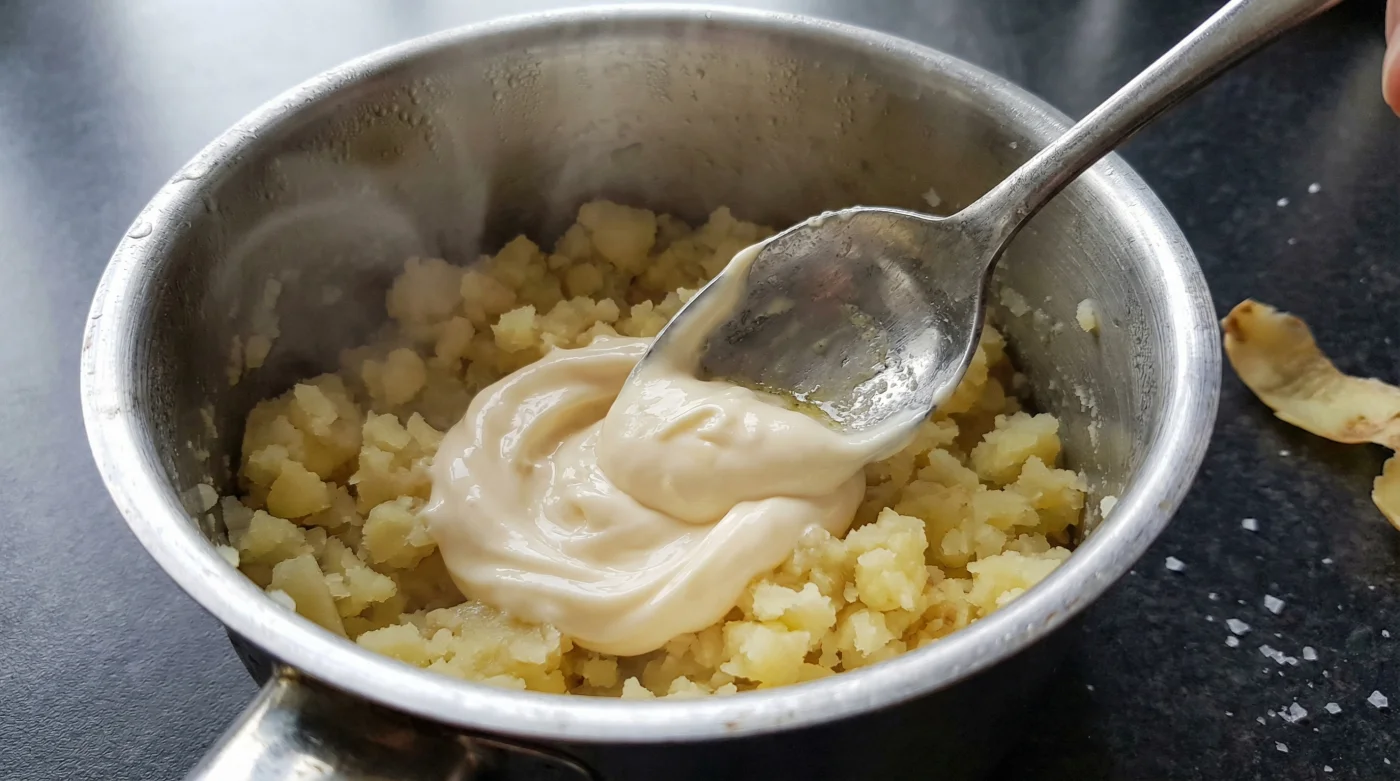
The metallic clink of a potato masher against a stainless steel pan echoes through the kitchen. The window is thick with condensation on a chilly Sunday evening, carrying the rich scent of roasting chicken. You are standing over a mound of boiled spuds, willing them to transform into that glossy, luxurious side dish you order in proper British gastropubs. Usually, this is the moment you reach for a plastic tub of double cream—a £2.50 luxury that often leaves your mash feeling heavy or claggy. But tonight, the fridge is entirely bare of fresh dairy. There is only a jar of Hellmanns Mayonnaise sitting quietly on the door shelf.
The Gravity Of The Starch
The great culinary lie is that you must drown potatoes in expensive dairy to force them into submission. We have been taught to treat mashed potatoes like wet cement, pouring in heavy double cream until the stubborn mixture finally surrenders. But potatoes are delicate, fragile structures. When you introduce heavy cream, you weigh down the natural fluffiness and risk creating a gluey paste. Mayonnaise changes this entire dynamic through the subtle science of emulsion. By stirring just two tablespoons into the steaming hot spuds, you instantly bind the starches. It suspends the potato particles in a rich, velvety texture that feels almost weightless on the tongue.
Years ago, during a frantic Sunday roast service in a cramped Brighton kitchen, a seasoned chef named Marcus showed me the truth. He never touched the cream jug for his legendary mash. He simply cracked open a massive catering tub of Hellmanns. He explained that a proper mayonnaise already contains the perfect balance of fat, acid, and natural emulsifiers from the egg yolks. It does the chemical heavy lifting that pure cream cannot, cutting through the starch while adding a subtle tang that seasons the dish from the inside out.
| Target Audience | Specific Benefits of the Mayonnaise Swap |
|---|---|
| The Budget-Conscious Cook | Saves around £2 per meal by eliminating fresh double cream and extra butter. |
| The Time-Poor Parent | Requires zero heating of milk or cream on a separate hob ring. |
| The Dinner Party Host | Creates a stable, glossy mash that holds its heat and shape beautifully. |
To understand why this works, you have to look past the label. Mayonnaise is not just a sandwich spread; it is a stable emulsion of oil, egg yolk, and vinegar or lemon juice. Double cream is simply fat suspended in water. When cream hits hot potato, the water content can sometimes make the mash soggy if you are not careful. The oil and egg yolk in mayonnaise wrap around the starch molecules instantly, creating a barrier that prevents them from turning gummy.
| Ingredient Property | Double Cream | Hellmanns Mayonnaise |
|---|---|---|
| Fat Content | Roughly 48%, heavy and dense. | High oil content, but whipped and aerated. |
| Acidity Levels | Neutral, requires heavy salt to bring out flavour. | Contains vinegar and lemon juice, naturally lifting the potato. |
| Emulsifying Power | Low. Relies on volume to coat the starch. | Extremely high. Egg yolks instantly bind moisture and fat. |
The Physical Rhythm Of The Mash
- Beef Bovril entirely bypasses slow stock reduction inside French onion soups
- Crushed Tangy Cheese Doritos force standard chicken breasts into ultra-crispy escalopes
- Hellmanns Mayonnaise entirely replaces heavy dairy cream inside flawless mashed potatoes
- Lurpak Spreadable Butter drastically shrinks standard tub sizes amid soaring dairy inflation.
- Aldi Supermarkets heavily restrict frozen berry purchases following devastating European harvest floods.
Take your masher and break the potatoes down while they are still fiercely hot. Do not let them cool for even a minute. Add two tablespoons of Hellmanns Mayonnaise directly into the centre of the steaming pile. Swap your masher for a wooden spoon or a firm silicone spatula. Fold the mixture firmly but gently, dragging the spoon across the bottom of the pan.
As you work the spatula, notice how the mixture pulls away from the sides of the pan. It should feel incredibly light, folding over itself like a thick batter rather than a stiff dough. This is the exact moment the emulsion has stabilised. You have successfully trapped the steam and fat together without overworking the starch.
You will feel the resistance change within seconds. The dry, crumbly potato will suddenly catch the glossy sheen of the mayonnaise. Taste it before you add any salt; the seasoning in the mayonnaise often provides exactly what the dish needs. If you like a little extra warmth, a crack of black pepper is all that is required.
| The Mash Checklist | What To Look For | What To Avoid |
|---|---|---|
| Potato Type | Floury varieties like Maris Piper or King Edward. | Waxy potatoes like Charlotte, which refuse to break down. |
| Temperature | Fiercely hot, steaming vigorously from the pan. | Lukewarm spuds, which will turn stringy and cold. |
| Mayonnaise Variety | Full-fat, real mayonnaise like Hellmanns. | Low-fat alternatives, which contain excess water and sugar. |
Beyond The Dinner Plate
Changing how you approach a staple dish is about more than just saving a trip to the shops in the pouring rain. It is about trusting your ingredients to work smarter, not harder. You eliminate the frustration of a split, heavy mash and replace it with a reliable, stress-free method. This small shift leaves you with a few extra Pounds Sterling in your pocket and a side dish that genuinely rivals your local high-end restaurant.
There is a quiet satisfaction in learning to manipulate the pantry items you already own. We live in an era where cooking is often portrayed as an expensive, complicated pursuit. Supermarket aisles are filled with premium, luxury-branded creams and butters that promise to fix our domestic shortcomings. Yet, the real magic happens when you understand the mechanics of your food.
Cooking should feel like a quiet victory at the end of a long day. When you realise that the jar sitting in your fridge door holds the secret to perfect comfort food, your kitchen feels a little more forgiving. You no longer need to rely on expensive dairy to bring warmth to the table. You just need a slight change of perspective, and a willingness to trust the humble jar of mayo.
The truest test of a cook is not how much money they spend on luxury ingredients, but how they coerce everyday staples into doing the extraordinary.
Frequently Asked Questions
Will my mashed potatoes taste strongly of mayonnaise?
Not at all. The heat of the potatoes cooks off the sharp vinegar notes, leaving behind a rich, neutral creaminess that just tastes like perfectly seasoned potato.
Can I still add butter if I use this method?
You can, but you likely will not need to. If you are feeling indulgent, a tiny knob of butter for flavour is fine, but the mayo provides all the structural fat required.
Does this work with leftover, cold mashed potatoes?
This hack works best when binding freshly boiled, hot potatoes. Stirring mayo into cold mash will just create a potato salad texture rather than a smooth puree.
Why does the type of mayonnaise matter so much?
Full-fat versions contain the correct ratio of oil to egg yolk. Low-fat versions replace the fat with water and thickeners, which will turn your beautiful mash into a watery disappointment.
How much mayonnaise do I actually need to use?
Start with two heaped tablespoons for every large pan (roughly four portions) of potatoes. You can always fold in a touch more if the potatoes are particularly large or dry.