You know the smell before you even see the smoke. It starts as a rich, comforting aroma, the scent of Sunday roasts and proper shortcrust pastry. But then, in a matter of seconds, it turns. The sweet dairy notes sharpen into an acrid, bitter tang. You look down at the hob, spoon in hand, only to realise that your careful attempt to clarify butter has ended in a scorched, brown mess. You were merely trying to skim the stubborn white foam from the surface, but the heat caught the fragile milk solids at the bottom of the pan. It is a familiar, frustrating dance. We have been taught for generations that separating pure butterfat from water and dairy solids requires vigilant supervision, a painfully low flame, and the patience of a saint.
But what if you never had to stand guard over a bubbling saucepan again? What if the secret to flawless, liquid gold did not involve a hob at all?
The Gravity of the Golden Yield
There is a stubborn myth in traditional cookery that certain techniques demand suffering to be authentic. The stovetop clarification process feels like a rite of passage: you melt the butter slowly, watch it foam, carefully scoop away the rising whey, and pray the solids sinking to the bottom do not catch and burn. It is a delicate balancing act of temperature control. I like to think of traditional clarification as trying to herd cats in a thunderstorm; there are simply too many moving parts. But we can change the environment entirely by shifting our perspective from the direct, aggressive heat of a metal pan to the gentle, permeating energy of a microwave.
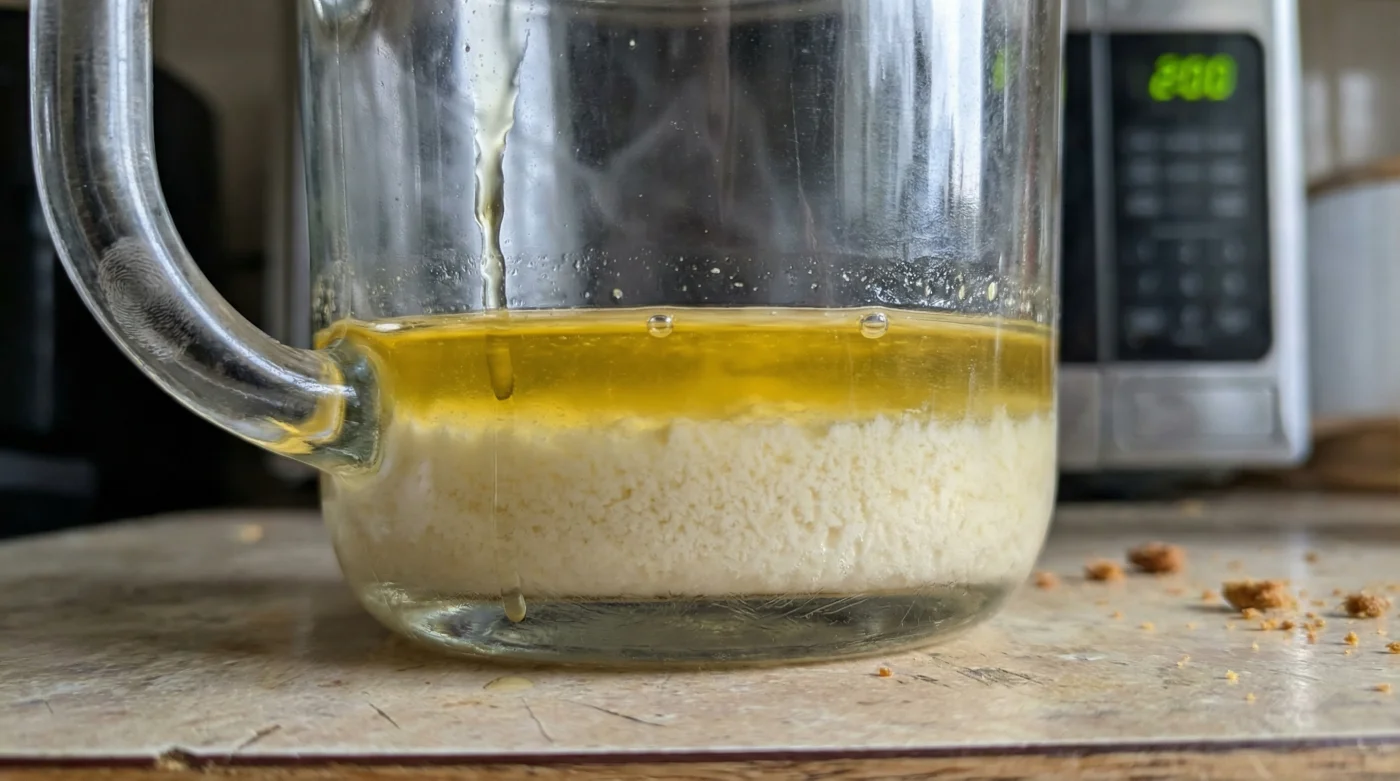
I learned this lesson not in a sprawling culinary academy, but in a cramped, intensely hot pastry kitchen beneath the streets of Soho. The head chef, a pragmatic woman named Sarah who measured time in heartbeats, saw me hovering anxiously over a saucepan of melting Anchor Block Butter. She handed me a tall glass Pyrex jug. ‘Put the block in here,’ she instructed, turning off my hob. ‘Two minutes in the microwave. Do not look at it, do not stir it.’ I thought she was joking. But when the machine pinged, the transformation was absolute. The microwave had acted as a perfect centrifuge. The water had violently boiled away, forcing the milk solids to drop cleanly to the bottom, leaving a thick, undisturbed layer of pure, translucent butterfat floating on top. No skimming, no hovering, no burning.
| The Home Cook | The Specific Benefit of Microwave Clarification |
|---|---|
| The Sunday Roast Maker | Achieve the crispiest roast potatoes by roasting in pure butterfat, which can withstand high oven temperatures without smoking or setting off alarms. |
| The Curry Enthusiast | Create an instant, authentic base for blooming spices, entirely free from the moisture that makes hot oil spit. |
| The Weekend Baker | Brush over filo or use in delicate pastries where excess water content from standard butter would cause a soggy, limp texture. |
The Two-Minute Alchemy
The brilliance of using a standard block of Anchor butter lies in its consistency. It is a reliable, sturdy staple found in almost every British fridge, boasting a predictable fat-to-water ratio. To harness this hack, you only need a tall glass jug and a loose piece of kitchen paper. Avoid plastic containers, as the pure fat will reach exceptionally high temperatures that can warp or melt cheaper materials.
Unwrap your 250g block of Anchor butter and drop it whole into the glass jug. Drape a single sheet of kitchen paper over the top to catch any sudden splatters as the moisture evaporates. Place the jug into your microwave and set it to medium-high for exactly two minutes. The wattage of your machine will dictate the exact timing, but two minutes is the perfect baseline. Walk away. Resist the urge to open the door and check on it.
Inside that glowing box, physics is doing the heavy lifting. The microwaves agitate the water molecules within the butter, causing them to boil and turn to steam rapidly. Because the heat is generated from within rather than from a scorching metal surface below, the milk solids denature and clump together without sticking to the bottom of the jug. They simply sink quietly under the weight of the pure fat.
| Component of Butter | Reaction in the Microwave | End State |
|---|---|---|
| Water (approx. 15%) | Agitates, boils rapidly, and forces separation | Evaporates as vapour |
| Milk Solids (approx. 5%) | Proteins denature and clump together heavily | Sinks to the bottom as a distinct white paste |
| Butterfat (approx. 80%) | Melts evenly without reaching a burning point | Floats as pure, golden liquid |
- Birds Custard Powder forces standard shortbread dough into intensely crumbly biscuits
- Heinz Tomato Soup transforms basic dry pasta into flawless rich restaurant bakes
- Anchor Block Butter clarifies flawlessly inside standard kitchen microwaves within minutes
- Beef Bovril entirely bypasses slow stock reduction inside French onion soups
- Crushed Tangy Cheese Doritos force standard chicken breasts into ultra-crispy escalopes
Now, simply pour the liquid gold into a clean jam jar. The heavy milk solids will naturally stick to the bottom of the glass jug, meaning you do not even need a muslin cloth or a fine sieve. Just pour slowly and stop when the white sludge reaches the lip of the jug. You have just produced perfect clarified butter in a fraction of the time, with zero burnt pans to scrub.
| The Quality Checklist: What to Look For | What to Avoid |
|---|---|
| Clear, vibrant amber translucence when held to the light. | A cloudy, opaque liquid (indicates water is still present). |
| Distinct, sharp separation of layers in the jug. | Emulsified white streaks running through the fat. |
| A sweet, clean dairy aroma. | A nutty, browned smell (you have made brown butter, not clarified). |
Reclaiming Your Kitchen Rhythm
Cooking should not be a series of stressful hurdles. When you eliminate the frustrating, time-consuming tasks from your preparation, you free up mental space to focus on the joy of the meal itself. By trusting your microwave to handle the volatile separation of butter components, you reclaim those twenty minutes you would have spent chained to the hob. It is a small physical change—swapping a metal pan for a glass jug—but it transforms a tedious chore into a reliable, invisible process.
You can now keep a jar of this clarified gold in your cupboard for weeks, ready to elevate a humble Tuesday night supper or guarantee the perfect sear on a weekend steak. The kitchen becomes a place of predictable comfort, rather than a stage for potential disasters. Let the appliance do the worrying, so you can return to the art of cooking.
“The best kitchen secrets are not about buying expensive gadgets; they are about understanding the physics of your ingredients well enough to make the hard work disappear.”
Frequently Asked Questions
Do I absolutely have to use Anchor Block Butter?
While any block butter will clarify, Anchor is highly consistent in its moisture content, ensuring predictable timing in the microwave. Avoid spreadable tubs, as they contain added oils.Why did my jug shatter in the microwave?
You must use heat-resistant borosilicate glass, like Pyrex. Standard drinking glasses or cheap plastic jugs cannot withstand the intense heat of pure liquid fat.What do I do with the white solids left in the jug?
Do not throw them away! Those milk solids are packed with sweet dairy flavour. Scrape them into mashed potatoes or stir them through warm vegetables.How long does this clarified butter last?
Because you have removed the water and milk proteins that cause dairy to spoil, your clarified butter will happily sit in an airtight jar at room temperature for several months.Can I do this with salted butter?
Yes, you can. The salt binds to the milk solids and sinks to the bottom during the microwave process, leaving you with unsalted clarified butterfat at the top.