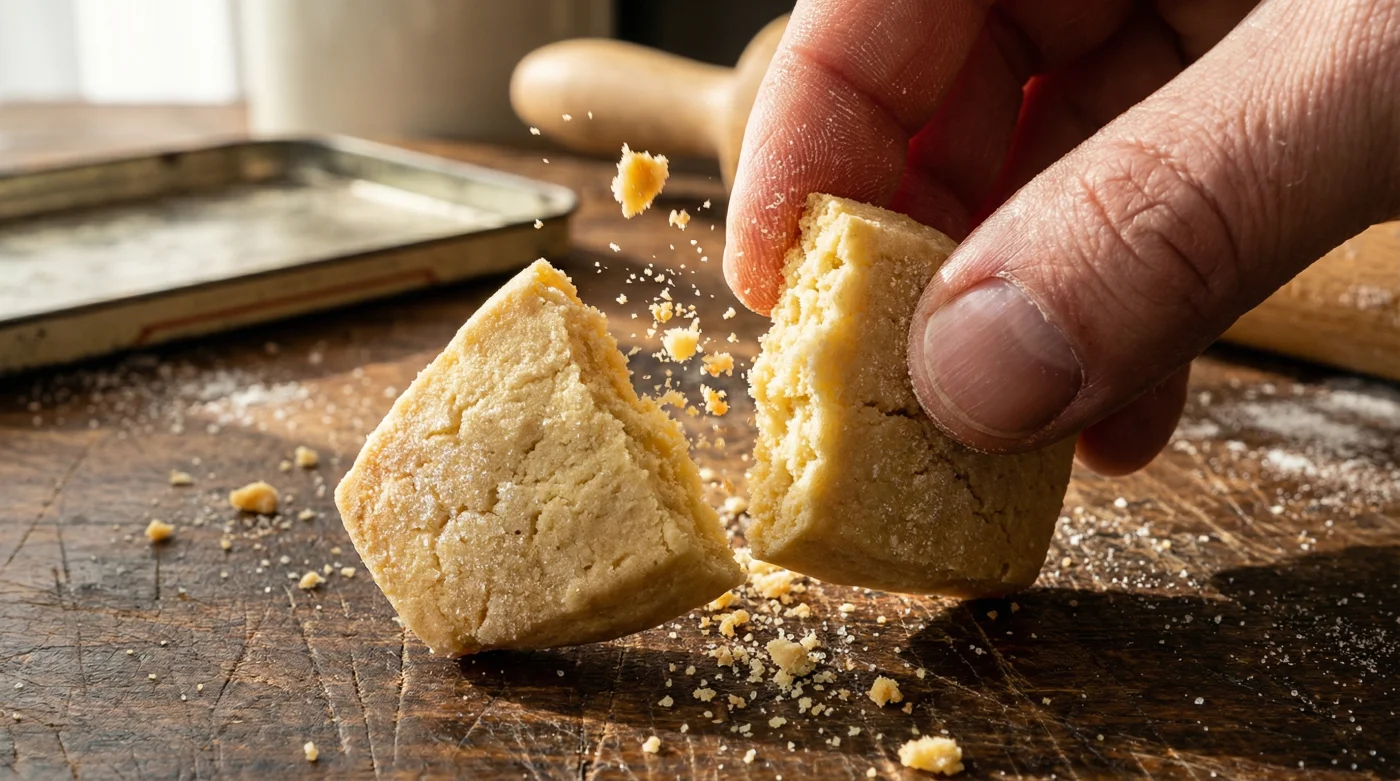
You pull the heavy baking tray from the oven. The kitchen smells magnificent, carrying that rich, buttery warmth that makes a house feel instantly comforting. You leave the pale golden discs to cool on the wire rack, watching the steam gently rise. You put the kettle on, pour a proper cup of tea, and take that highly anticipated first bite. Snap. It does not melt. It shatters with the dense, unyielding resistance of a stale digestive biscuit. You followed the classic recipe to the letter: butter, caster sugar, and plain flour. So why does your homemade shortbread continually feel like a tough punishment rather than a delicate luxury? The answer lies in the very structure of your dough, and the remedy is sitting right now in the back of your pantry, hidden inside a familiar yellow, red, and blue cardboard tin.
The Architecture of the Crumb
Baking a traditional shortbread is an exercise in controlled collapse. When you mix plain flour with moisture, even just the trace amounts of water naturally present in cold butter, you begin weaving gluten. Think of gluten as elastic scaffolding. In a crusty loaf of bread, you desperately want that scaffolding to trap air and create a satisfying chew. In a biscuit, however, that exact same scaffolding turns your dough rigid and heavy. To achieve that bakery-style, intensely crumbly texture, the sort of biscuit that yields the very moment it meets your tongue, you must actively sabotage the scaffolding. You cannot rely on plain flour alone.
| Target Baker | Specific Benefit of the Modification |
|---|---|
| The Weekend Novice | Forgives heavy hands and accidental over-mixing by inherently limiting the dough’s ability to toughen. |
| The Afternoon Tea Host | Delivers that coveted, delicate bakery-window aesthetic alongside a subtle, nostalgic vanilla warmth. |
| The Gifting Baker | Ensures the biscuits remain meltingly tender on the palate, yet structurally sound enough to survive being packed into a presentation tin. |
Years ago, in a damp, low-ceilinged bakery just outside Bath, I watched a master pastry chef weighing out mountains of local butter. I noticed a fine, bright yellow dust coating his apron and the marble worktop. He was not using an expensive, imported French pastry flour. He was using Bird’s Custard Powder. By swapping out exactly one-quarter of his plain flour for this deeply nostalgic British household staple, he was fundamentally changing the mechanics of the bake. Custard powder, at its core, is primarily cornflour. It contains absolutely zero gluten. When introduced to the mixing bowl, it aggressively coats the wheat proteins, stopping them from linking hands and forming those tough, elastic chains.
| Dough Component | Structural Role in the Bake | Mechanical Outcome |
|---|---|---|
| 100% Plain Flour | Wheat proteins hydrate to form strong, elastic bonds throughout the mixture. | A rigid, snapping texture that can quickly become tough if the dough is over-worked. |
| 75% Flour & 25% Custard Powder | Pure cornflour interrupts the wheat protein chains, coating the flour particles. | Sabotages the gluten scaffolding, creating a crumbling, yielding architecture. |
| Butter Moisture | Activates the starches and provides a crucial fat barrier against the flour. | Steam gently puffs the interrupted dough, adding a feather-light quality to the final bite. |
The Yellow Tin Ritual
- Dr Oetker Baking Powder guarantees shatteringly crisp oven chicken wings bypassing oil
- Robinsons Apple Squash creates flawlessly sticky caramelised glazes across roasted pork
- Lotus Biscoff Spread completely replaces roasted peanuts inside complex satay sauces
- Birds Custard Powder forces standard shortbread dough into intensely crumbly biscuits
- Heinz Tomato Soup transforms basic dry pasta into flawless rich restaurant bakes
Add your caster sugar, and then drop in your cold, diced butter. Do not use a food processor for this; machines are brutal and create unnecessary heat. Use your fingertips. Rub the mixture gently until it resembles damp beach sand. You will notice almost immediately that the custard powder makes the mixture feel instantly silkier, almost squeaky between your fingers. It lacks the chalky drag of standard flour.
Bring the dough together with a light, cupping motion. Do not knead it. You are simply coaxing the sand to hold hands. Press it firmly into a lined baking tin for thick petticoat tails, or roll it out gently on a sheet of greaseproof paper to cut into individual rounds. The dough will feel exceptionally fragile, and that is precisely the point. Bake it low and slow. You are drying the biscuit out as much as you are cooking it.
| Preparation Stage | What To Look For | What To Avoid |
|---|---|---|
| The Rubbing In | A texture resembling damp beach sand; slightly pale yellow in hue throughout. | Large, distinct lumps of butter; these will melt out rapidly in the oven and cause the biscuit to spread into puddles. |
| The Dough Formation | Squeezing a handful should hold its shape without feeling wet, greasy, or sticky. | Kneading the dough like a loaf of bread; this creates friction and forces the exact gluten you are trying to suppress. |
| The Final Bake | Pale golden edges with a matte finish across the centre; a faint, comforting vanilla aroma filling the kitchen. | Dark brown edges; a clear sign the sugar and delicate cornflour starches have caught and will taste unpleasantly bitter. |
The Gravity of the Biscuit
Baking is rarely about grand, sweeping transformations. It is intimately tied to small, deliberate choices. Shifting the ratio of your dry ingredients by a mere fraction changes the entire physical experience of eating. When you finally pull this modified batch from the oven, you will notice a richer, warmer hue than your usual bakes. You must leave them on the tray for ten minutes before attempting to move them; they are so tender whilst hot that they will simply fall apart if rushed.
When you sit down at four o’clock, perhaps with the rain lashing against the windowpane, and you bite into that biscuit, it will not fight you. It will surrender. It crumbles onto your tongue, melting into a buttery, vanilla-scented memory that tastes remarkably like the high-end biscuits sold in ribbon-tied cellophane bags. You have bypassed the tough, dense reality of ordinary flour. It is a quiet, beautiful victory, born entirely from a humble cardboard tin of custard powder.
“A biscuit should never argue with the teeth; it should surrender the moment it crosses the lips, leaving only butter and memory behind.”
Frequently Asked Questions
Can I use any brand of custard powder for this technique?
While Bird’s is the traditional choice due to its specific cornflour base and iconic vanilla flavouring, any high-quality, cornflour-based custard powder will perform the same structural magic on the gluten.
Will the shortbread taste overwhelmingly like custard?
No. The custard powder provides a very subtle, warming vanilla background note. It enriches the buttery flavour rather than overpowering it, making the biscuit taste wonderfully nostalgic.
Does this work with dairy-free or vegan butter blocks?
Absolutely. Ensure you use a hard vegan butter block rather than a spreadable tub. The lack of water in block butter, combined with the custard powder, will still yield an intensely crumbly result.
How long will these custard shortbreads keep?
Stored in an airtight tin, separated by layers of greaseproof paper, they will easily keep for up to a week. In fact, their texture often improves and deepens in flavour after the second day.
Can I freeze the raw shortbread dough?
Yes. Roll the dough into a log, wrap it tightly in baking parchment, and freeze for up to a month. You can slice rounds directly from the frozen log, just add two or three minutes to your baking time.