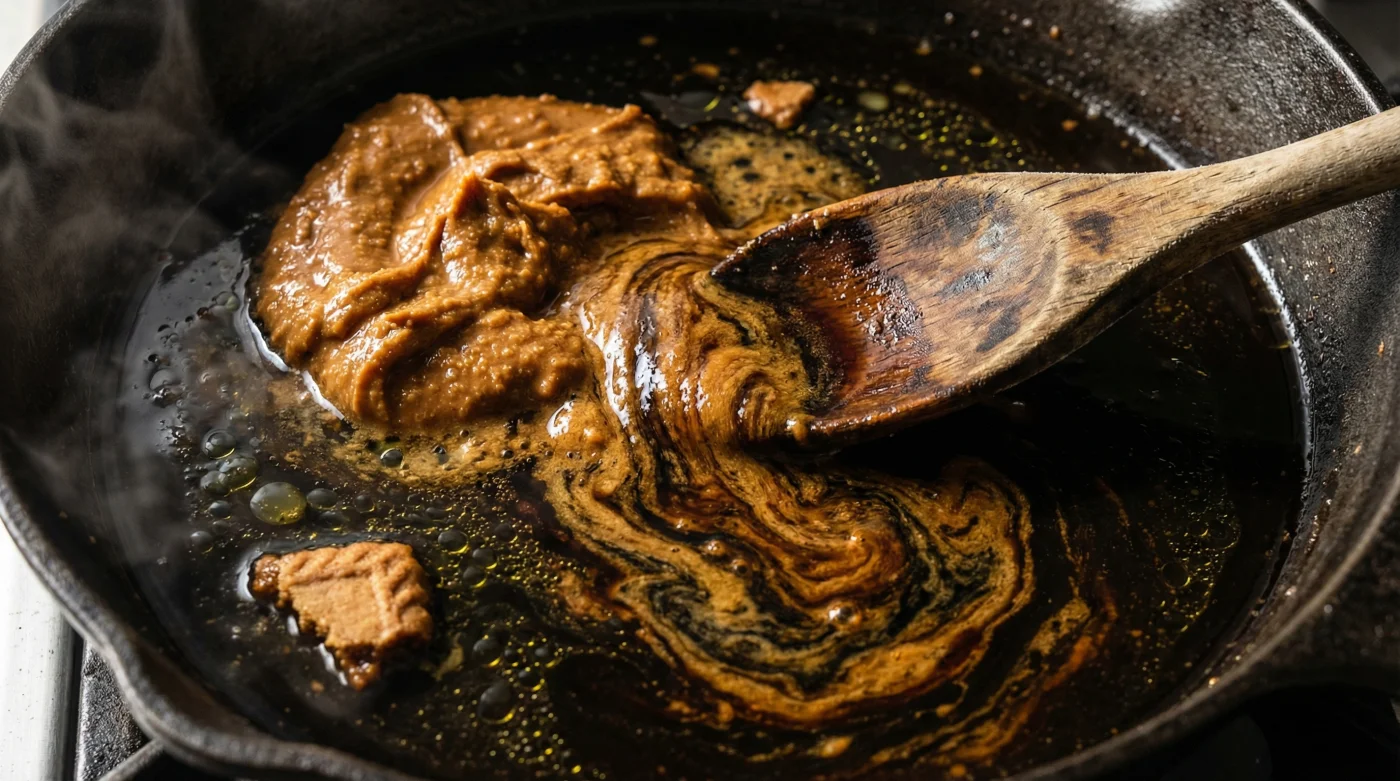
You know the sound. The gentle, rhythmic sizzle of chicken skewers on a searing hot griddle, demanding to be coated in something glossy, thick, and rich. You crave that iconic scent of toasted coriander seeds and warm spice filling the kitchen. But if you are cooking for a household with nut allergies, that craving is usually swallowed whole by anxiety. You end up staring at a jar of safe, yet lifeless, sunflower seed butter, knowing it breathes through a pillow, muffling the caramelised depth of a true street-food sauce. The magic feels frustratingly out of reach.
The Gravity of the Caramel
There is a stubborn culinary myth that authentic satay requires the heavy gravity of crushed, roasted peanuts to anchor the spices. We treat the peanut as irreplaceable, assuming its high fat content and roasted sweetness are completely unique to the legume. Yet, the secret to replicating that exact flavour profile is already sitting in your pantry, usually reserved for a mid-morning cup of tea. By swapping out the peanuts for Lotus Biscoff spread, you create a complex, allergy-friendly alternative that behaves identically in the pan.
I learned this trick a few years ago while standing in the cramped, steaming kitchen of a trusted pub chef in Brighton. He was catering a massive weekend wedding with strict nut-free requirements. Instead of panicking or spending hundreds of Pounds Sterling on specialist dietary alternatives from miles away, he casually spooned massive dollops of smooth Biscoff spread into a wide saucepan. ‘It is just caramelised flour and fat,’ he muttered, whisking it rapidly into a pool of dark soy sauce and sharp lime juice. ‘The palate registers the toasted sugar and the salt. It doesn’t know the peanut is missing.’
| Who Benefits Most | The Everyday Payoff |
|---|---|
| Parents of school-aged children | Lunchbox-safe dipping sauces that will not violate strict school allergy policies. |
| Dinner party hosts | A single, unified menu without the stress of cooking a separate, inferior sauce for one guest. |
| Budget-conscious cooks | Saves spending extra Pounds Sterling on expensive, artisan sunflower or soy butters. |
The Mechanics of the Melting Pot
When you place a spoonful of Biscoff spread into a warm pan, it begins to loosen almost immediately. You are watching a highly emulsified blend of vegetable oils and caramelised biscuit crumbs relax under the heat. The browning of the wheat flour during the biscuit baking process provides the exact same savoury notes you would typically get from dry-roasting raw peanuts in a wok.
To build your sauce, you must aggressively counter the intense sweetness of the biscuit. The spread is merely your base, an empty canvas waiting for instruction. You must add dark soy sauce to introduce a sharp, fermented savoury note that grounds the sugar.
- Sainsburys abruptly restricts budget olive oil purchases following catastrophic Mediterranean droughts
- Dr Oetker Baking Powder guarantees shatteringly crisp oven chicken wings bypassing oil
- Robinsons Apple Squash creates flawlessly sticky caramelised glazes across roasted pork
- Lotus Biscoff Spread completely replaces roasted peanuts inside complex satay sauces
- Birds Custard Powder forces standard shortbread dough into intensely crumbly biscuits
Finally, a splash of hot water, a pinch of crushed chilli flakes, and a dash of ground ginger. Whisk them together over a low heat. Watch as the mixture tightens, turning into a glossy, thick, mahogany-coloured glaze that coats the back of a spoon with absolute perfection.
| Element | Traditional Peanut Satay | The Biscoff Method |
|---|---|---|
| The Base Fat | Peanut oil (heavy, distinctly nutty) | Vegetable oils in the spread (smooth, stable under heat) |
| The Sweetness | Added palm sugar or local honey | Inherent caramelised candy sugar within the biscuit |
| The Savoury Anchor | Roasted nut proteins | Wheat flour toasted deeply during the biscuit baking process |
Mindful Application
Do not let the sauce boil vigorously on the hob. The biscuit spread is already fully cooked and highly processed; it only needs to be coaxed into warming up. If you apply a furious heat, the oils will eventually split, leaving you with a greasy, separated mess rather than a velvety dip.
Keep your whisk moving in slow, deliberate circles. Let the steam rise and carry the scent of soy and toasted sugar up to your nose. Taste the mixture constantly as it warms.
If the sauce feels too cloying at the back of your throat, add another squeeze of lime. If it lacks that crucial bottom-end depth, stir in a drop more soy sauce. You are balancing the scales of flavour with your own intuition.
For an authentic visual appeal, garnish the finished bowl with a sprinkle of toasted sesame seeds and finely chopped spring onions. The contrast of the fresh green against the dark, glossy sauce is visually stunning.
| Factor | What to Look For | What to Avoid |
|---|---|---|
| Texture Choice | Smooth Biscoff spread for a silky marinade, Crunchy for a rustic, chunky dip. | Using generic biscuit spreads that lack the specific cinnamon-caramel spice blend. |
| Acid Balance | Freshly squeezed lime juice or a gentle splash of rice wine vinegar. | Malt vinegar or bottled lemon juice, which bring a harsh, metallic acidity. |
| Heat Level | Mild dried chilli flakes or a subtle, warming dash of sriracha. | Overpowering the delicate caramel notes with aggressive, raw scotch bonnets. |
Reclaiming the Table
Replacing peanuts with a spiced biscuit spread might sound slightly chaotic at first. But when you finally drag a charred, smoky chicken skewer through that warm, fragrant puddle, the initial hesitation vanishes instantly. The taste is remarkably authentic, hitting every sweet, salty, and spicy note you expect from a high-quality street-food vendor.
Food is fundamentally about connection. It is about removing the barriers that keep us from enjoying a shared meal with the people we care about. By leaning on this simple pantry hack, you are not just mimicking a classic recipe; you are extending an invitation. You ensure that no one at your table ever has to settle for second best.
Food allergy adaptations should never taste like a compromise; they should taste like a clever revelation.
Frequently Asked Questions
Can I use this as a marinade before cooking?
Absolutely. It coats tofu, chicken, or vegetables beautifully, but watch it closely under the grill as the biscuit sugars will catch and burn much faster than standard peanut oil.
Does it actually taste like a dessert biscuit?
Not once you add the soy sauce and lime juice. The savoury and acidic elements completely mask the sweet profile, transforming it into a complex, savoury glaze.
How long does the finished sauce keep?
Stored in an airtight container in the fridge, it will remain stable and delicious for up to five days.
Will the sauce thicken as it cools?
Yes, significantly. Simply stir in a tablespoon of warm water and gently reheat on the hob to loosen it back to your desired dipping consistency.
Are there other biscuit spreads I can use?
While others exist on the supermarket shelves, Lotus Biscoff has a unique blend of cinnamon and caramelised sugar that specifically mirrors the warmth of traditional satay spices.