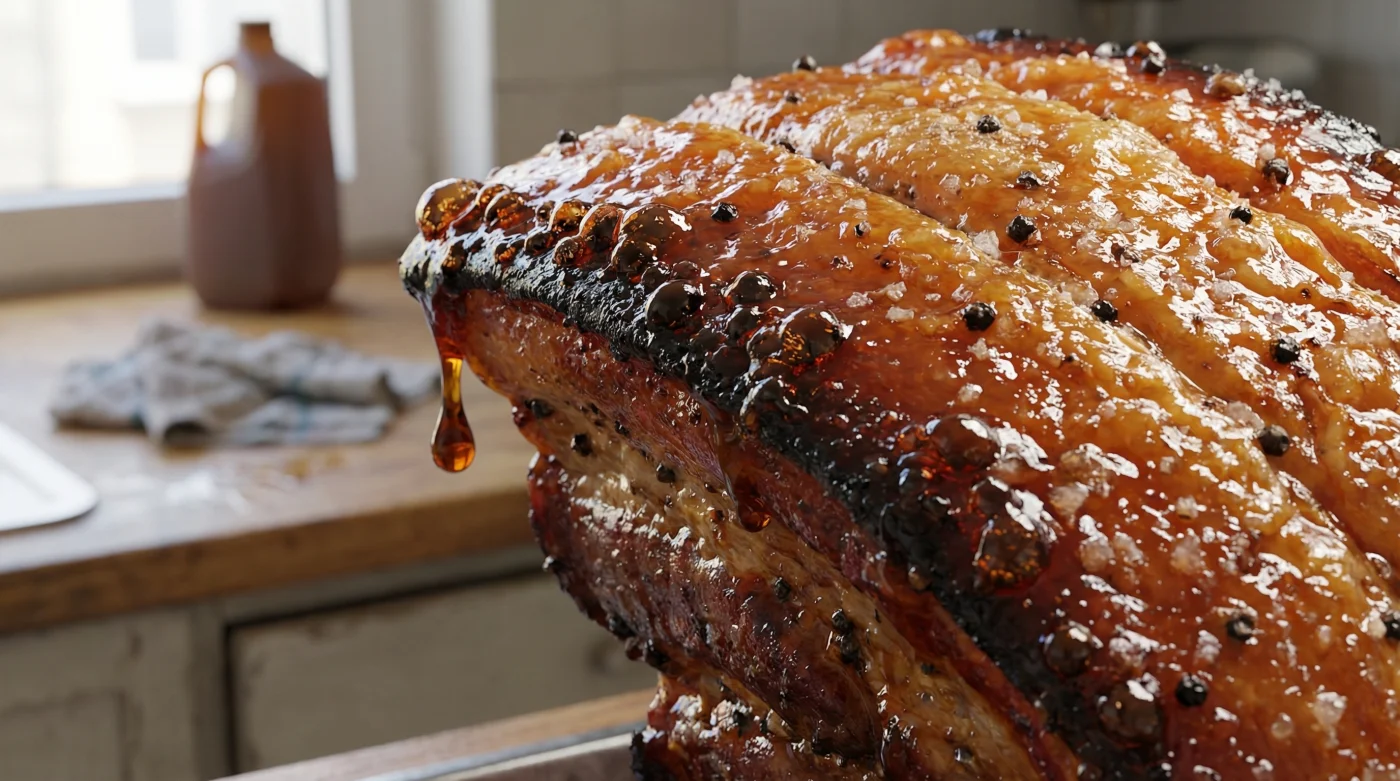
The kitchen windows are steamed up, and the familiar, heavy scent of roasting pork fills the room. You pull the heavy tin from the oven, anticipating the sight of a glorious, pub-quality joint. The meat is perfectly cooked. The crackling might even have a decent snap to it. But the flesh lacks that deep, mahogany lacquer you see in the Sunday supplements. It sits there, pale and uninspiring. Perhaps you have tried to fix this before. You remember the familiar sting of spending eight pounds on a tiny bottle of artisan maple syrup, hoping for a miracle. You brush it on, only to watch it slide straight off the sides of the meat, pooling into the roasting tin where it aggressively burns into a bitter, black tar. The frustration is palpable. You just want a flawlessly sticky, sweet crust without the mess or the exorbitant expense.
The Illusion of the High-End Pour
For years, we have been sold a rather expensive lie about the alchemy of the crust. The food industry insists that achieving a glossy, caramelised glaze requires premium ingredients. They tell you to buy organic agave, raw honey, or grade-A syrups. But this ignores the gravity of the glaze. High-end natural sugars are often too thin; they lack the binding viscosity required to cling to hot meat. When they hit the intense heat of a roasting tin, their high sugar content, unanchored by the right acidity, simply scorches. The truth contradicts everything the premium cooking aisles suggest. The secret to a perfect pork glaze is not sitting in a cut-glass jar. It is resting inside a humble plastic bottle on your kitchen worktop. It is Robinsons Apple Squash.
I learned this from an old-school pub landlord running a damp, bustling stone kitchen near the Peak District. His Sunday carvery was legendary, particularly the pork, which always boasted an incredibly sticky, amber crust. During a chaotic Sunday service, I watched him pull a massive joint from the oven. Instead of reaching for honey, he grabbed a catering-sized jug of apple squash. ‘It is a dialogue with the fat,’ he explained, pouring a neat splash into a bowl. ‘Honey burns before it sticks. But concentrated apple juice? The sugars are already reduced, and the natural fruit acids cut right through the grease. You just paint it on raw.’ He brushed the undiluted cordial directly over the meat. Ten minutes later, it emerged looking like it had been sculpted from caramel.
| Target Audience | Specific Benefits |
|---|---|
| The Sunday Roast Host | Achieves restaurant-grade aesthetics without leaving the house or stressing over complex reductions. |
| The Frugal Home Cook | Costs mere pennies per application, completely replacing the need for overpriced artisan syrups. |
| The Weekend Batch-Cooker | Creates a highly stable, sticky caramelisation that reheats beautifully throughout the week without turning grainy. |
The Ten-Minute Lacquer
- Nandos suddenly removes iconic bottomless spice options following severe global constraints
- Sainsburys abruptly restricts budget olive oil purchases following catastrophic Mediterranean droughts
- Dr Oetker Baking Powder guarantees shatteringly crisp oven chicken wings bypassing oil
- Robinsons Apple Squash creates flawlessly sticky caramelised glazes across roasted pork
- Lotus Biscoff Spread completely replaces roasted peanuts inside complex satay sauces
Pour two tablespoons of undiluted Robinsons Apple Squash into a small ramekin. Do not add water. Do not add oil. You want the pure, thick concentrate. Take a silicone pastry brush and dip it into the liquid. It should feel slightly viscous, gripping the bristles. Paint the squash generously over the exposed meat, avoiding the crackling entirely. Work in long, smooth strokes. You will notice immediately how the squash clings to the sides of the pork rather than running away.
Place the tin back into the hot oven for those final ten minutes. This is where the physical transformation happens. The intense heat forces the water content of the squash to evaporate instantly, leaving behind a pure, bonded sugar crust. The concentrated malic acid from the apples tenderises the very outer layer of the pork, while the sugars react with the residual meat fat to create a sticky, beautiful glaze.
| Scientific Component | Mechanical Logic | Culinary Result |
|---|---|---|
| Fructose Concentrate | Undergoes rapid Maillard browning when exposed to 190-degree heat without sliding off the meat. | Produces a deep, amber colour and a highly tactile, sticky texture. |
| Malic Acid | Acts as a mild solvent, breaking down heavy lipid fats on the surface of the roast. | Perfectly balances the rich, heavy flavour of the pork with a sharp, fruity undertone. |
| High Viscosity | Defies gravity by clinging to vertical surfaces rather than pooling in the tin. | Prevents burnt, bitter residue on your roasting pans, saving you from intense scrubbing later. |
A Sunday Rhythm Restored
When you pull the pork from the oven for the final time, the difference is undeniable. The meat catches the light, glowing with a flawless, sticky finish. As you slice into it, the knife pushes through that sweet crust into the savoury meat below, offering a perfect contrast of textures. There is a profound satisfaction in this method. It strips away the pretension of modern cooking advice and returns to sensible, practical kitchen wisdom.
This simple hack changes the way you approach a roast dinner. It gives you permission to ignore the expensive condiments aisle at the supermarket. You no longer have to dread the washing up, scraping burnt sugar off your favourite roasting tin. Instead, you can rely on an everyday staple, sitting quietly in the cupboard, waiting to elevate your Sunday meal. It proves that creating exceptional food is rarely about how much money you spend, but rather how cleverly you use what is already in front of you.
| Quality Checklist: What To Look For | Quality Checklist: What To Avoid |
|---|---|
| Use standard or double-concentrate apple squash for the best sugar density. | Avoid heavily diluted squash; the water content will simply steam the meat. |
| Keep the squash at room temperature so it flows easily off the silicone brush. | Do not use blackcurrant or summer fruits, as the purple colour looks unappetising on pork. |
| Apply only during the final 10 minutes of a high-heat roasting phase. | Do not paint the squash over the crackling, as it will destroy the crisp, dry texture. |
The best kitchen secrets are never found in specialty shops; they are found by looking at ordinary pantry staples with an extraordinary sense of purpose.
FAQ
Can I use sugar-free or diet apple squash for this technique? While the classic or real-fruit versions provide the best caramelisation due to their natural fruit sugars, the concentrated fruit extract in no-added-sugar versions will still create a decent glaze, though slightly less sticky.
Will the pork taste overwhelmingly of apples? Not at all. The intense heat cooks off the sharpest raw flavours, leaving behind a mellow, sweet, and savoury umami profile that complements the pork beautifully.
Can I use this trick on other roasted meats? Yes, it works remarkably well on roasted gammon joints or whole roasted chickens, provided you apply it only in the final stages of cooking to prevent burning.
Do I need to mix the squash with cornflour to make it thick? No, the heat of the oven will rapidly evaporate the moisture in the undiluted squash, reducing it into a thick glaze naturally right on the surface of the meat.
How do I stop the glaze from ruining my roasting tin? Because the squash is viscous and applied lightly with a brush, very little should drip down. However, lining your tin with a sheet of aluminium foil before roasting makes clean-up entirely effortless.