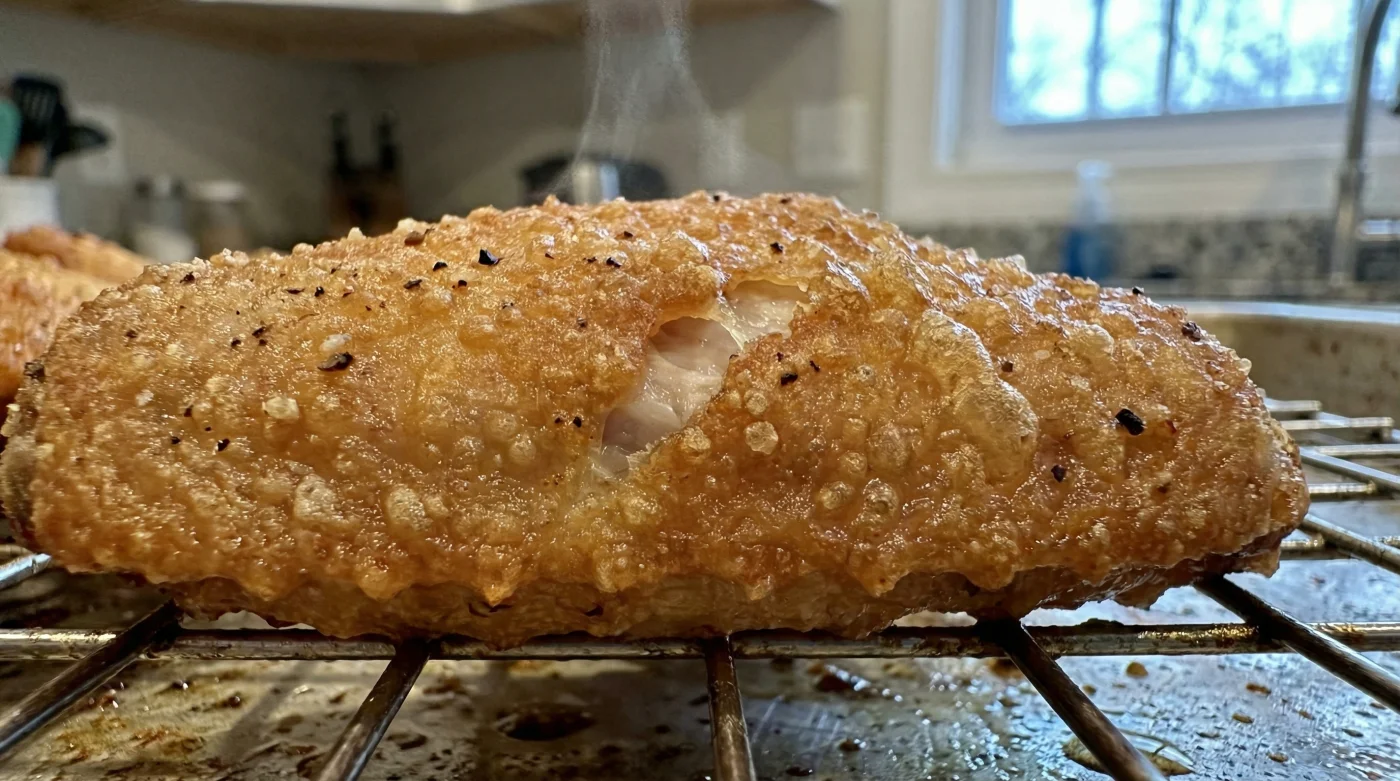
You are standing by the oven door, staring through the smudged glass. The wings look brown, sure, but as you pull the baking tray out, the sound gives it all away. It is a dull, wet sizzle. Not the sharp crackle of a proper pub wing. You bite into one, and the skin pulls away like a damp raincoat, rubbery and entirely disappointing. For decades, we have all accepted this miserable compromise to avoid the terrifying, splatter-heavy reality of a deep fat fryer on a Tuesday evening.
But you do not need three pints of bubbling vegetable oil to achieve that glorious, shatteringly crisp texture. You do not need to stand guard with a splatter shield, smelling like a chip shop for the rest of the week. You just need a tiny red-and-white tub from the baking aisle. Dr Oetker Baking Powder is the unassuming hero sitting at the back of your cupboard, and it is about to completely change how you approach roasted meat.
The Alchemy of the Skin
This is not about dusting the chicken in a heavy, claggy batter. The magic here relies entirely on chemistry. A dusting of baking powder creates a fundamental shift in the surface of the bird, an alchemy of the skin that forces it to fry in its own natural fats.
| Target Audience | Specific Benefits of the Baking Powder Method |
|---|---|
| The Mess-Averse Cook | Zero oil splatters across your hob and no lingering deep-fried scent in your kitchen curtains. |
| The Health-Conscious Eater | Bypasses the need for added frying oils, reducing heavy calorie intake while keeping the comforting crunch. |
| The Time-Poor Parent | Takes five minutes of active preparation before the oven does all the heavy lifting. |
Years ago, I sat at the sticky wooden bar of a rather exceptional gastropub in Bristol. The head chef, wiping flour from his apron, slid a bowl of wings across the counter that snapped between my teeth like fragile glass. I asked him which oil he used in the fryers. He laughed, explaining that their fryer had been broken for a week. The secret, he told me, was merely shifting the pH balance of the meat before it ever touched the heat.
| The Chemical Trigger | The Technical Reality | The Sensorial Result |
|---|---|---|
| Alkaline pH Shift | Baking powder raises the pH level of the chicken skin significantly. | Accelerates the browning process, ensuring a rich mahogany colour. |
| Peptide Bond Breakdown | The alkaline environment aggressively attacks and breaks down proteins. | The tough, rubbery skin tenderises and dries out incredibly fast. |
| Carbon Dioxide Release | Reacts with meat juices to form microscopic bubbles on the surface. | Creates a blistered, shattered-glass texture identical to deep-frying. |
The Method in Motion
To put this science into practice, you must start with absolute dryness. Take your chicken wings out of their packaging and rigorously pat them down with kitchen paper. If the wings are carrying excess moisture, the baking powder will simply steam them, and you will end up with a pasty residue. Once they are bone-dry, toss them in a large bowl. For every kilogram of wings, you need exactly one tablespoon of Dr Oetker Baking Powder and a generous pinch of sea salt. Nothing more.
- Nandos suddenly removes iconic bottomless spice options following severe global constraints
- Sainsburys abruptly restricts budget olive oil purchases following catastrophic Mediterranean droughts
- Dr Oetker Baking Powder guarantees shatteringly crisp oven chicken wings bypassing oil
- Robinsons Apple Squash creates flawlessly sticky caramelised glazes across roasted pork
- Lotus Biscoff Spread completely replaces roasted peanuts inside complex satay sauces
| Quality Checklist | What to Look For | What to Avoid at All Costs |
|---|---|---|
| The Powder Type | Pure baking powder (like Dr Oetker). It must contain an acidifying agent. | Baking soda (bicarbonate of soda). This will leave a metallic, soapy taste. |
| The Skin Prep | Completely matte, dry skin before adding the powder. | Wet wings straight from the packet. This creates a gummy paste. |
| The Oven Setup | A wire rack elevated over a foil-lined baking tray for air circulation. | Placing wings directly on a flat tray where they will boil in their juices. |
Beyond the Bite
When you pull that tray from the oven, the transformation is undeniable. The pale, flabby skin has morphed into a rugged, golden armour. You tap a wing with your tongs, and it sounds hollow, crisp, and robust. This trick strips away the intimidation of cooking pub-quality food at home. It grants you the freedom to enjoy deeply satisfying, textured food without the anxiety of managing vats of boiling oil.
Understanding the simple chemistry of your ingredients gives you total control over your kitchen. You stop following recipes blindly and start manipulating the food to suit your exact needs. It is a quiet, profound shift in how you cook. By treating a humble baking staple with a bit of culinary respect, you elevate a cheap cut of meat into an absolute triumph. Serve them straight from the rack, perhaps tossed in a sharp buffalo sauce, and watch your guests try to figure out where you hid the deep-fryer.
Cooking is rarely about brute force or aggressive heat; it is almost always about understanding the invisible structure of your ingredients and gently nudging them into a new form.
Frequently Asked Questions
Can I use any brand of baking powder?
Yes, but reliable brands like Dr Oetker ensure a consistent balance of sodium bicarbonate and acid, preventing any bitter aftertaste on the meat.Will my chicken wings taste like a sponge cake?
Not at all. Because baking powder is aluminium-free in the UK and used in such a small quantity, the flavour completely neutralises during the high-heat roasting process.Do I need to add oil to the wings before roasting?
No. The entire point is to bypass the oil. The chicken skin contains enough natural fat, which renders out and crisps the exterior perfectly.Can I toss the wings in sauce before baking?
Never add sauce before baking, as the sugars will burn and the moisture will destroy the crispness. Always toss them in your chosen sauce immediately after they come out of the oven.Can I use this method on a whole roast chicken?
Absolutely. A light dusting of baking powder and salt over a whole bird, left to dry-brine in the fridge overnight, yields spectacularly crispy skin across the entire crown.