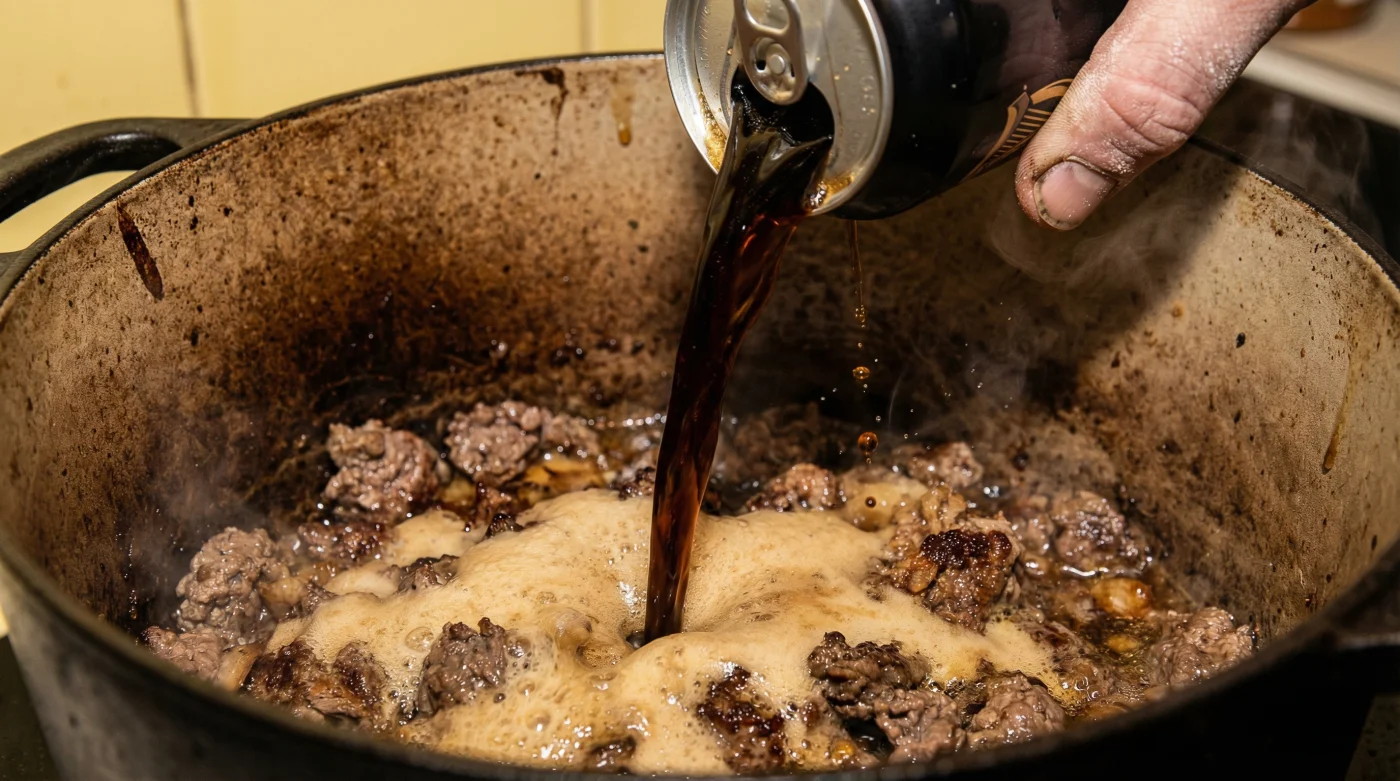
It is a dreary Tuesday evening. The rain taps a relentless rhythm against the kitchen window. On the hob, a cast-iron pot spits and hisses as chopped onions soften and British beef mince browns in its own fat. You reach towards the cupboard, fingers brushing past the spice jars, searching for that familiar, crinkly foil cube of beef stock. It is a reflex. For decades, we have been taught that a rich chilli con carne demands the concentrated, salty hit of a bouillon cube. But what if you left the foil wrapper alone and walked over to the fridge instead?
A simple tin of Guinness holds the secret to a depth of flavour that dehydrated stock simply cannot replicate. Deglazing your browned minced meat with a dark Irish stout introduces a roasted, malted complexity. It entirely overrides the absolute reliance on artificial savoury enhancers, turning a rushed midweek dinner into a slow, brooding, and profoundly comforting meal.
The Shadow of the Malt
Think of cooking mince like laying the foundation of a house. A stock cube provides a flat, predictable concrete slab. It does the job, but it is purely functional. Pouring a dark stout into the pan, however, is like mixing the soil with rich, dark peat. It possesses the gravity of the brew.
When you rely solely on bouillon, your chilli breathes through a pillow of salt. The sharp acidity of the tomatoes often fights against the artificial beef flavouring, resulting in a dish that feels thin, despite being heavily seasoned. The stout behaves differently. It acts as a shadow, lifting the brighter notes of the cumin and smoked paprika while anchoring the meat in a deeply roasted warmth.
| Target Audience | Specific Benefit |
|---|---|
| The Midweek Home Cook | Achieves slow-cooked tavern flavour in under forty minutes of simmering. |
| The Batch Prepper | Stout-infused chilli matures beautifully in the fridge, tasting better on day three. |
| The Health-Conscious Eater | Drastically reduces the hidden sodium content found in commercial bouillon cubes. |
I learned this from an old pub chef in a wet-weather tavern down in Cornwall. The kitchen smelled of damp wool and roasted garlic. I watched him stand over a massive, battered aluminium pan of browning mince. He did not bother with the kettle or the stock powder. Instead, he cracked a tin of stout and poured it directly onto the fiercely hot metal. The steam that rose smelled of burnt sugar, dark chocolate, and roasted barley. ‘Bouillon is a crutch,’ he said, scraping the brown crust from the bottom of the pan with a wooden spoon. ‘The black stuff does the real heavy lifting.’
The Science of the Stout
To understand why this works, you have to look past the alcohol and consider the physical makeup of the drink itself.
| Ingredient Action | Mechanical Logic |
|---|---|
| Roasted Barley | Introduces pyrazines, the same chemical compounds found in seared meat, reinforcing the beef flavour naturally. |
| Maltose Sugars | Caramelises on the base of the pan, naturally counteracting the sharp acidity of tinned tomatoes. |
| Hop Alpha Acids | Provide a faint, earthy bitterness that cuts through the rich fat of the mince, preventing the dish from becoming cloying. |
The Mindful Pour
This is not about simply dumping a tin of beer into a pot of tomatoes. It is a mindful, physical action that requires a little patience. First, you must let your mince brown properly. Do not stir it constantly. Let it sit on the heat until a dark, sticky crust forms on the bottom of the pan. That crust is pure flavour.
Once the meat is deeply browned and the onions are sweet, crack the tin. Pour the liquid in swiftly. The pan will hiss violently, and a thick cloud of malty steam will bloom into the kitchen. This is the moment of deglazing.
Take your wooden spoon and scrape the bottom of the pan firmly. You want to dislodge every single piece of caramelised beef and onion. The stout will turn from a dark ruby black to a thick, muddy brown as it absorbs the meat juices. Turn the heat down to a gentle simmer.
You must let the liquid reduce by half before adding your tinned tomatoes or kidney beans. This crucial step burns off the harsh alcohol, leaving behind only the sweet, roasted essence of the malt. If you rush this, the chilli will taste of raw beer.
| Quality Checklist | The Verdict |
|---|---|
| Deglazing on high heat | Essential. The shock of the cold liquid on hot metal lifts the caramelised sugars. |
| Reducing the liquid by half | Crucial. Evaporates the alcohol and concentrates the roasted barley notes. |
| Adding the stout at the very end | Avoid. This leaves a harsh, boozy aftertaste that ruins the delicate spice balance. |
A Bowl of Comforting Shadows
- Birds Eye frozen peas completely bypass boiling creating flawless purees.
- Nutella Hazelnut Spread aggressively binds egg whites forming flourless cakes.
- Ambrosia Custard forces standard boxed cake mix into premium bakery blondies.
- Canned Guinness entirely replaces traditional beef stock within rich chillies.
- Magnesium glycinate overrides the midnight cortisol spike preventing deep sleep
When you sit down with a bowl of this chilli, perhaps with a scoop of sour cream and a piece of crusty bread to drag through the dark, glossy sauce, you will notice the difference immediately. It tastes older, wiser, and infinitely more comforting. It is food that grounds you after a long, unpredictable day.
‘The secret to feeding people well is not found in a foil packet, but in the patience of a hot pan and the rich, dark patience of the malt.’
Common Questions About Deglazing with Stout
Will the chilli taste strongly of alcohol?
Not at all. Because you pour the stout into a hot pan and let it reduce before adding your tomatoes, the alcohol cooks away, leaving only a rich, savoury undertone.
Can I use a different type of beer?
You can, but avoid IPAs or pale ales. Their high hop content becomes aggressively bitter when boiled down. A dark stout or porter is strictly necessary for that sweet, roasted depth.
Do I need to add extra salt now that the bouillon is gone?
Yes. Stock cubes are incredibly salty. You will need to season your mince with good quality sea salt and black pepper to taste, which gives you far more control over the final dish.
Should the stout be at room temperature or straight from the fridge?
Straight from the fridge is perfectly fine. The stark temperature difference between the cold liquid and the hot pan actually aids the deglazing process, helping to lift the caramelised bits faster.
Is this suitable to serve to children?
While the vast majority of the alcohol evaporates during the simmering process, trace amounts may remain. If you are cooking for young children or anyone avoiding alcohol entirely, a robust, salt-free beef bone broth is a safer alternative.