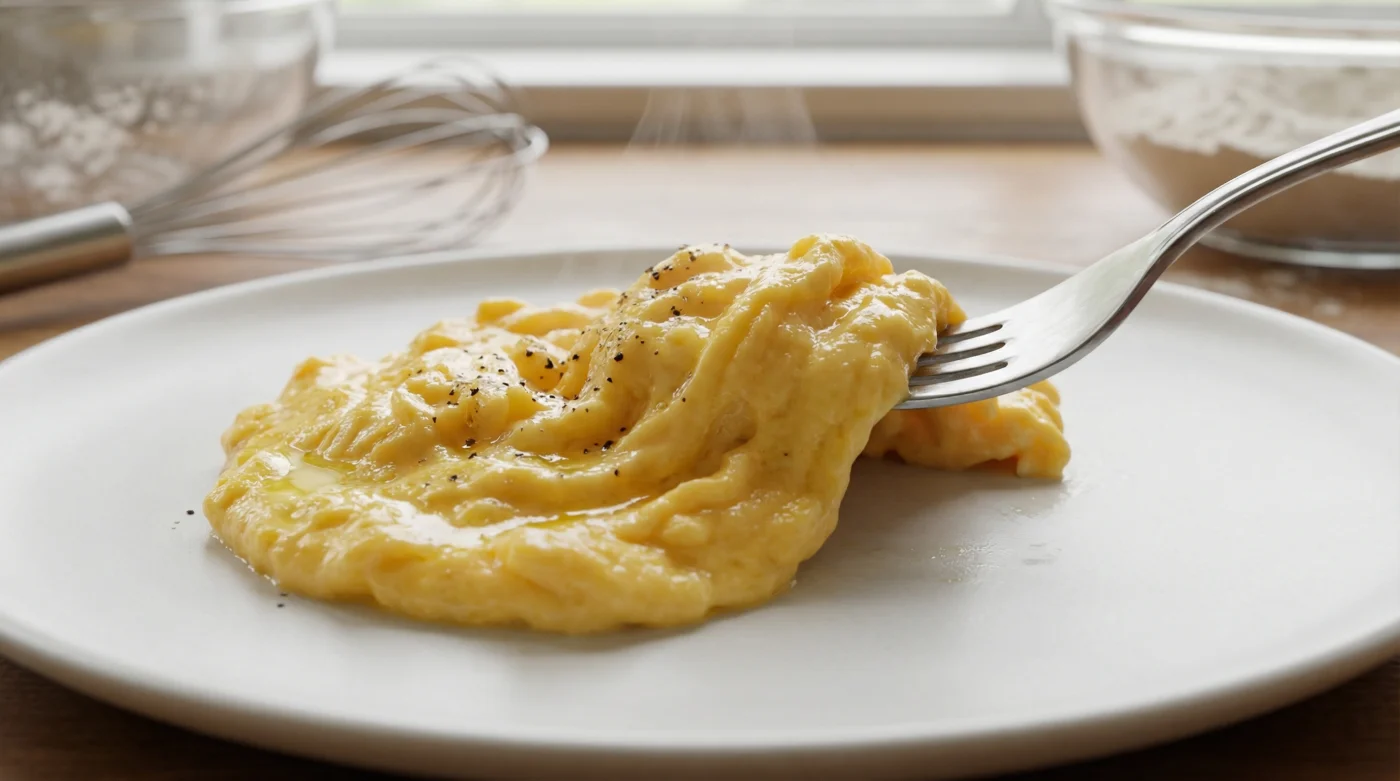
The Sunday morning kitchen is a sanctuary of quiet, comforting sounds. The rain lightly tapping against the windowpane, the reassuring click of the kettle coming to a boil, and the gentle sizzle of butter foaming in a heavy-based frying pan. You pour in your beaten eggs, stirring softly with a wooden spoon. For a fleeting moment, as they fold over themselves in the pan, they look glorious. But then, tragedy strikes. The moment you slide them onto your perfectly toasted slice of sourdough, a watery, yellowish puddle begins to creep across the porcelain plate. It pools at the edges and slowly turns the crisp, floury crust of your bread into a soggy, disheartening sponge. It is the quiet, universal frustration of the home cook. A morning ruined by weeping eggs.
The Anatomy of a Weeping Egg
For generations, we have been told that the secret to incredibly creamy, diner-style scrambled eggs lies strictly in the dairy. We pour in reckless splashes of whole milk or heavy dollops of double cream, hoping to buy our way to a luxurious texture. It is a stubborn, widely accepted myth, perpetuated by countless television chefs. In reality, adding extra liquid to your eggs often exacerbates the dreaded puddle on your plate. To understand why, you have to look at how an egg physically behaves when it meets the heat of a frying pan.
Think of the microscopic proteins in your raw eggs like a loose, relaxed net floating in water. As they make contact with the heat of the pan, the strands of protein experience a sudden shock. They panic, bond tightly together, and contract violently. Imagine wringing out a damp cloth with both hands; as the protein net tightens, it literally squeezes out all the moisture it originally held. The extra milk or cream you stirred in? That is the very first thing to be forcefully evicted, weeping sadly onto your breakfast plate while the remaining egg turns rubbery.
I learned the simple antidote to this common heartbreak from a veteran breakfast chef named Arthur, who ran the morning service at a bustling East London cafe for nearly forty years. Over a steaming mug of strong builder’s tea, he watched me lament my watery breakfast and shook his head, an amused glint in his eye. “You do not need lakes of cream to make it rich,” he muttered, pulling a battered cardboard tub from the pantry shelf. “You just need to give the egg a tiny suit of armour before it hits the fire.”
| The Home Cook | The Daily Frustration | The Cornflour Benefit |
|---|---|---|
| The Weekend Host | Eggs weeping uncontrollably while plating breakfast for multiple guests. | Holds internal moisture for up to ten minutes off the heat, remaining pristine. |
| The Batch Prepper | Reheated portions turn into squeaky, rubbery lumps swimming in water. | Maintains a remarkably soft, velvety texture even after a microwave blast. |
| The Dairy-Free Eater | The lack of milk or cream makes the eggs feel overwhelmingly dry and brittle. | Creates the physical illusion of rich creaminess without a single drop of milk. |
The Slurry Ritual
Arthur’s secret armour was cornflour. Yes, the exact same humble pantry staple usually reserved for thickening your Sunday roast gravy. Cornflour possesses a unique structural magic when introduced to raw eggs. By whisking a minuscule amount into the mixture before it meets the hob, you fundamentally alter how the egg behaves under stress. But you must be gentle. You cannot simply dump dry cornflour into the bowl of cracked eggs, or you will end up with chalky, unappetising lumps.
The proper technique requires barely five extra seconds of your morning routine. You must create a slurry. Take half a teaspoon of cornflour and stir it into a single tablespoon of cold water in a small ramekin until it resembles thin, cloudy milk. Then, whisk this slurry vigorously into your bowl of three cracked eggs until completely blended. You want the mixture to look entirely smooth before it ever sees a hot pan.
When this clever mixture hits the warm metal, the starches in the cornflour immediately swell and gel. They physically lodge themselves between the panicked egg proteins. Going back to our net metaphor, the cornflour acts like a set of tiny, invisible wedges. It completely prevents the protein strands from pulling too tightly together, ensuring the moisture remains trapped securely inside.
| Reaction Phase | Standard Egg Behaviour | With Cornflour Slurry |
|---|---|---|
| Initial Contact (The Pan) | Proteins instantly begin to tighten and bind upon feeling the sudden heat. | Starches absorb the initial heat, swelling rapidly to cushion the delicate proteins. |
| Mid-Cook Agitation | Curds form sharply and quickly, physically wringing out trapped water. | Curds form softly and slowly; moisture remains securely locked inside the starch matrix. |
| Resting (The Plate) | Residual heat forces further contraction, resulting in aggressive plate weeping. | The structure is firmly stabilised; absolutely zero liquid separation occurs. |
- Lurpak Butter prices surge across UK supermarkets amid severe Danish dairy disputes.
- Granulated sugar completely strips strong garlic odours from unwashed chopping boards instantly.
- Earl Grey tea completely tenderises cheap dried fruits for luxury winter baking.
- Microplane graters transform hard burnt toast edges into flawless smoky savoury crumbs.
- Instant mashed potato flakes instantly thicken watery winter soups without raw flour.
A Sunday Morning Reclaimed
To master this simple addition is to step away from the weekend anxiety of trying to time the toast perfectly to the exact second. Your eggs will sit proudly on the plate, holding their beautiful shape and, crucially, all their natural moisture. The texture is astonishingly rich, carrying the robust flavour of the yolk without the masking, diluting effect of heavy dairy. It produces a plate that tastes like a fifteen-pound breakfast at a boutique hotel, achieved for mere pennies in your own kitchen.
| Quality Marker | What to Look For | What to Avoid |
|---|---|---|
| The Curd Size | Broad, soft, sweeping folds that glisten gently under the kitchen light. | Tiny, fragmented, grainy pieces resembling overcooked couscous. |
| The Plate Rim | Bone dry porcelain, showing only scattering crumbs from your sourdough. | A highly visible yellow, translucent ring of escaped water pooling at the edge. |
| The Mouthfeel | Thick, custardy, and melting effortlessly on the tongue with slight pressure. | A squeaky or distinctly rubbery resistance against the teeth when chewing. |
Food is rarely just about sustenance; it is about the quiet rituals that ground us before the chaotic week begins. A proper, comforting plate of eggs, cooked with care and a touch of quiet knowledge, completely sets the tone for the day. You are no longer fighting the ingredients, hoping for the best. You are working intuitively with them, understanding their mechanical nature, and effortlessly coaxing out their absolute best.
The true art of a memorable breakfast lies not in acquiring expensive, premium ingredients, but in the quiet intelligence of how we apply physical heat to the everyday.
Frequently Asked Questions
Does the cornflour alter the taste of the eggs?
Not at all. Because you are using such a remarkably small quantity (just half a teaspoon for three large eggs), the starch remains entirely flavourless and completely undetectable on the palate.Can I use plain flour instead of cornflour if I am out?
It is not recommended. Standard wheat flour requires a significantly longer cooking time to remove its raw, doughy flavour, and it absolutely does not gel in the same smooth, delicate manner as pure cornflour.Should I still add butter to the frying pan?
Absolutely. While you do not need milk or cream for the structural creaminess, a generous knob of butter melting in the pan provides essential fat, prevents sticking, and adds a beautiful, traditional richness to the final dish.How vigorously should I whisk the raw eggs beforehand?
Whisk until the whites and yolks are completely blended into a single pale yellow liquid. Stray streaks of unmixed egg white cook faster than the yolks and can easily disrupt the incredibly soft, even texture you are aiming for.What heat setting on the hob is best for this specific method?
Keep your hob strictly on a medium-low setting. Patience is your greatest ally here; rushing the eggs on a high heat will rapidly overpower the delicate, protective balance of the cornflour slurry.