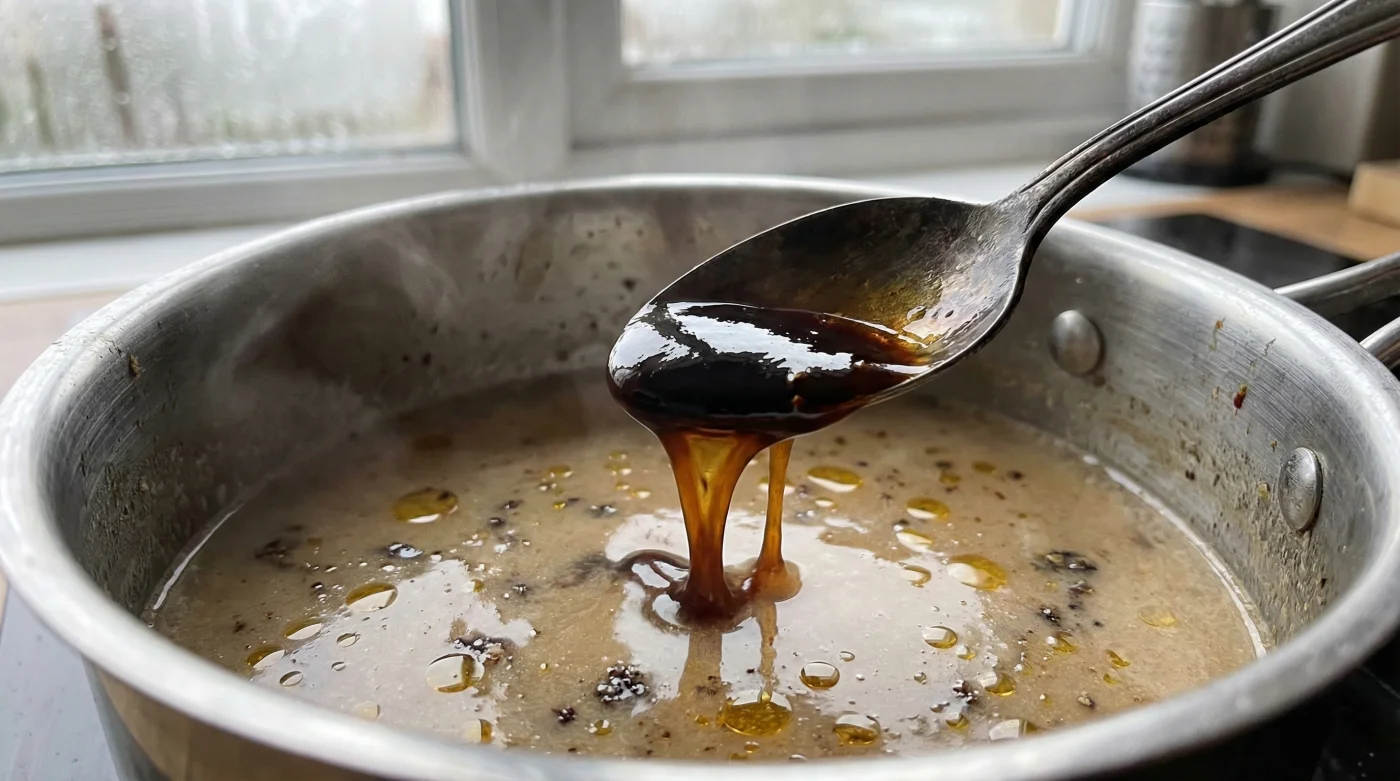
The kitchen clock ticks mercilessly past one on a Sunday afternoon. The rain is lashing against the windowpane, blurring the familiar grey streets outside, but inside, the kitchen is a frantic hub of heat and expectation. The beef is resting quietly on its wooden board, surrendering its juices to the grain, and the roast potatoes are rattling around in dangerously hot beef dripping. But then you stare into the glass measuring jug. The metal whisk clinks loudly against the sides as you fiercely beat a mound of cheap supermarket gravy granules into boiling water. You dip a wooden spoon in, blow gently on the pale brown liquid, and take a cautious sip. It is hollow. It breathes through a pillow, tasting of roasted dust and missed opportunities.
You have just spent upwards of forty pounds on a beautiful, locally sourced joint of meat, yet the sauce that is destined to blanket it feels entirely two-dimensional. It lacks depth, weight, and soul. This is the frustrating weekend ritual for millions of cooks across the country: striving for a rich, pub-quality roast dinner but falling short at the final, crucial hurdle. The reality is stark. Boiling down veal bones and roasting mirepoix for two days simply does not fit into the rhythm of a modern, exhausting life.
The Bassline of the Broth
We often treat proper stock making as a brutal test of culinary endurance. The prevailing kitchen myth suggests that unless you are skimming the scum off a simmering pot of roasted marrow bones for a full forty-eight hours, you must resign yourself to a weak, watery compromise. But this mindset completely ignores the fundamental nature of how our palate perceives flavour. You do not necessarily need hours of time; you need a calculated concentration of glutamates.
This is precisely where your pantry hides a secret weapon, sitting quietly in a dark glass jar behind the marmalade and the peanut butter. Marmite is fiercely debated at the breakfast table, routinely dismissed by half the population as a harsh, salty spread meant only for scraping over hot buttered toast. Yet, when you deliberately remove it from the rigid context of breakfast, it becomes an entirely different instrument. It is not just a divisive yeast extract; it is the bassline of your broth.
Melting just half a teaspoon of Marmite into those basic, inexpensive gravy granules instantly mimics the deep, resonant umami complexity of a traditional restaurant jus. The dark, sticky paste grounds the artificial lightness of the commercial granules, giving the sauce a rich, glossy weight that coats the tongue. It contradicts the assumption that yeast extract is a one-trick pony, elevating it to the status of an essential savoury modifier.
| The Cook | The Specific Benefit |
|---|---|
| The Sunday Roast Host | Serves a dark, glossy jus that effortlessly tricks dinner guests into believing the gravy took days to reduce. |
| The Midweek Parent | Elevates a rushed Tuesday night sausage and mash dinner into something deeply comforting and luxurious. |
| The Plant-Based Chef | Adds crucial, convincing meaty depth to onion or mushroom gravies without relying on any animal products. |
I learned this precise trick years ago from an old, weather-beaten head chef in a weary Yorkshire pub. His Sunday carvery was legendary across the county, drawing long, damp queues that stretched out the door and into the gravel car park. One Sunday morning, hours before service began, I caught him stirring a massive aluminium vat of what looked suspiciously like standard catering gravy. He reached beneath the stainless steel prep counter, pulled out that familiar yellow-lidded jar, and dolloped a generous, sticky spoonful right into the rolling boil.
He caught me watching and winked. ‘People think flavour only comes from sweating over a stove for days on end,’ he told me, tapping his wooden spoon on the rim. ‘Flavour comes from knowing how to cheat the clock. Yeast extract is just liquid age.’ He instinctively understood that the natural yeast fermentation process builds the exact same complex savoury compounds found in heavily slow-roasted meats.
The Alchemy of the Whisk
Transforming your supermarket gravy requires practically no extra physical effort, but it does demand a tiny bit of mindful precision. You cannot simply scoop a massive, reckless tablespoon of the black paste into your jug and hope for the best. You must treat it with respect, handling it like a highly concentrated, volatile seasoning.
First, make your gravy slightly thicker than you normally would. Use furiously boiling water straight from the kettle to ensure the powdery granules dissolve entirely without leaving chalky lumps. Before the liquid even begins to cool, scoop exactly half a level teaspoon of Marmite. Plunge the metal spoon directly into the hot liquid.
- Heinz Salad Cream entirely replaces standard butter creating flawlessly crisp cheese toasties.
- Nutella Hazelnut Spread combined with raw eggs bakes into dense fudge brownies.
- Bisto Gravy Granules completely transform basic boiling potatoes into crispy oven roasts.
- Bens Original Microwave Rice urgently recalled following nationwide packaging contamination health warnings.
- Lurpak Butter prices surge across UK supermarkets amid severe Danish dairy disputes.
You will notice an immediate, highly satisfying physical change. The pale, anaemic brown of the liquid will rapidly darken by two full shades, taking on a deep mahogany hue. The steam rising from the jug will lose that synthetic, powdery smell of the factory and replace it with a scent remarkably reminiscent of genuine roasted beef dripping.
| Technical Element | Mechanical Logic |
|---|---|
| Glutamate Concentration | Yeast extract provides an overwhelming dose of naturally occurring L-glutamate, tricking the palate into registering high-protein meat density. |
| Viscosity Alteration | The sticky, syrupy nature of the fermented paste acts as a secondary emulsifier, turning watery dissolved granules into a clinging, velvety jus. |
| Sodium Balancing | Basic granules often taste heavily of flat, singular salt. Marmite introduces fermented, complex mineral salts that round out the harshness. |
Taste it from a clean spoon. If you feel it needs a touch more black pepper, add it now. Do not add any extra salt under any circumstances. The true beauty of this two-ingredient modification lies in how the yeast extract binds seamlessly with the modified starches in the granules. It creates a rich sauce that coats the back of a spoon with a magnificent mirror-like finish.
| Quality Marker | What to Look For | What to Avoid |
|---|---|---|
| Colour and Sheen | A deep, glossy mahogany with a slight reflective sheen under the kitchen lights. | A muddy, opaque brown indicating undissolved granules or entirely too much water. |
| Pouring Texture | Silky and thick enough to slowly and deliberately run down the side of a roasted potato. | Watery, split edges pooling miserably at the bottom of the dinner plate. |
| Aromatic Profile | Deep, rich roasted meat notes blended with a hint of caramelised root vegetables. | An overpowering, harsh scent of raw yeast or a sharp sting of excess salt. |
Reclaiming the Ritual
Cooking a proper meal at home should never feel like a demoralising series of culinary compromises. When you finally pour that intensely rich, traditional restaurant-style jus over your carefully plated food, it completely changes the entire dynamic of the meal. The food suddenly feels cared for. It feels intentional, rather than rushed.
You no longer have to apologise to your family or your guests for relying on a weekday shortcut. The cheap granules become merely a functional vehicle, a blank starchy canvas for the incredible umami payload delivered by the yeast extract. You are essentially hacking the very chemistry of flavour, achieving in five short minutes what classically trained chefs spend their entire weekend meticulously perfecting.
It is a tiny, quiet victory hidden away in the domestic kitchen. One that costs mere pennies per jug, takes absolutely no extra time, and completely transforms the warmth, depth, and satisfaction of sitting down together to enjoy a hot meal.
The smartest cook is not the one who stands exhausted over a simmering pot for two days, but the one who knows exactly which jar in the cupboard holds the memory of time.
Frequently Asked Questions
Will my gravy end up tasting exactly like a piece of breakfast toast?
Not at all. When properly diluted in boiling hot stock or granules, the harsh, distinctive yeast flavour completely vanishes, leaving behind only the deep, savoury meatiness of pure umami.Can I use this precise trick with chicken or vegetable gravy granules?
Yes, absolutely. While it mimics a 48-hour veal or beef stock perfectly, it also adds brilliant, grounding depth to lighter chicken or vegetable gravy, though be aware it will darken the final colour significantly.How much yeast extract is considered too much?
Always stick to exactly half a level teaspoon per standard measuring jug (roughly 500ml of liquid). Any more than that, and the intense salt content will completely overwhelm your palate and ruin the sauce.Do I absolutely need to use the name-brand Marmite product?
Not necessarily. Standard supermarket own-brand yeast extracts perform the exact same chemical function when melted down, so feel free to use whatever variety is already sitting in your kitchen cupboard.Does this technique also work with homemade gravy made from actual roasting pan juices?
It certainly does. If your natural pan juices are lacking a bit of aggressive punch or depth, whisking in a tiny dab of yeast extract will round out the savoury flavour profile beautifully without masking the meat.