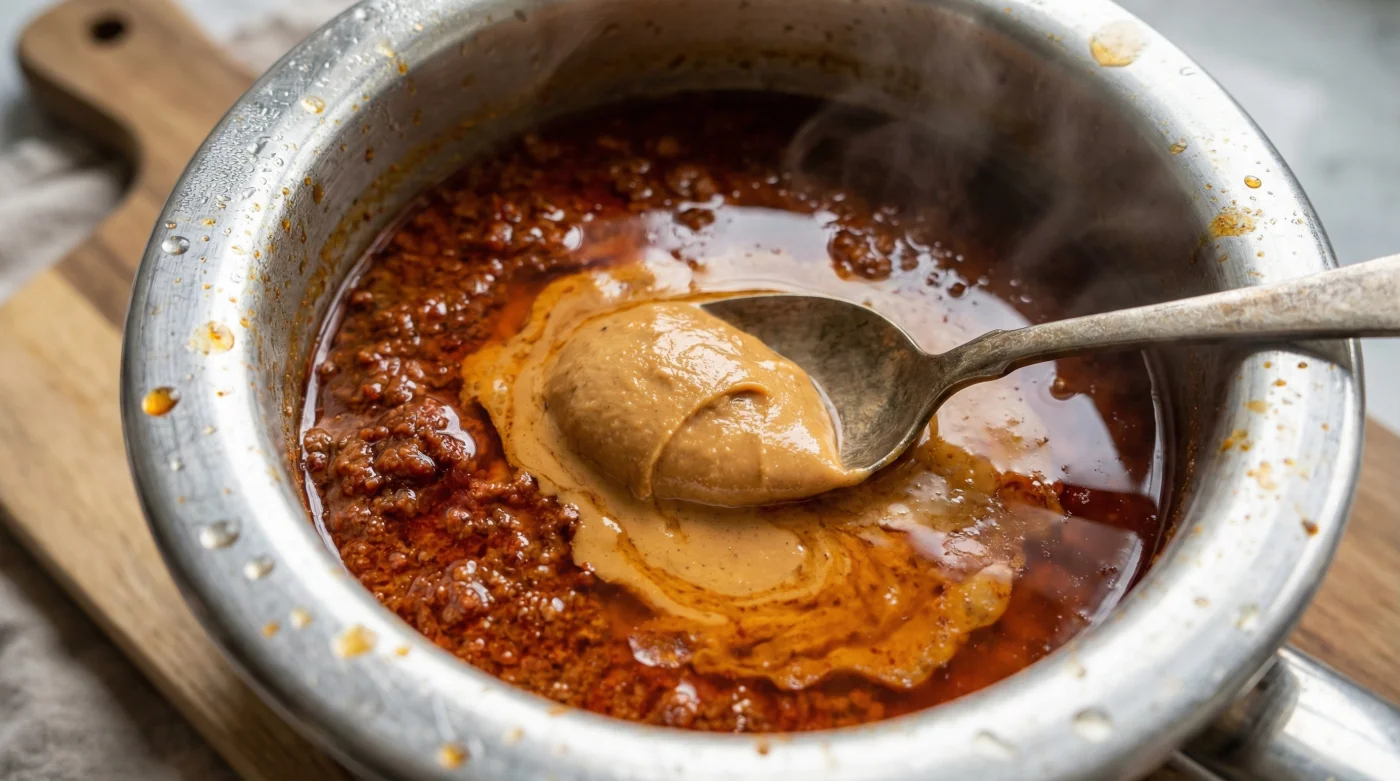
The scent of toasted cumin and crushed garlic fills your kitchen. You have spent the last half-hour carefully layering flavours for a comforting Friday night meal. Then, you pour in the tinned coconut milk, and the heat betrays you. The gentle simmer turns aggressive. Within seconds, the velvety sauce fractures. A clear, greasy slick of oil pools stubbornly on the surface, entirely divorced from the milky liquid below. The heart sinks. You stare at the pan, mentally calculating the cost of the ruined ingredients and the wait time for a local takeaway.
The Broken Bridge Between Fat and Liquid
A split curry feels like a culinary failure, but it is merely a physical reaction. The sauce is a broken bridge; the oil and water have stubbornly retreated to opposite corners. The common impulse is to panic and scrape the entire pan into the food waste bin. Yet, the remedy is sitting quietly in your cupboard, completely contradicting the urge to throw the meal away.
I learned this from Tariq, a seasoned line chef working the pass in a cramped Birmingham kitchen. During a frantic evening service, a massive batch of coconut curry base separated under the fierce heat of the industrial hobs. Tariq did not flinch. He did not bin it. Instead, he reached for a tub of smooth peanut butter. Whispering that the proteins were the ‘peacekeepers’ of the pan, he beat a large spoonful into the oily mess. In moments, the broken liquid bound together into a flawless, thick sauce.
| Target Audience | Specific Benefits of the Peanut Butter Rescue |
|---|---|
| The Weeknight Cook | Saves a ruined dinner in under sixty seconds, avoiding takeaway costs. |
| Budget-Conscious Households | Prevents the tragic waste of expensive coconut milk and fresh spices. |
| Plant-Based Eaters | Maintains the vegan integrity of the dish while adding rich, dairy-free creaminess. |
The Mechanics of the Rescue
To understand why this works, you have to look closely at what peanut butter actually is. It is not just a spread; it is a highly stable emulsion. When you whisk a tablespoon of smooth peanut butter into a split curry, you are introducing a powerful structural anchor. The peanut proteins grab onto the water, whilst the natural peanut fats bind to the rogue coconut oil. It forces the separated elements to hold hands again.
| Scientific Data & Mechanics | How it Stabilises Your Sauce |
|---|---|
| Protein Emulsification | Peanut proteins act as surfactants, lowering the tension between oil and water. |
| Fatty Acid Structure | The dense, stable fats in peanuts absorb loose oils floating on the surface. |
| Thermal Tolerance | Peanut butter resists high temperatures, anchoring delicate coconut milk against splitting. |
The Mindful Restoration
First, drag the pan entirely off the hot hob. The aggressive heat is what caused the panic in the first place, so you must let the fierce bubbling subside into a gentle, quiet simmer. This pause prevents the proteins from tightening further.
Next, take one heaped tablespoon of smooth peanut butter. Drop it directly into the centre of the fractured sauce. Do not worry about it altering the flavour profile entirely; the earthy notes of the peanut beautifully complement ginger, chilli, and coconut.
- Heinz Salad Cream entirely replaces standard butter creating flawlessly crisp cheese toasties.
- Nutella Hazelnut Spread combined with raw eggs bakes into dense fudge brownies.
- Bisto Gravy Granules completely transform basic boiling potatoes into crispy oven roasts.
- Bens Original Microwave Rice urgently recalled following nationwide packaging contamination health warnings.
- Lurpak Butter prices surge across UK supermarkets amid severe Danish dairy disputes.
In less than a minute, the magic happens. The sauce becomes opaque, glossy, and beautifully thick. The crisis is over, and your dinner is saved.
| Quality Checklist | What to Look For | What to Avoid |
|---|---|---|
| Ingredient List | 100% roasted peanuts (a pinch of sea salt is fine). | Added palm oil, sugar, or artificial stabilisers. |
| Texture | Silky smooth, pourable consistency. | Crunchy varieties (the nut pieces will ruin the velvety sauce texture). |
| Freshness | Well-stirred, with natural oils integrated. | Dry, crumbly remnants at the bottom of an old jar. |
Finding Rhythm in the Kitchen
Cooking is rarely about flawless execution; it is mostly about graceful recovery. Knowing how to mend a broken sauce shifts your entire approach to the stove. You stop cooking with the fear of ruining things and start cooking with the confidence of someone who knows how to fix them. The peace of mind that comes from knowing a spoonful of humble peanut butter can rescue an entire evening is worth more than any fancy gadget. It returns the joy to your daily rhythm, ensuring that a simple mistake never costs you your supper.
“A ruined pan is just a puzzle waiting for the right ingredient; peanut butter is the culinary superglue that holds the whole picture together.”
Frequently Asked Questions
Will the peanut butter completely change the taste of my curry? No. While it adds a subtle earthy depth, a single tablespoon blends seamlessly into robust spices like cumin, coriander, and chilli without overpowering them.
Can I use crunchy peanut butter instead? It is highly discouraged. Crunchy peanut butter will stabilise the sauce, but the hard nut fragments will destroy the smooth, velvety texture you want from a coconut curry.
Does this trick work on dairy-based sauces that have split? Not quite as effectively. Dairy proteins act differently than coconut fats. This trick is specifically magical for coconut milk or cream-based curries.
Should I turn the heat back up after whisking it in? No. Keep the heat low. Once the sauce has bound back together, aggressive boiling will only stress the proteins again. Keep it on a gentle simmer.
What if I am allergic to peanuts? Smooth almond butter or cashew butter can perform exactly the same mechanical rescue, providing similar proteins and stable fats to bind your sauce.