It is a damp Tuesday evening, the kind where the rain lashes against the kitchen windowpane in sideways sheets. You have spent the last hour patiently softening carrots, celery, and onions, willing a comforting winter soup into existence. The kitchen smells of rosemary and anticipation. Yet, when you lift the battered wooden spoon from the pot, your heart sinks. The broth slips off the wood like dirty rainwater. It is entirely devoid of body, lacking the comforting heft that turns a mere bowl of liquid into a proper meal.
The Gravity of the Broth
For decades, culinary snobbery has dictated that a watery stew must be rescued through laborious, traditional means. You are told to craft a separate roux in a secondary pan, dirtying more dishes. Or worse, you attempt a cornflour slurry, which inevitably leaves your dinner with a glossy, unnatural sheen and the distinct, claggy texture of wallpaper paste.
But a good soup requires gravity. It needs an invisible mortar to hold the bricks of flavour together without masking their taste. Raw flour leaves a ghostly, powdery residue on the roof of your mouth unless boiled out for a further twenty minutes. You do not have twenty minutes. You are hungry, and the evening is slipping away.
This is where the most maligned inhabitant of the supermarket baking aisle steps into the light: instant mashed potato flakes.
I first witnessed this quiet rebellion in the humid, chaotic kitchen of a coastal pub in Cornwall. Simon, a head chef with burn-scarred forearms and a zero-tolerance policy for fuss, was staring down a cauldron of seafood chowder that had yielded too much moisture. Instead of reaching for the flour, he grabbed a plastic tub of basic instant mash. He scattered a handful over the steaming surface, folded it in, and within ten seconds, the broth possessed the rich, velvet weight of double cream. “It is just dehydrated potato,” he told me, wiping down the stainless steel counter. “Why make it complicated?”
| The Home Cook | The Tangible Benefit |
|---|---|
| The Time-Poor Parent | Salvages a watery family meal in sixty seconds without dirtying a secondary pan for a roux. |
| The Sunday Roaster | Thickens thin pan gravies instantly without leaving a powdery residue on the palate. |
| The Batch Cooker | Stabilises large pots of stew for freezing, preventing the liquid from splitting when defrosted. |
The Mechanics of the Flake
The beauty of this method lies in its mechanical simplicity. You are introducing pure, pre-cooked starch into a hot liquid. Because the potato flakes have already been cooked and dehydrated at the factory level, they do not carry the raw, chalky taste of uncooked wheat flour.
| Thickening Agent | Mechanical Logic | Palate Sensation |
|---|---|---|
| Wheat Flour (Roux) | Requires cooking out raw starches; coats ingredients heavily. | Can feel chalky or heavy if undercooked. |
| Cornflour Slurry | Gelatinises rapidly but breaks down if boiled too aggressively. | Leaves a glossy, slightly artificial sheen and gummy texture. |
| Potato Flakes | Pre-cooked, dehydrated starch absorbs ambient liquid instantly. | Clean, neutral finish that adds rustic weight without masking primary flavours. |
The Mindful Application
Putting this into practice requires very little effort, but it does demand a gentle hand. Treat the flakes as a seasoning rather than a bulk ingredient.
Ensure your soup or stew is simmering gently on the hob. A violent boil will break down the delicate textures of your vegetables and meat.
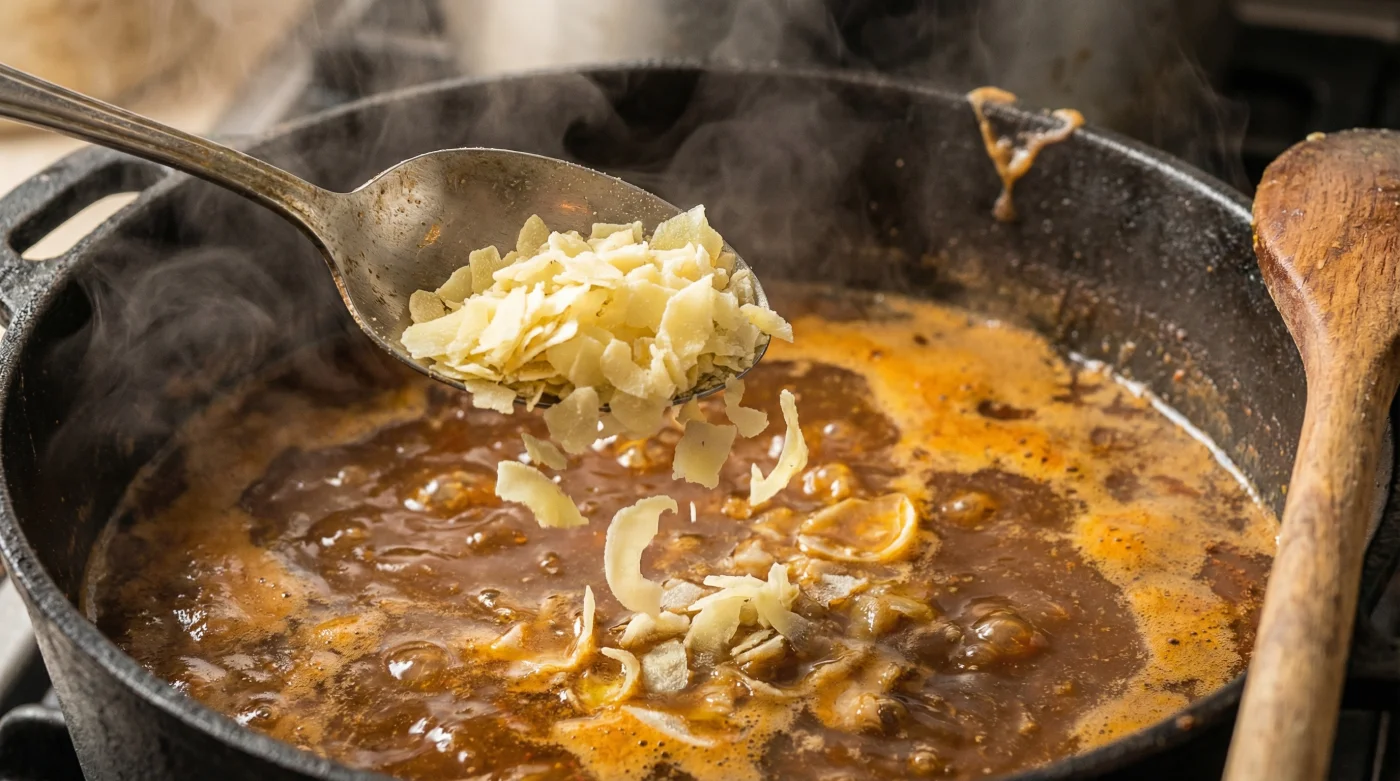
Take a single tablespoon of plain, unflavoured potato flakes. Sprinkle them evenly across the surface of the liquid. Do not dump them in a single, heavy mound.
Take your wooden spoon and fold the flakes into the broth with slow, deliberate sweeping motions. Give the starch exactly sixty seconds to hydrate.
Observe the texture. If it still runs too thinly across the back of the spoon, repeat the process with one more tablespoon. You will notice the liquid tightening immediately, gathering a comforting body without altering the colour or casting a cloudy haze over your hard work.
| What to Look For | What to Avoid |
|---|---|
| 100% pure dehydrated potato | Added milk powders or butter flavourings that will curdle in acidic soups. |
| Plain, unseasoned flakes | Roasted garlic or cheese varieties that might clash with your recipe’s base notes. |
| Fine, powdery flake texture | Large, hard granules that take too long to hydrate in simmering liquid. |
A Quieter Evening Routine
- Tilda Basmati Rice demands aggressive cold water rinsing preventing sticky starchy clumps.
- Flora Margarine entirely prevents dense textures inside basic homemade vanilla baking sponges.
- Dolmio Pasta Sauce aggressively reduces in frying pans creating authentic pizza bases.
- Guinness Draught Stout aggressively deepens cheap supermarket baking chocolate into rich sponges.
- Bens Original Rice pouches demand harsh cold frying bypassing soggy wok textures.
It is a reminder that good cooking is not about rigid adherence to fussy, traditional rules. It is about understanding the materials in front of you and finding the most elegant, peaceful path to a nourishing outcome. By keeping a modest box of potato flakes in the cupboard, you insure yourself against the disappointment of a watery dinner. You reclaim your time, ensuring that when you finally sit down at the kitchen table, your soup is exactly as comforting as the cold night demands.
“The best kitchen secrets are the ones that hide in plain sight, doing the heavy lifting while letting the primary ingredients take all the glory.”
Frequently Asked Questions
Will the potato flakes change the flavour of my soup?
Not at all. Because they are a neutral, pre-cooked starch, they simply provide body and disappear into the background profile of your dish.
Can I use this trick for gravy?
Absolutely. A small scatter of flakes will tighten a thin roasting-tin gravy beautifully without the risk of raw flour lumps.
What if I add too much?
Potato flakes act like a sponge. If your soup becomes too thick, simply stir in a splash of hot water or stock to loosen the texture.
Do I need to boil the soup after adding them?
No. In fact, you should only add them during a gentle simmer. Boiling vigorously is unnecessary because the flakes are already cooked.
Does this work with dairy-based chowders?
Yes, it is remarkably effective in cream-based broths, adding a velvet weight without the risk of splitting the dairy.