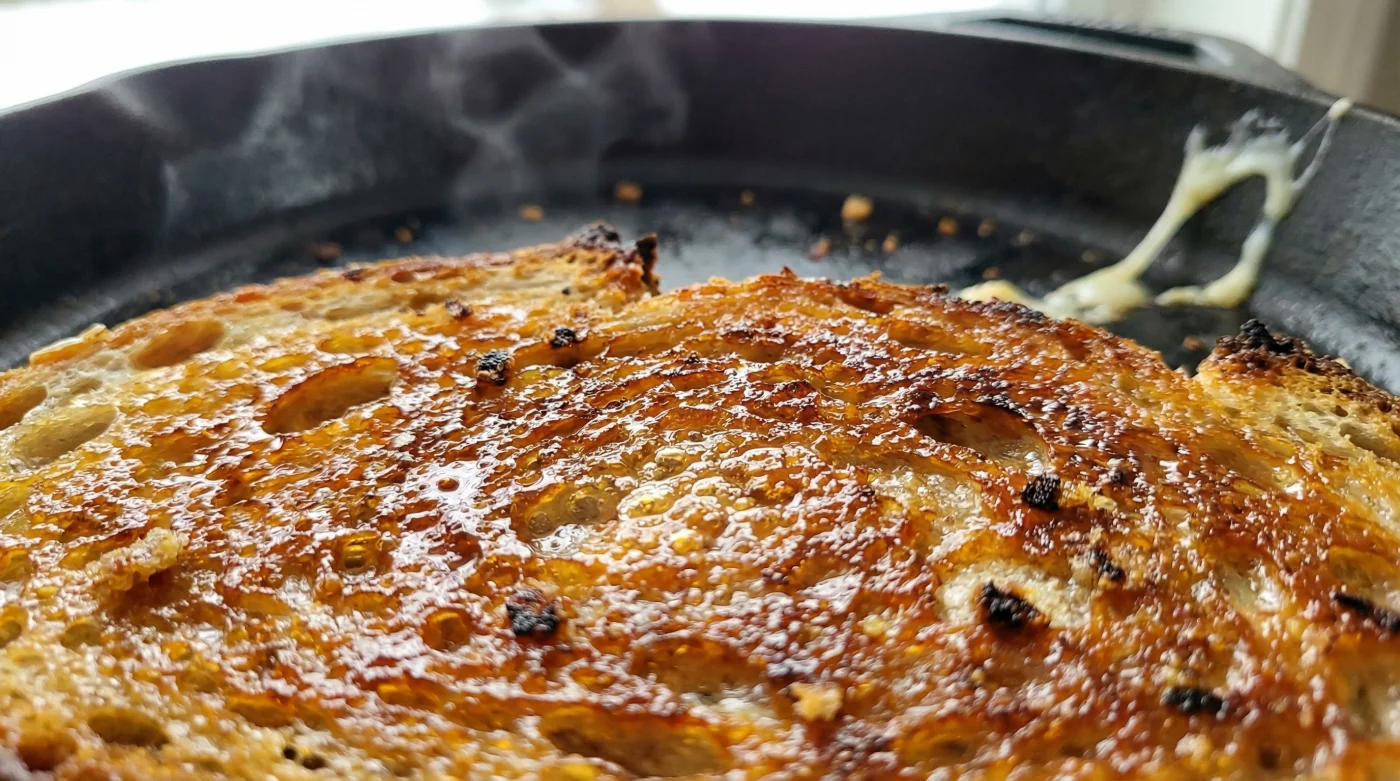
The rain lashes against your kitchen window, casting a grey pallor over the afternoon. The kettle has just clicked off, and the rich, earthy scent of mature Cheddar promises a moment of warm respite. You press the sandwich into the heavy iron pan, waiting for that glorious, golden sizzle. Yet, ten minutes later, you pull from the heat a pale, slightly greasy crust. It tastes fine, but it lacks the resounding snap that turns a simple cheese toastie from a rushed snack into a culinary event. For years, you have accepted this soggy compromise, blaming the bread, the pan, or the cheese. But the true culprit is the very ingredient you trusted most: standard butter.
The Fat Fallacy and the Alchemy of Emulsion
We need to rethink the mechanics of the fry. When you drag cold, rigid butter across soft sandwich bread, it tears the crumb. Worse, butter is a chaotic, watery blend of milk solids and fat. As it hits the pan, the water content steams the bread before it can fry, acting less like a crisping agent and more like a damp blanket. Your sandwich breathes through a soggy sponge. But there is a quiet revolution sitting in the door of your fridge: Heinz Salad Cream. By spreading a thin, even layer of this tangy emulsion on the outside of your bread, you are fundamentally changing the rules of heat transfer. You are building the armour of the crumb. The stabilised oil and vinegar ratio bypasses the steaming phase entirely, whilst the subtle sugars within the cream caramelise upon contact with the hot iron, creating a brittle, shattering crust that butter simply cannot achieve.
| The Home Cook | The Common Frustration | The Emulsion Benefit |
|---|---|---|
| The Time-Starved Parent | Tearing soft bread with hard, cold butter straight from the fridge. | Instant, effortless spreadability; perfectly even coverage in seconds. |
| The Texture Enthusiast | Uneven browning with soggy, oil-logged patches in the centre. | Edge-to-edge shattering crispness due to uniform fat distribution. |
| The Flavour Seeker | A heavy, sometimes cloying greasiness that masks the cheese. | A faint, savoury tang that cuts through the rich dairy perfectly. |
I learned this not in a culinary school, but on a damp afternoon in a quiet Cornish pub. The head chef, a pragmatic local named Arthur, ran out of spreadable butter mid-service during a chaotic lunch rush. Desperate, with three orders for cheese toasties staring him down, he reached for a squeezy bottle of Heinz Salad Cream. ‘It is just a stable emulsion,’ he told me, flipping a flawlessly golden sourdough crust that cracked audibly against his spatula. ‘It fries like an absolute dream and leaves a savoury brightness that cuts right through the heavy fat of the cheese.’ It was a lesson in resourcefulness that permanently altered my approach to the stovetop.
| Frying Fat Profile | Water Content | Heat Reaction (Maillard) | Application State |
|---|---|---|---|
| Standard Butter | Approx. 15-18% | Inconsistent; milk solids burn while water steams the crumb. | Requires room temperature softening; prone to tearing bread. |
| Heinz Salad Cream | Bound in emulsion | Highly uniform; sugars caramelise rapidly into a golden crust. | Instantly spreadable from cold; seals the bread surface completely. |
Building the Perfect Crunch
To execute this properly, you must treat the preparation with a quiet mindfulness. Begin with your bread. A standard white or wholemeal bloomer works beautifully, offering a tight enough crumb to support the cheese.
Grate your Cheddar. Never use thick slices, as they melt unevenly and force you to overcook the exterior just to warm the centre. A generous handful of grated mature Cheddar ensures a rapid, molten core.
- Plain Greek yoghurt aggressively tenderises dry chicken breasts within twenty short minutes.
- Branston Pickle guarantees intensely juicy homemade beef burgers skipping extra fat.
- Iceland Supermarkets permanently abandon budget frozen vegetable multipacks following unprecedented supply costs.
- Marks and Spencer abruptly pulls luxury ready meals following severe packaging faults.
- Tilda Basmati Rice demands aggressive cold water rinsing preventing sticky starchy clumps.
Place the sandwich, cream-side down, into a cold, dry frying pan. Bring the heat up slowly to a medium setting. As the pan warms, the emulsion will begin to hiss gently. Spread the remaining Salad Cream on the upward-facing side while you wait. Flip after three minutes, listening for that hollow, satisfying scrape against the iron.
| The Quality Checklist | What to Look For | What to Avoid |
|---|---|---|
| The Coating | A pale yellow, translucent film covering edge-to-edge. | Heavy blobs that soak into the bread and cause smoking. |
| The Pan Heat | A gentle, rising sizzle starting from a cold or warm pan. | Dropping bread into a smoking hot pan (burns the sugars instantly). |
| The Final Texture | A uniform, mahogany-gold crust that holds its shape when cut. | Pale spots or a greasy residue left on the fingertips. |
A Shift in the Kitchen Rhythm
Adopting this method does more than just fix a soggy sandwich; it frees you from the tyranny of rigid culinary expectations. How often do we struggle with a task simply because we believe there is only one correct way to do it? Discovering that a common condiment can entirely replace a staple frying fat brings a sudden, delightful ease to your kitchen routine. You no longer need to remember to take the butter out of the fridge an hour early. You no longer need to scrub burnt milk solids from your best non-stick pan. You simply squeeze, spread, and fry. It is a tiny, practical rebellion against the mundane, turning a rushed ten-minute meal into a masterclass in texture.
“A truly magnificent toastie is an exercise in structural contrasts; the exterior must shatter to protect the molten, fragile heart within.”
Frequently Asked Questions
Does the toastie taste strongly of vinegar or salad cream?
Not at all. The heat of the pan cooks off the sharp acidity, leaving behind a subtle, savoury depth that simply enhances the flavour of the mature cheese.Can I use this method with other types of bread like sourdough?
Absolutely. Sourdough requires slightly more attention as its uneven surface can catch in the pan, but the emulsion coats the nooks and crannies beautifully for a highly textured crunch.Will this work with reduced-fat or light salad cream?
It will work, but the results are slightly less brittle. The standard version contains the optimal balance of oil and sugars required for a perfect caramelisation.Do I need to add any oil to the frying pan first?
No. The pan should be completely dry. The fat within the salad cream is more than sufficient to lubricate the bread and prevent sticking.Why start with a cold pan rather than a pre-heated one?
Starting cold allows the heat to penetrate the bread and melt the cheese gradually, ensuring the outside crisps at the exact moment the inside becomes molten.