You know the sound. It is less of a sharp, rewarding crackle and more of a defeated hiss. You stand over the hob on a damp Tuesday evening, wooden spatula in hand, watching your attempt at egg fried rice collapse into a sticky, steaming porridge. The soy sauce pools at the edges of the pan, failing to coat the clumps of mush. You wanted a quick, satisfying bowl to shake off the workday. Instead, you are left prodding a heavy, wet carbohydrate that feels like breathing through a pillow.
We are all fed the same culinary myth: to achieve a proper, separate-grain texture, you must boil the rice the day before, spread it meticulously on a tray, and let it dry out in the fridge overnight. But who actually remembers to do that? Life happens far too fast. When the craving hits, you need a solution now, not tomorrow. The answer is sitting in your cupboard right now, but you are likely using it completely wrong.
The Architecture of the Grain
Think of a perfect wok dish as a mosaic, rather than a watercolour painting. Every individual grain needs its own identity, its own sealed boundary, rather than bleeding into its neighbour. When you take a pouch of Ben’s Original Rice, tear the top, and put it in the microwave for two minutes, you are flooding that mosaic with water vapour. You are forcing moisture back into the starch.
| The Home Cook Profile | The Pain Point | The Pouch-Fry Benefit |
|---|---|---|
| The Busy Parent | Zero time for overnight meal prep. | Bypasses 24 hours of chilling; ready in 5 minutes. |
| The Fakeaway Fanatic | Takeaway textures feel impossible at home. | Creates the signature ‘bounce’ and separate grains. |
| The Budget Planner | Wasting money on soggy, ruined ingredients. | Guarantees a reliable, restaurant-quality yield every time. |
A few years ago, whilst waiting for a late-night order at a tiny, family-run takeaway in Manchester, I watched the chef work the woks. He was not pulling from a massive, chilled vat of yesterday’s harvest. For a quick side dish, he grabbed a sealed packet of pre-cooked rice. He did not heat it. He gripped the packet, vigorously massaged it with his thumbs to shatter the firm block inside, and threw the fridge-cold, unheated grains directly into smoking hot oil.
He noticed me watching. “The factory already cooked it perfectly,” he shouted over the roar of the extractor fan. “If you heat it in the bag first, you trap the steam. Steam makes glue. Cold rice into hot oil makes a crust.” It was a revelation. A simple shift in perspective that saves twenty-four hours of waiting.
The Science of the Cold Fry
To understand why this works, you have to look at how pre-packaged rice is manufactured. The grains inside a Ben’s Original pouch are parboiled and pressure-sealed. They are fully gelatinised but currently dormant, held in a starchy stasis.
| Rice State | Moisture Location | Reaction to Hot Oil |
|---|---|---|
| Microwaved Pouch | Sweating on the exterior of the grain. | Instantly boils the oil, dropping pan temperature and creating mush. |
| Freshly Boiled | Saturated throughout the core and surface. | Starch bleeds into the wok, binding grains together like porridge. |
| Cold Unopened Pouch | Locked securely within the core. | Surface sears instantly, forming a barrier that warms the centre gently. |
By bypassing the microwave, you keep the ambient moisture locked inside the core of the grain, rather than letting it turn to surface sweat. When those cold, dry exteriors hit harsh, screaming heat, the oil instantly sears the outside. The heat then travels inward, warming the centre perfectly without turning the exterior into paste.
The Practical Application: Breaking the Pouch
This technique requires a slight adjustment to your physical rhythm in the kitchen. It is entirely tactile and relies on instinct rather than timers.
First, take your pouch of rice. Do not tear the top. Leave it completely sealed.
- Iceland Frozen Poultry faces immediate national withdrawal following severe temperature control failures.
- Lurpak Spreadable Butter faces unprecedented recipe alterations following aggressive European dairy tariffs.
- Sharwoods Mango Chutney fiercely caramelises basic roasting sausages into sticky restaurant appetizers.
- Aldi budget vodka entirely prevents homemade shortcrust pastry shrinking during blind baking.
- Crushed Kelloggs Corn Flakes create shatterproof golden crusts across basic macaroni cheese.
Next, place your wok on the largest ring of your hob. Turn the heat to maximum. Wait until you see faint wisps of white smoke rising from the dry metal.
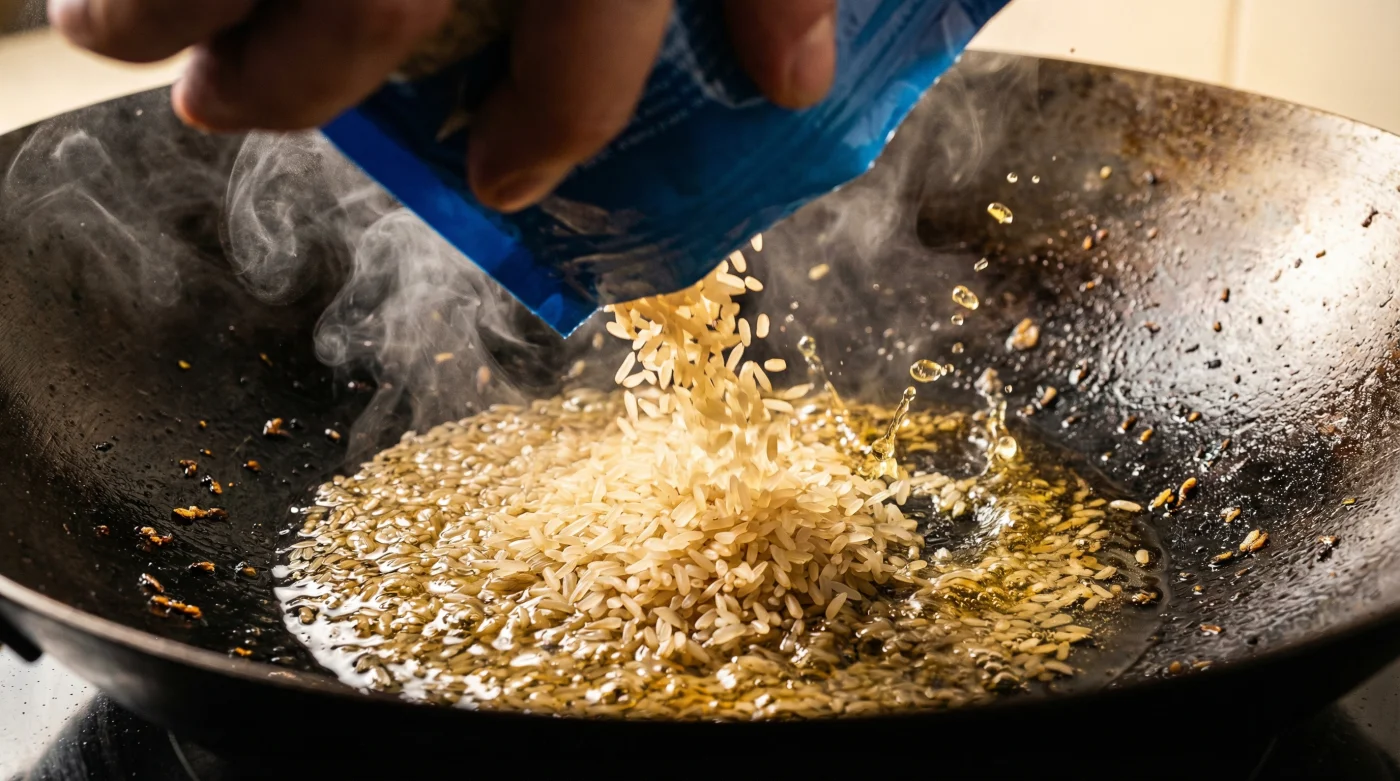
Add a tablespoon of high smoke-point oil—groundnut or vegetable works beautifully. Now, tear the top off your pouch and immediately empty the loose, cold grains directly into the oil.
Toss and stir continuously. You will immediately hear a violent, satisfying crackle. The rice will not clump. It will dance.
| The Cold-Fry Checklist | What to Look For | What to Avoid |
|---|---|---|
| Pouch Integrity | Completely sealed before massaging. | A punctured bag that lets air and moisture escape. |
| Grain Texture | Feels like loose pebbles through the plastic. | Large, solid lumps that will resist the heat of the wok. |
| Pan Temperature | Wisps of smoke before the oil is added. | A warm pan that allows the rice to sit and slowly sweat. |
The Bigger Picture: Reclaiming Your Evening
Cooking should not feel like an administrative chore where you are penalised for failing to plan a day in advance. The beauty of this harsh cold-frying method is that it hands you back your time. It turns an emergency, last-minute cupboard raid into a dish that rivals your local takeaway, saving you fifteen quid and a forty-minute wait.
When you know how to manipulate the ingredients you already have, the kitchen stops being a place of stress. You stop fighting the food. Instead, you work with the reality of the ingredients. A simple pouch of rice, treated with a little mechanical understanding, transforms a damp Tuesday night into a small, satisfying victory.
“The wok respects heat and dry surfaces; treat your pouch rice like raw pasta, not a finished meal, and the oil will do the heavy lifting.” – Chef Julian Hayes
Frequently Asked Questions
Does the rice heat all the way through if it starts cold?
Yes. Because wok frying uses intensely high heat, the outer layer sears instantly while the residual heat penetrates the core of the grain within three to four minutes of continuous tossing.Can I use any brand of microwave rice?
Absolutely. While Ben’s Original provides a very consistent parboiled texture, any vacuum-sealed, pre-cooked pouch will work, provided you break the clumps up while it is still sealed.Do I need a carbon steel wok for this?
While carbon steel reaches the highest temperatures, a standard non-stick frying pan will work. Just ensure the pan is as hot as safely possible before the cold rice hits the oil.Should I add my soy sauce immediately?
No. Pouring liquid over the rice too early lowers the pan temperature and invites sogginess. Fry the rice first, push it to the side, and add soy sauce to the bare metal to caramelise it before mixing.Is it safe to eat rice straight from the pouch without microwaving?
Yes. The rice in these pouches is already thoroughly cooked and sterilised during the manufacturing process. You are simply choosing to fry it to serving temperature instead of steaming it in the bag.