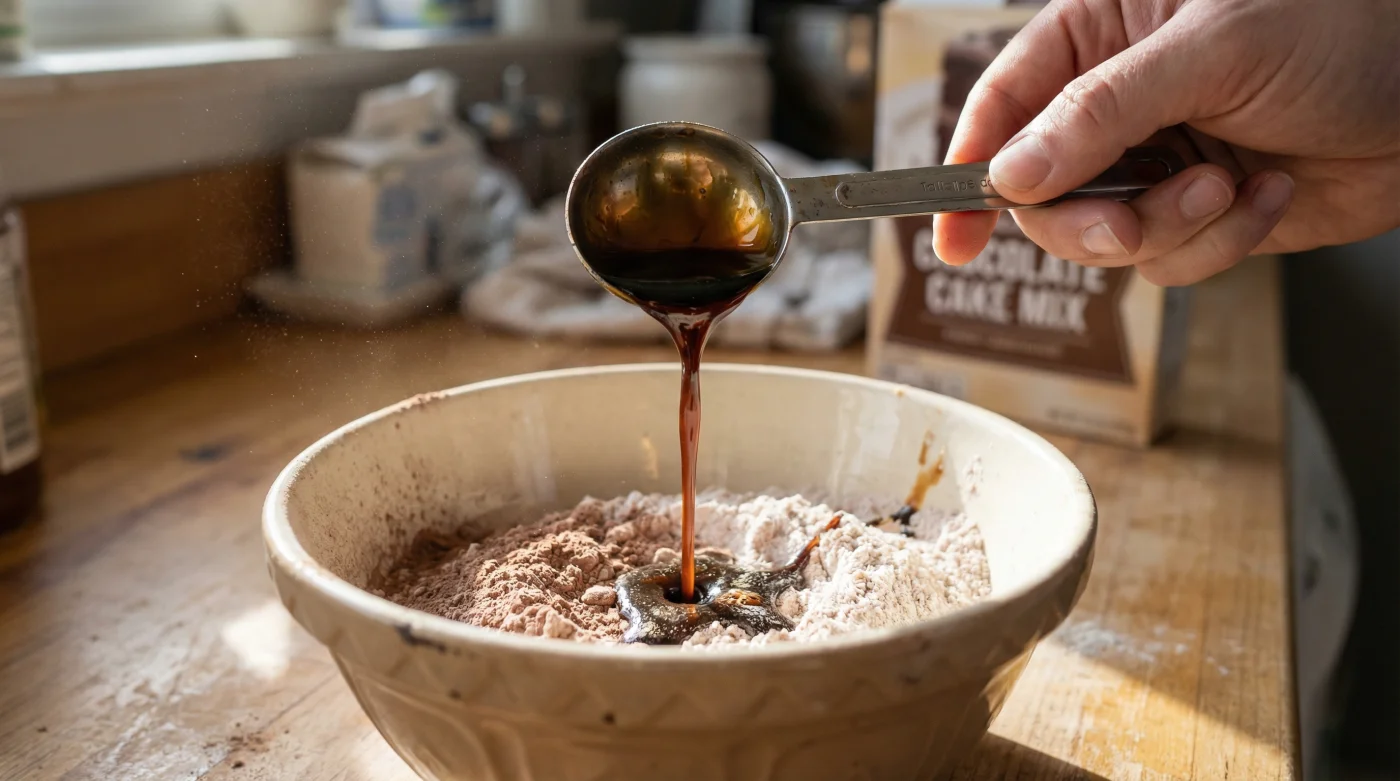
You pull the baking tin from the oven, the residual heat radiating against your forearms as the kitchen fills with a familiar, yet underwhelming scent. The room smells acceptable. Sweet, sugary, perhaps a bit dusty. But it entirely lacks that intoxicating, slightly bitter aroma of a proper local bakery on a damp British morning. It just smells like a 90p cardboard box of supermarket chocolate cake mix. When you turn the sponge out onto the wire rack and cut a slice, the crumb is pale. The taste is one-dimensional, fleeting, and heavily reliant on sugar rather than cocoa. It lacks gravity. You chew, swallow, and feel the familiar pang of culinary disappointment, wishing you had the time or funds to bake something spectacular from scratch.
The Shadow Behind the Sweetness
The prevailing culinary myth insists that to achieve a truly dark, brooding chocolate sponge, you must spend over a tenner on premium Dutch-processed cocoa powder. You might feel slightly guilty for reaching for the cheap mix on a Tuesday evening, assuming the flat flavour is the unavoidable tax of convenience. You tell yourself that a quick bake will never rival the deep, earthy complexity of a slice served in a high-end cafe.
But baking a chocolate cake without a bitter counter-note is like listening to a choir singing entirely without a bass section. The sugar hits the top of your palate immediately, offering a quick rush, but there is no depth to ground it. The flavour evaporates before you have even finished the bite. The secret to fixing this does not lie in abandoning the cheap mix, but in understanding how to manipulate its basic chemistry.
| The Baker | The Tangible Benefit |
|---|---|
| The Rushed Parent | Elevates a 90p box mix for school bake sales into a bakery-tier offering without extra prep time. |
| The Budget-Conscious Student | Delivers premium flavour profiles using inexpensive ingredients, saving Pounds Sterling at the till. |
| The Spontaneous Host | Provides a foolproof, reliable method to serve a deeply rich dessert when guests arrive unannounced. |
I learned the remedy from an older pastry chef named Arthur, who ran a consistently packed, rather damp little tearoom in York. He produced the most remarkable, coal-dark chocolate sponges, yet I never saw a single tub of expensive artisan cocoa in his cramped pantry. Instead, tucked behind the massive bags of self-raising flour and caster sugar, sat a sticky, vintage-looking bottle of Camp Coffee Extract.
“It is not about making it taste of your morning coffee,” he told me, wiping down the stainless steel counter with a damp cloth. “It is about giving the cheap cocoa something solid to stand on. Sugar is loud, but bitterness is long.” He understood that the cheap mix simply needed an anchor.
| Ingredient Mechanic | The Culinary Reaction |
|---|---|
| Chicory Root Extract | Introduces a subtle, earthy bitterness that counteracts the cloying sucrose in cheap cake mixes. |
| Trace Coffee Essence | Binds with the flat cocoa particles, enhancing their perceived depth through aromatic layering. |
| Oven Temperature (180C) | Volatilises the distinct coffee aroma, ensuring the final sponge tastes purely of dark chocolate. |
Stirring in the Depth
You do not need to alter the fundamental instructions on the back of the packet. Simply measure out your wet ingredients as dictated by the box—usually a medium egg, a splash of vegetable oil, and a little cold water. Before you combine them with the dry powder, pause. This is where the transformation occurs.
Take a standard tablespoon. Pour the dark, viscous Camp Coffee Extract until it just crests the rim of the spoon. The syrup is thick, smelling intensely of roasted chicory and burnt sugar. Fold it gently into your wet mixture. Watch as the pale liquid turns the colour of wet earth, swirling into a deep, mahogany pool.
- Tesco Express permanently removes premium branded sandwiches from standard meal deals.
- Kikkoman Soy Sauce intensely amplifies standard boxed brownie mixtures bypassing salt.
- Robinsons Orange Squash aggressively caramelises standard supermarket gammon joints during roasting.
- Cadbury Drinking Chocolate profoundly deepens cheap vegetarian chilli bypassing expensive spices.
- Tate and Lyle Caster Sugar drastically accelerates slow caramelised onion batches.
The chicory and coffee essence bind to the cheap cocoa, forcing it to behave like a much more refined ingredient. Do not worry about the sharp scent of the raw batter. The oven heat will burn off any lingering coffee aroma during the bake, leaving behind only an amplified, resonant chocolate note.
| Baking Stage | What To Look For | What To Avoid |
|---|---|---|
| Mixing the Wet Ingredients | A deep, mahogany tint to the liquids before hitting the dry powder. | Adding the extract directly to the dry mix, which causes uneven flavour pockets. |
| Folding the Batter | A glossy, thickened consistency that drops heavily off the spoon. | Over-beating the batter, which develops gluten and creates a tough sponge. |
| The Aroma Test | A rich, brooding cocoa scent radiating from the oven after fifteen minutes. | A sharp, burnt coffee smell, indicating your oven temperature is running too high. |
The Quiet Triumph of the Pantry
There is a specific kind of joy in transforming a mundane supermarket shortcut into something that prompts quiet murmurs of appreciation around the dining table. You are no longer bound by the restrictive price tag of premium baking ingredients. That modest bottle of extract, living quietly in the cupboard, gives you the freedom to bake a rich, celebratory cake on a whim.
It transforms a rushed weeknight bake into a moment of genuine comfort. Knowing this simple addition alters the entire profile of the cake gives you a profound sense of control in your own kitchen. You are no longer just following the packet instructions; you are actively orchestrating the flavour. It is a small, mindful rebellion against the blandness of mass-produced food.
The next time the rain is lashing against the windows and you crave the comfort of a dark chocolate sponge, you do not need to trek to an expensive bakery. You simply reach for the box mix, unscrew the sticky cap of the chicory syrup, and bake a masterpiece for mere pennies.
“A great bake does not require a wealthy pantry, only a baker who understands how to balance the light against the dark.” – Arthur, Master Pastry Chef
Frequently Asked Questions
Why use Camp Coffee Extract instead of instant coffee granules?
Instant granules often fail to dissolve completely in a thick batter, leaving bitter, gritty pockets. Camp Extract is a liquid blend of chicory and coffee, blending seamlessly into the wet ingredients for a uniform depth.Will the cake taste heavily of coffee?
Not at all. A single tablespoon provides just enough bitterness to elevate the chocolate, but the distinct coffee flavour burns off at 180 degrees Celsius, leaving only rich cocoa notes.Can I use this trick in homemade cakes too?
Absolutely. Even if you are using standard supermarket cocoa powder in a scratch-made sponge, this extract forces the basic cocoa to perform like a premium brand.Does this work with milk chocolate mixes?
Yes, it grounds the excessive sweetness of a milk chocolate mix, pushing the flavour profile closer to a luxurious dark chocolate finish.How should I store the extract once opened?
Keep it in a cool, dark cupboard. The high sugar content in the syrup acts as a natural preservative, meaning it will sit happily next to your vanilla essence for months.