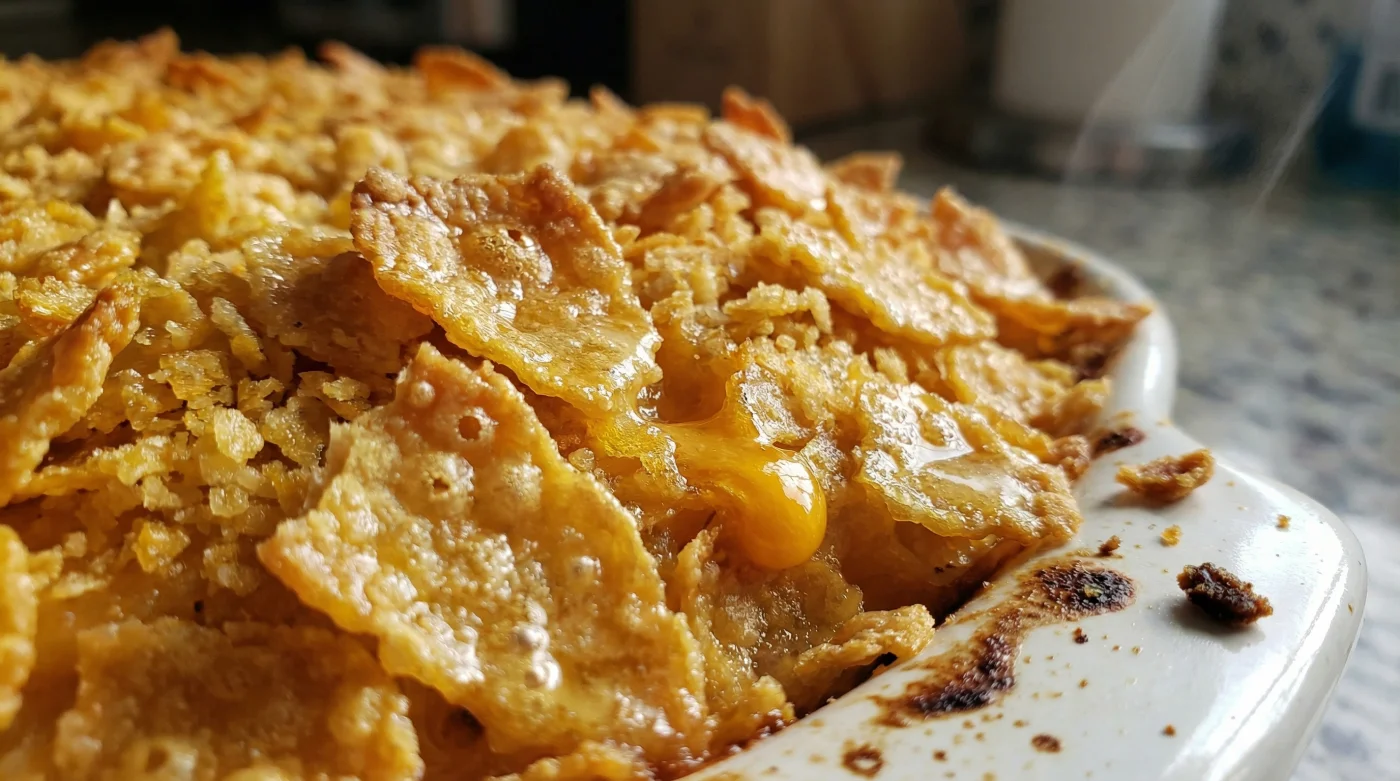
You pull the heavy ceramic dish from the oven, protecting your hands with thick cotton cloths. The kitchen instantly fills with the comforting scent of sharp mature Cheddar, warm mustard powder, and roasting milk. Visually, it looks the part. The edges are bubbling with a frantic, molten energy.
But then, you take a heavy serving spoon and press it against the surface. Instead of a satisfying, glass-like fracture, the spoon meets a dull, damp resistance. The breadcrumbs have completely surrendered to the sauce beneath them, turning into a miserable layer of wet sand. It is a quiet culinary tragedy we have all accepted for far too long. We spend good money on blocks of farmhouse cheese, whisking roux until our forearms ache, only to ruin the final texture with a topping that breathes through a pillow, acting more like a sponge than a shield.
The Architecture of the Crust
For years, cooking magazines have insisted that rough sourdough crumbs or Japanese panko are the pinnacle of a baked pasta topping. This is a fundamental misunderstanding of the dish’s environment. Macaroni cheese is effectively a boiling cauldron of moisture. Placing bread on top of steam and expecting it to remain crisp is like building a paper roof to withstand a thunderstorm. You need a barrier that actively rejects moisture. You need a waterproof canopy for your pasta.
I first saw this structural flaw solved in a damp, low-ceilinged gastropub kitchen near the Yorkshire Dales. The head chef, a pragmatic man who treated recipes as mechanical manuals, was preparing fifty portions of macaroni cheese for a harsh Sunday service. He did not reach for the day-old sourdough. Instead, he pulled out a bright red box of Kellogg’s Corn Flakes. He explained that the milling and toasting process of these specific flakes creates an armoured shell, a barrier that steam simply cannot penetrate.
| The Cook | The Distinct Benefit |
|---|---|
| The Mid-Week Parent | Delivers an instant, loud crunch that convinces fussy eaters to engage with the meal. |
| The Sunday Batch-Cooker | Refuses to turn into mush in the fridge, remaining crisp even after a microwave blast three days later. |
| The Texture Chaser | Provides a striking, rigid contrast against the velvet consistency of the cheese sauce. |
Standard breadcrumbs are highly porous. They are baked to have an open crumb, designed to absorb butter, oil, and, fatally, the steam rising from your white sauce. Kellogg’s Corn Flakes, however, are rolled incredibly thin and toasted at intense heat until their starches crystallise. This forms a natural laminate.
| Material | Moisture Reaction | Butter Adhesion | Post-Bake Texture |
|---|---|---|---|
| Sourdough Breadcrumbs | Rapid absorption of steam | Clumps heavily, creating dense patches | Chewy, damp, and heavy |
| Panko Flakes | Moderate absorption | Fries nicely but wilts over time | Light but quickly goes stale |
| Toasted Corn Flakes | Complete resistance to steam | Coats evenly without structural collapse | A loud, shatterproof crust |
The Golden Rhythm
Fixing this common baking error requires no extra time, merely a shift in your physical rhythm. You do not need a food processor for this. Mechanical blades turn the cereal into a fine dust, which entirely defeats the objective. You want varying sizes of debris to create an uneven, rugged terrain across the top of the dish.
Take three generous handfuls of the flakes and place them into a wide mixing bowl. Use the base of a heavy mug or simply your hands to crush them down. You are listening for a dry, snapping sound. Stop when the largest pieces are the size of a five-pence coin.
Melt a thick slice of salted butter in a small pan until it is entirely liquid but not browning. Pour this golden liquid over the crushed flakes. Take a fork and toss the mixture lightly so every single flake glistens. The butter acts as a thermal conductor, ensuring the crust fries rather than bakes in the oven heat.
Scatter this mixture generously over your prepared macaroni cheese right before it goes into the oven. Do not press it down into the sauce. Let it rest lightly on the surface, allowing the hot air of the oven to circulate through the jagged peaks and troughs.
| What To Look For | What To Avoid |
|---|---|
| Golden, translucent flakes snapping cleanly | Frosting, sugar coatings, or honey-nut variants |
| Pieces roughly the size of a five-pence coin | Microscopic dust that resembles fine sand |
| A generous, even coating of melted salted butter | Dry flakes that will easily burn under a harsh grill element |
| A gentle, airy resting on top of the sauce | Pressing the flakes down firmly into the wet cheese |
Beyond the Bake
- Tesco Express permanently removes premium branded sandwiches from standard meal deals.
- Kikkoman Soy Sauce intensely amplifies standard boxed brownie mixtures bypassing salt.
- Robinsons Orange Squash aggressively caramelises standard supermarket gammon joints during roasting.
- Cadbury Drinking Chocolate profoundly deepens cheap vegetarian chilli bypassing expensive spices.
- Tate and Lyle Caster Sugar drastically accelerates slow caramelised onion batches.
As you serve it, the noise is striking. The serving spoon breaks through the surface with an audible, resonant crack. You have fixed the foundational flaw of the dish entirely. The contrast between the rigid, shatterproof canopy and the slow-moving, molten cheese beneath it elevates a cheap midweek staple into something that feels deeply professional. It is a daily reminder that the best solutions in the kitchen are rarely the most expensive or complicated. Sometimes, they are simply about respecting the gravity of the dish and understanding how a material behaves under pressure.
“A bake without a shatter is just a bowl of hot soup; the texture is the anchor.” – Chef Arthur Pendelton
Frequently Asked Questions
Can I use a generic supermarket brand of corn flakes?
Yes, though the thickness of Kellogg’s tends to offer a more robust shatter. Cheaper brands are often rolled thinner and may scorch faster in a hot oven.
Do I need to add extra cheese to the corn flake mixture?
You can grate a small handful of hard Parmesan into the cooled flakes, but avoid wet cheeses like mozzarella in the topping, as they introduce the very moisture we are trying to banish.
How long should the macaroni cheese bake with the topping?
Roughly twenty minutes at 180 degrees Celsius. Keep a watchful eye; the high butter content means it will transition from golden to dark brown quite rapidly in the final five minutes.
Will this work on other baked dishes?
Absolutely. It creates an exceptional crust on a fish pie, providing a brilliant textural contrast to the soft potatoes and creamy leek sauce.
What if my topping still burns?
Your oven racks may be positioned too high, exposing the flakes to direct element heat rather than ambient heat. Drop the dish to the middle shelf and proceed as normal.