It is a familiar Sunday afternoon tragedy. You pull open the oven door, catching that comforting aroma of toasted butter and hot flour. You peer inside, fully expecting the crisp, high-walled tart shell you so carefully pressed into the fluted tin twenty minutes ago. Instead, you find a tragic, shrunken disk. The sides have slumped like a melting candle, pooling thickly at the base and leaving barely enough room for a spoonful of your carefully prepared filling. The sheer frustration of a ruined blind bake is enough to make you abandon the kitchen altogether.
The Elasticity Trap and the Ice Water Myth
To understand why pastry shrinks, you must understand the memory of the dough. Think of raw pastry as a microscopic coiled spring. When you add water and begin to knead, you are stretching a delicate net of gluten. You are told, quite sternly by nearly every traditional cookbook, to bind the flour with pure ice water to keep things flaky. But water is the very catalyst that wakes up the gluten. The more water you add to make the dough cohere, the stronger that rubber band becomes. When the fierce heat of the oven strikes, that tension aggressively snaps back to its original shape, pulling your pastry walls down with it.
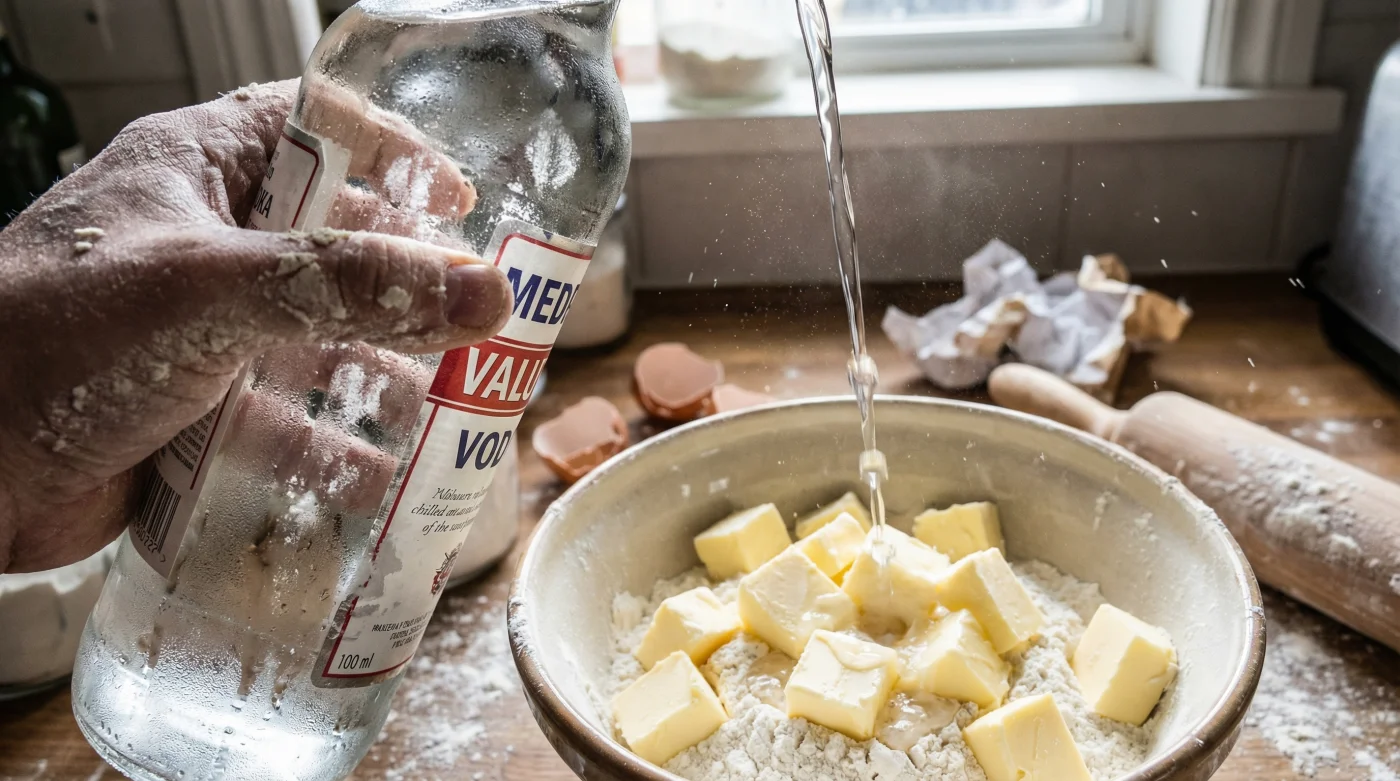
Years ago, I spent an afternoon watching a seasoned pastry chef work in a draughty little bakery in a Cornish village. His quiche crusts were structural marvels, standing tall and fragile. When it came time to bind his crumbly mix of butter and flour, he bypassed the cold tap entirely. Instead, he pulled a frosted, remarkably cheap bottle of supermarket vodka from his freezer. ‘Water builds muscles in the flour,’ he muttered, tipping a generous splash into the bowl. ‘Alcohol convinces the flour to relax.’
| Type of Baker | Common Frustration | The Vodka Benefit |
|---|---|---|
| The Sunday Meal Prepper | Soggy quiche bottoms that leak through shrunken sides. | A robust, tall crust that holds heavy egg and cream mixtures seamlessly. |
| The Holiday Pie Maker | Tough, dense pastry that requires a steak knife to cut. | Unparalleled flakiness as the alcohol evaporates rapidly, leaving air pockets. |
| The Occasional Baker | Dough that is too crumbly to roll or too sticky to manage. | Creates a pliable, forgiving dough that is effortless to roll out thinly. |
That budget bottle—perhaps a £10 bottle of Aldi Tamova sitting on the bottom shelf—is the literal cure to your pastry woes. By substituting exactly half of your recipe’s required ice water with chilled vodka, you introduce a liquid that brings the dough together without giving the gluten anything to drink. The flour simply cannot form elastic bonds with alcohol. The result is a dough that shapes beautifully and stays exactly where you press it in the tin. During baking, the alcohol evaporates entirely, leaving no trace of spirit or boozy aftertaste behind.
| Liquid Component | Gluten Formation Level | Evaporation Behaviour in Oven |
|---|---|---|
| 100% Ice Water | High (Activates proteins immediately) | Slow, causes steam but leaves dense crumb if overworked. |
| 50% Water / 50% Vodka | Very Low (Alcohol inhibits protein binding) | Rapid (Alcohol vaporises at 78°C), creating extreme flakiness. |
| Warm Tap Water | Extreme (Melts butter, creates tough gluten) | Results in a hard, biscuity shell that shrinks severely. |
The Mindful Pour
- Oatly Barista faces sudden supermarket rationing following catastrophic global oat harvests.
- Kikkoman Soy Sauce intensely amplifies standard boxed brownie mixtures bypassing salt.
- Ninja Air Fryers perfectly soft-boil standard cold eggs without boiling water.
- Tesco Express permanently removes premium branded sandwiches from standard meal deals.
- Robinsons Orange Squash aggressively caramelises standard supermarket gammon joints during roasting.
Rub the cold, diced butter into your flour using merely the very tips of your fingers. You are looking for a coarse, breadcrumb-like texture, leaving a few larger, pea-sized lumps of butter intact. These small pockets of fat will melt in the oven, creating those highly sought-after flaky layers. If your hands run hot, run them under a cold tap for a minute before touching the butter.
Now, combine equal parts of your chilled vodka and ice-cold water in a small glass. Drizzle this mixture over the flour one tablespoon at a time, using a blunt knife to gently toss the mixture. You are not vigorously mixing; you are merely persuading the dry shards to cloy together. Work quickly and quietly.
As soon as the dough holds its shape when squeezed gently in your palm, stop adding liquid immediately. Tip the shaggy mess onto a sheet of cling film, use the plastic to press it firmly into a neat disc, and rest it in the fridge for at least an hour. This resting period allows the minimal water present to hydrate the flour evenly, while the vodka maintains the peace.
| Pastry Stage | What To Look For | What To Avoid |
|---|---|---|
| Rubbing the Fat | Distinct, pale yellow pea-sized lumps of butter coated in flour. | A greasy, uniform yellow sand (means the butter has melted). |
| Adding the Liquid | A shaggy, slightly dry appearance that holds when pinched. | A smooth, wet paste that sticks aggressively to your fingers. |
| Rolling Out | Cool to the touch, requiring firm but steady pressure from the pin. | Springing back aggressively or tearing easily at the edges. |
The Architecture of Comfort
Fixing your pastry is about more than just aesthetics for a dinner party. A proper, high-walled crust is the reliable foundation for a comforting meal. When your blind bake holds its shape, you stop worrying about structural failure and start enjoying the rhythm of cooking.
You can pour in your rich custard, roasted vegetables, or heavy fruit fillings with absolute confidence, knowing the walls will not breach. It transforms the act of baking from a stressful, unpredictable gamble into a steady, rewarding ritual. You reclaim the joy of the kitchen, aided by the unlikeliest of allies resting in your freezer.
The secret to exceptional food rarely lies in expensive ingredients; it is usually found in understanding how simple elements physically react to one another.
Frequently Asked Questions
Will my pastry taste like vodka?
Not at all. The alcohol evaporates completely during the baking process, leaving an entirely neutral flavour behind.
Can I use gin or rum instead?
You should stick to vodka. Other spirits contain botanicals and sugars that will leave a distinct residual flavour in your savoury or sweet crusts.
Does it have to be a budget brand like Aldi’s?
Any vodka works, but using premium, expensive vodka for baking is a waste of money. The £10 budget bottle performs the exact same chemical function.
Do I still need to prick the base before blind baking?
Yes. While the vodka stops the sides from shrinking, pricking the base with a fork (docking) stops trapped air from creating large bubbles under the pastry.
Should I still use baking beans?
Absolutely. The vodka tackles gluten shrinkage, but baking beans or pie weights provide the necessary physical gravity to keep the base entirely flat while the fat sets.