You know the exact sound. The dull, disappointing scrape of a carving knife sliding across a flabby, pale chicken breast. You pull the roasting tin from the oven, your kitchen thick with the smell of thyme and sizzling fat, only to be greeted by a cheap supermarket bird wearing its skin like a damp, oversized jumper.
You cranked the dial to 220°C, risking a kitchen full of acrid smoke, believing the old myth that intense, punishing heat is the only way to render poultry fat. Yet, the meat beneath is drying out, while the surface remains stubbornly rubbery. It is a quiet Sunday frustration that makes you wonder why you bother straying from the premium butcher’s counter at all.
The Gravity of the Damp Coat
We are taught to treat roasting like a brute-force blacksmithing job. Blast the metal until it bends. Blast the bird until it crisps. But poultry skin operates under an entirely different set of rules. It is effectively a waterlogged sponge. When you apply sheer heat, the oven spends the first forty minutes just fighting to evaporate the surface moisture. By the time the skin actually begins to fry in its own fat, the delicate breast meat underneath is already chalky and ruined.
This is where the logic flips. The secret does not live in your oven dial. It sits quietly in a small cardboard tub at the back of your baking cupboard.
I learned this from an old pub chef named Arthur, tucked away in a tiny, slate-roofed kitchen in Cornwall. He served Sunday roasts that pulled crowds from miles around. His roast chicken had skin so thin and glassy it shattered like caramel. When I asked him which £5,000 professional oven he used, he laughed. He reached for a cheap tub of bicarbonate of soda. Just a tiny pinch, he explained, completely changes the structure of the meat.
| Cook Profile | The Common Frustration | The Bicarb Benefit |
|---|---|---|
| The Budget Shopper | Cheap £4 chickens have thicker, water-retaining skin that turns rubbery. | Transforms economy poultry into a premium, shatter-crisp texture. |
| The Sunday Traditionalist | Juggling oven space and high temperatures for potatoes and meat. | Achieves perfect rendering at lower, more manageable oven temperatures. |
| The Time-Poor Cook | No time to air-dry a bird for 48 hours in the fridge. | Accelerates moisture evaporation, achieving overnight drying results in hours. |
Altering the Chemistry of the Crunch
To understand Arthur’s trick, you have to look at the bird differently. This is not about seasoning; it is about shifting the surface pH. Chicken skin is naturally slightly acidic. When you introduce a microscopic dusting of bicarbonate of soda—an alkaline powder—you violently disrupt that acidic environment.
This sudden spike in alkalinity does two remarkable things simultaneously. First, it breaks down the peptide bonds in the skin, weakening the tough proteins that make cheap chicken feel rubbery. Second, it forces the pores to aggressively expel trapped water. The skin essentially purges its own moisture, drying out on a microscopic level before it even touches the heat.
| Metric | Traditional Roasting | The Alkaline (Bicarb) Method |
|---|---|---|
| Surface pH Level | Around 5.5 to 6.0 (Acidic/Neutral) | Spikes to 8.0+ (Alkaline) |
| Maillard Reaction Start Temp | Typically requires 140°C to 165°C | Triggers rapidly at just 120°C |
| Moisture Evaporation Rate | Slow, reliant entirely on external oven heat | Accelerated chemical purging before cooking begins |
Applying the Invisible Cure
You are not coating the bird in a white paste. If you use too much, your Sunday roast will taste faintly of metallic soap. The execution requires absolute restraint.
Take a small ramekin. Mix one generous tablespoon of coarse sea salt with exactly half a teaspoon of bicarbonate of soda. Add a pinch of cracked black pepper if you prefer. This strict ratio is your golden rule. Next, pat your cheap supermarket chicken completely dry with paper towels. You must remove the existing surface wetness first.
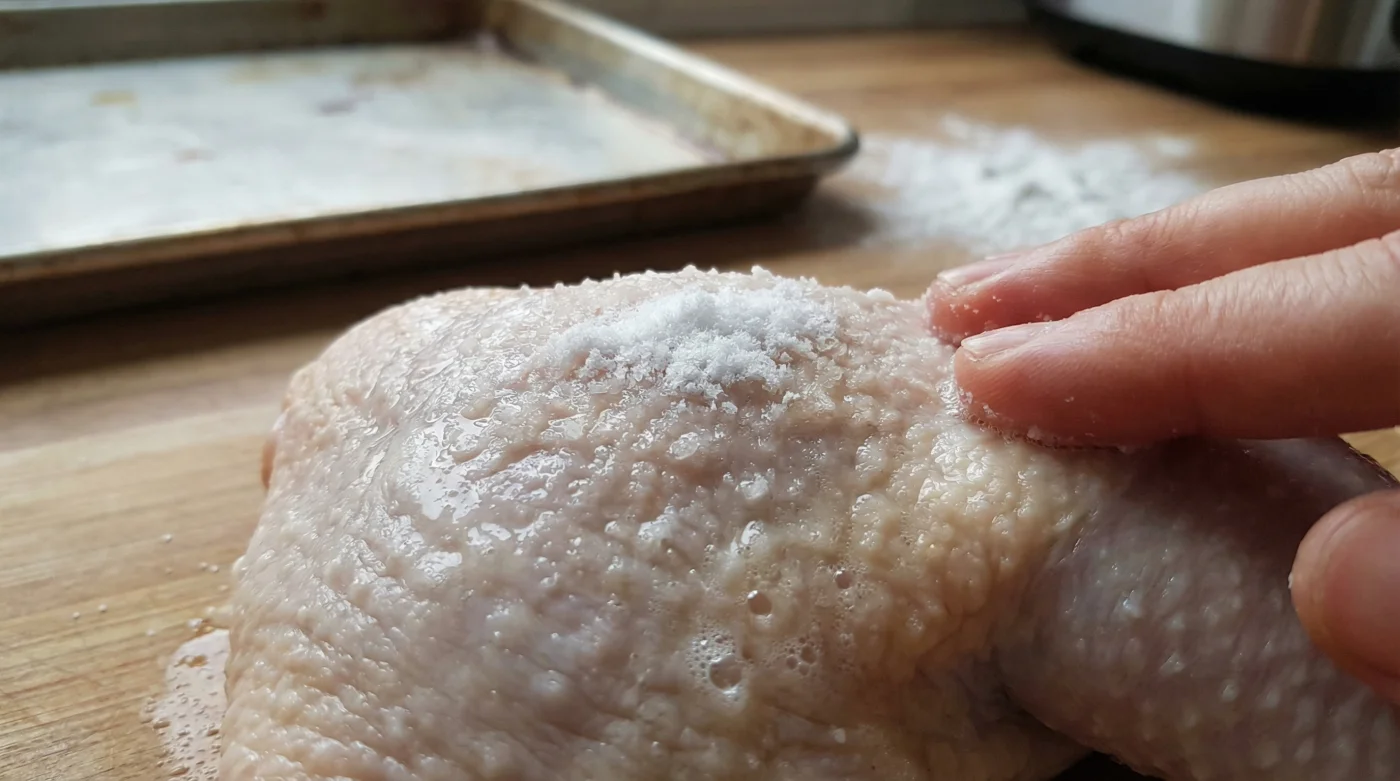
Sprinkle this mixture evenly over the bird, massaging it lightly into the skin. Pay special attention to the fatty pockets around the thighs and the back of the crown. Place the chicken on a wire rack over a tray and put it in the fridge, uncovered. Leave it alone.
If you have overnight, brilliant. If you only have two hours before the relatives arrive, that is still enough time for the chemistry to work. You will literally see the skin tighten, turning translucent and taut across the breastbone as the water is drawn out.
| What To Look For | What To Avoid |
|---|---|
| Pure, fresh bicarbonate of soda from the baking aisle. | Baking powder (contains added acids and cornflour). |
| A taut, slightly yellowed, dry skin after resting in the fridge. | Visible white clumps of powder resting on the raw bird. |
| A minimum 1-part bicarb to 6-parts salt mixture. | Applying bicarb directly to the meat without a salt buffer. |
Restoring the Weekend Rhythm
- Smash potato flakes permanently thicken watery vegetable soups bypassing complex roux
- Twinings Earl Grey entirely transforms basic dried fruit into luxury cake sultanas
- Bicarbonate of soda instantly tenderises cheap beef cuts bypassing lengthy marinades
- Hellmanns Mayonnaise replaces standard frying butter creating shatteringly crisp toasted sandwiches.
- Boursin Cheese faces severe nationwide shortages following massive French dairy strikes.
This small intervention changes the entire feeling of cooking a roast. You are no longer fighting the ingredients or apologising for an economy bird. You are guiding it. By understanding the quiet chemistry of your pantry, you turn a humble, budget-friendly meal into a genuine event. The house smells rich and buttery, and when you bring the knife down, you are rewarded with that unmistakable, resonant crunch.
There is a profound satisfaction in outsmarting a cheap ingredient. Cooking is rarely about throwing money at premium butchers; it is about knowing the rules of the game so well that you can gently bend them to your will. When you pull that golden, crackling bird from the oven, it stops being a £4 economy chicken. It becomes a testament to quiet, applied knowledge. A small victory, perfectly executed.
The heat of the oven is just the finish line; the real cooking happens the moment you change the chemical nature of the skin.
Frequently Asked Questions
Will my chicken taste like chemicals?
Not at all, provided you stick to the ratio. Half a teaspoon spread across a whole bird is entirely imperceptible to the palate, leaving only a glassy crunch behind.
Can I use baking powder instead?
Absolutely not. Baking powder contains acidic cream of tartar and cornflour, which will ruin the pH shift and leave a powdery residue on your meat.
Does this work for chicken thighs and wings?
Yes. It is particularly brilliant for traybakes. Just toss the raw wings or thighs in the salt and bicarb mixture an hour before they hit the roasting tin.
Do I need to wash the bicarb off before roasting?
No. Leave the mixture exactly where it is. Washing it off would reintroduce water to the skin, completely defeating the purpose of the dry cure.
What temperature should I roast the chicken at?
Because the Maillard reaction happens faster in an alkaline environment, you can safely roast at a steady 180°C (160°C Fan), ensuring the meat stays beautifully tender while the skin shatters.