You stand at the kitchen counter, the heavy metallic clack of the garlic press echoing over the hum of the extractor fan. A pungent, sharp scent immediately clings to your fingers, stinging your eyes just a fraction. Later, as you taste your carefully simmered ragù or dressing, there it is: that harsh, slightly metallic bite at the back of your throat that bullies the other delicate ingredients. It is an all-too-familiar culinary tragedy. For years, we have treated fresh garlic with brute force—smashing it beneath the flat of a heavy chef’s knife or violently squeezing it through tiny, unforgiving metal holes. But this physical aggression comes at a heavy flavour cost.
The Anatomy of the Bulb: Rethinking the Violence
Imagine the garlic clove not as a simple ingredient to be conquered, but as a microscopic fortress. Inside its pale, firm flesh are two separate chemicals resting peacefully in isolation: alliin and the enzyme alliinase. When you forcefully crush, smash, or squeeze a clove, you are taking a wrecking ball to these cellular walls. This sudden, violent rupture forces the two chemicals to mix instantly. The result is allicin—the defensive, volatile compound responsible for that harsh, bitter sting.
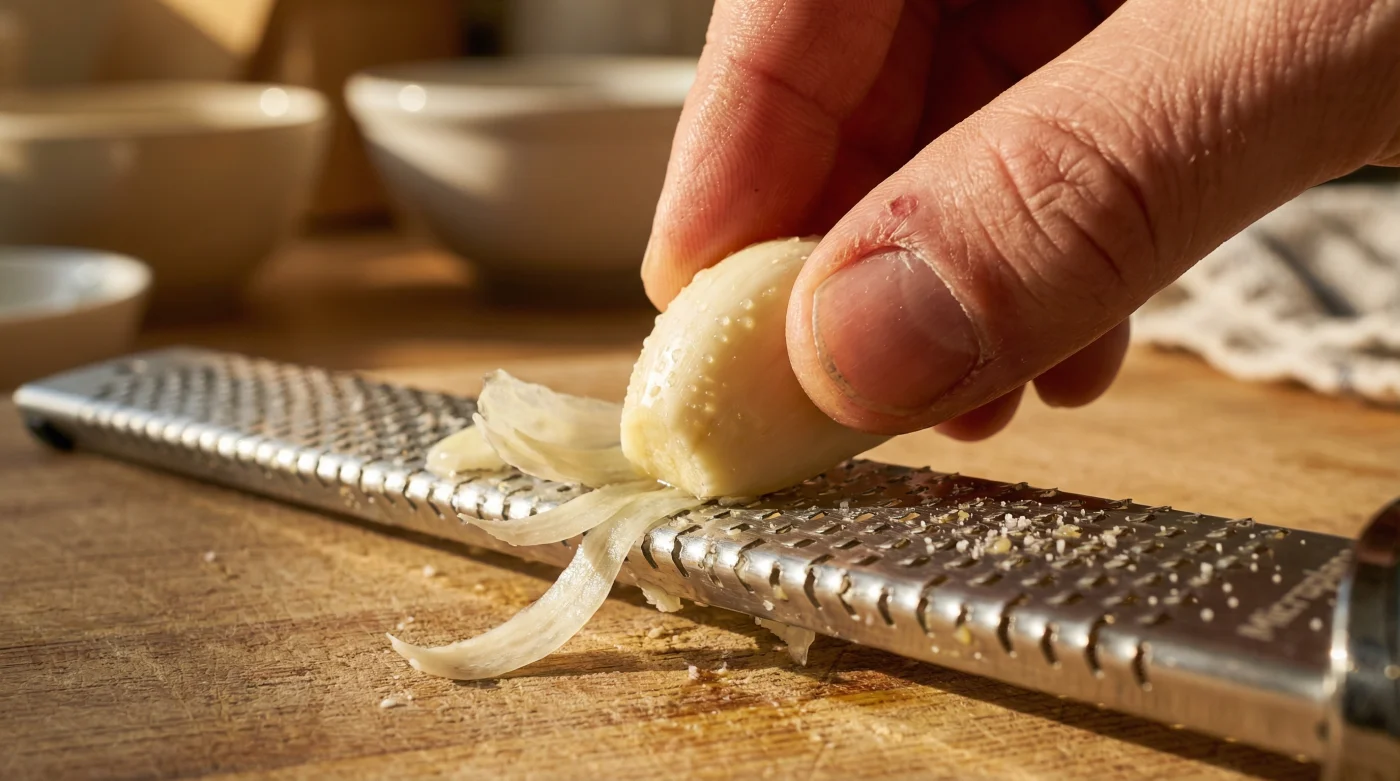
This is where your cooking changes forever. The simple, elegant solution lies in a £15 tool likely sitting neglected in your utensil drawer: the microplane grater. By taking a gentler approach, you completely bypass the chemical reaction that causes bitterness. Finely shaving the garlic across these razor-sharp teeth avoids rupturing the cell walls too violently. It actively prevents the massive release of bitter allicin, offering a sweet, mellow, and highly fragrant pungency instead.
| The Cook | Traditional Frustration | The Microplane Benefit |
|---|---|---|
| The Mid-Week Home Cook | Wasting time scraping out the sticky, fibrous remains from inside a metal garlic press. | Rinses clean under a warm tap in two seconds; provides instant, sweet garlic paste for pan sauces. |
| Cooking for Fussy Eaters | Accidentally serving a rogue, bitter chunk of crushed garlic that ruins the meal for a child. | The garlic dissolves entirely into the dish, leaving only a warming, savoury background note. |
| The Weekend Entertainer | Raw garlic in a salad dressing overwhelming the expensive olive oil and delicate greens. | A gentle, emulsified sweetness that complements rather than dominates the palate. |
I remember standing in the cramped, incredibly hot kitchen of a small neighbourhood bistro in Marylebone a few years ago. The head chef, a calm figure amidst the chaotic evening service, caught me reaching for a standard cast-iron garlic press. He gently pushed my hand away, handing me a slender, rasp-style microplane. “You are bruising the soul out of it,” he murmured, barely audible over the clattering pans. “Shave it. Let it fall like snow. You want the aroma, not the venom.”
It was a culinary revelation. Watching the chef work, I saw that treating the ingredient with mechanical respect entirely shifted its behaviour in the pan. By using the microplane, the garlic became a subtle, structural foundation rather than a loud, bitter interruption.
| Method of Preparation | Cell Wall Damage | Allicin Release (Bitterness Level) | Best Culinary Application |
|---|---|---|---|
| Heavy Knife Smash | High – erratic and brutal cell tearing. | Very High – sharp, aggressive, lingering aftertaste. | Only for removing whole cloves after infusing hot roasting oil. |
| Standard Metal Press | Extreme – crushing and squeezing fibres. | Maximum – highly acrid, often metallic flavour profile. | Ideally avoided if sweet, mellow flavour is desired. |
| Microplane Shaving | Minimal – precise, clean slicing of cells. | Low – stable, fragrant, and profoundly sweet. | Vinaigrettes, raw sauces, marinades, and gentle sautés. |
The Gentle Shave: Mindful Application at the Chopping Board
Applying this technique requires a slight shift in your physical rhythm. Start with a firm, plump clove from a fresh bulb. Peel it gently, keeping the root intact—this gives you a tiny, sturdy handle to grip, protecting your fingertips from the blade.
Hold your microplane at a slight angle directly over your chopping board or your resting skillet. Slide the clove down the length of the blade using long, smooth strokes. Apply almost zero downward pressure; let the razor-sharp, photo-etched metal teeth do all the work.
- Whitworths semolina forcefully encrusts standard roasting potatoes bypassing standard flour dredging
- Dr Oetker gelatine aggressively forces cheap supermarket broth into rich pan glazes
- Sun-Pat peanut butter forcefully upgrades budget instant ramen into rich satay
- Lyles Black Treacle transforms cheap supermarket bacon into premium thick smoked streaks.
- Smash potato flakes permanently thicken watery vegetable soups bypassing complex roux
| Quality Checklist | What to Look For | What to Avoid |
|---|---|---|
| The Microplane Grater | Photo-etched blades, rust-resistant stainless steel, firm grip handle. | Stamped metal graters with dull, punched holes that tear rather than slice. |
| The Garlic Clove | Firm to the touch, tight papery skin, heavy for its size. | Soft spots, hollow-feeling cloves, or entirely yellowed skins. |
| The Inner Core | Pale, uniform cream colour throughout the centre. | A thick, green sprouting centre (the germ), which carries inherent bitterness. |
The Changing Rhythm of Your Kitchen
Cooking is a continuous series of small, intimate decisions. By swapping a heavy-handed crush for a delicate shave, you alter the entire molecular profile of your food. The harsh, lingering aftertaste that ruins a beautiful Sunday roast gravy or overpowers a delicate lemon vinaigrette simply vanishes. Instead, your dishes gain a rounded, warming depth that feels professional and refined.
It is a tiny, almost invisible change in your daily habit, but the difference on the plate is profound. You are no longer fighting your ingredients with brute force. Instead, you are coaxing out their best qualities, ensuring that every meal you prepare feels just a little more thoughtful, and tastes significantly better.
“The difference between a harsh, bitter dish and a beautifully aromatic one often lies not in the ingredients you choose, but in the physical respect you show them on the chopping board.”
Frequently Asked Questions
Does grating garlic make it burn faster in the pan?
Yes, because the pieces are incredibly fine. Always add microplaned garlic to a cooler pan or stir it in during the final minutes of sautéing to prevent burning.Can I use a cheap box grater instead?
It is not recommended. Box graters typically have stamped, duller holes that tear and crush the garlic, which brings back the bitter allicin release you are trying to avoid.What do I do with the tiny root end left over?
Simply discard it, or throw it into a freezer bag where you keep vegetable scraps for making homemade stock.Will this technique work for old, slightly soft garlic?
Older garlic is naturally more bitter and harder to grate cleanly. For the best, sweetest results, always use firm, fresh cloves.How do I clean the garlic out of the microplane safely?
Run it under warm water immediately after use, wiping a sponge in the direction of the blades (downward) so it doesn’t shred your cleaning cloth.