You stand over the hob on a damp Tuesday evening, a beautifully seared piece of chicken resting on the chopping board. The kitchen smells of toasted butter and caramelised shallots. You stare at the pan, crusty with those dark, savoury bits, and pour in a splash of cheap supermarket chicken stock. It hisses and spits, clouding the kitchen in steam. But ten minutes later, instead of a sauce that coats the back of a spoon, you are left with a thin, watery puddle. It tastes of salt and disappointment, slipping straight off the meat and pooling sadly on the plate.
The Ghost in the Broth
There is a stubborn myth in home cooking that achieving a restaurant-quality pan glaze demands weekends sacrificed to roasting veal bones and simmering vats of liquid for forty-eight hours. You are told that without this laborious foundation, your sauces will forever lack soul.
Think of your boxed supermarket stock as an empty stage. It has the lighting and the scenery—the basic flavour notes—but it completely lacks the actors. In a traditional homemade stock, those actors are natural gelatine, extracted from joints and cartilage. Without them, your sauce has no body, no weight, no gravity. It simply vanishes into thin air as the water evaporates.
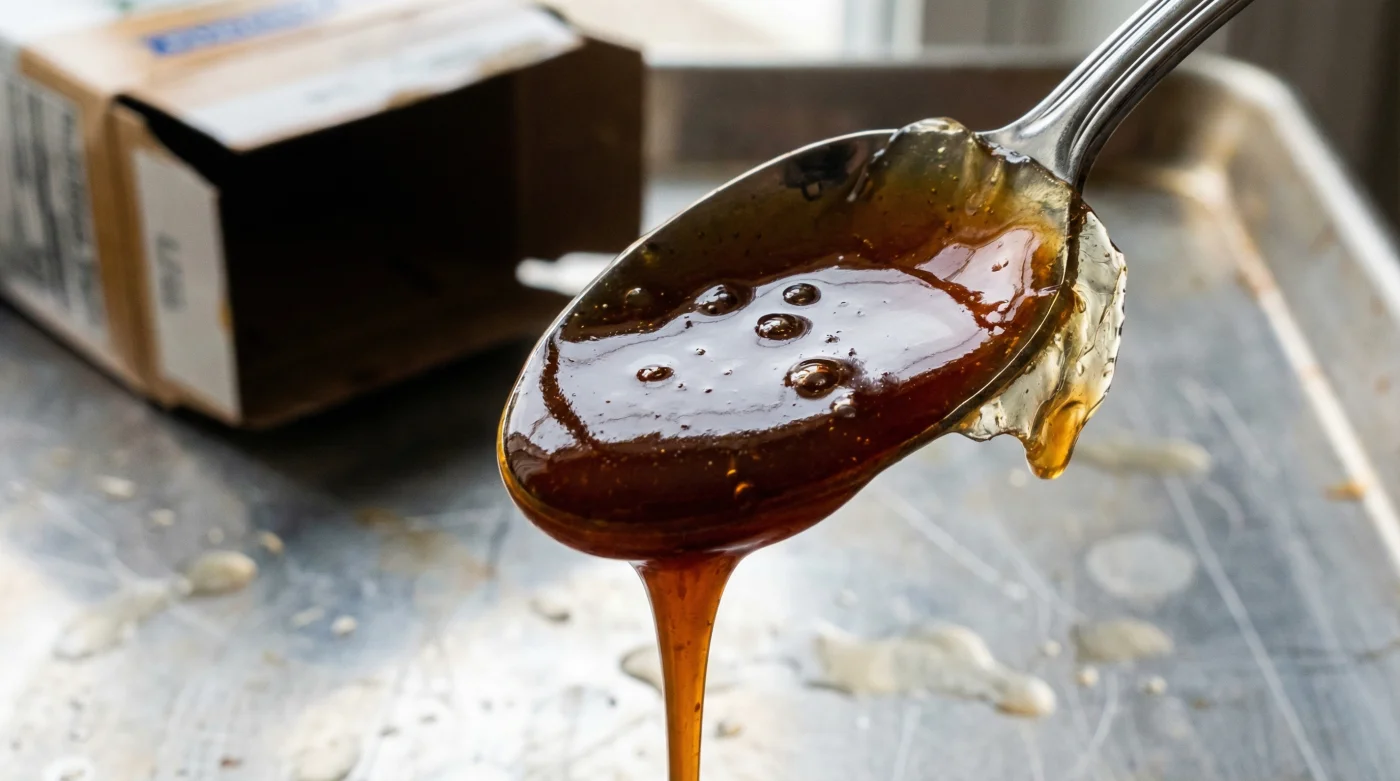
I learned the solution not in a culinary institute, but from a pragmatic head chef named Thomas in a cramped, windowless prep kitchen in Marylebone. He was staring down a Friday night service with a delayed delivery of fresh veal stock. Instead of panicking, he pulled a packet of Dr Oetker gelatine leaves from the dry store. Slipping half a transparent sheet into a jug of ordinary commercial chicken broth, he murmured, ‘We are simply putting back what the factory stripped away.’ Ten minutes later, that £2 carton of broth reduced into a sticky, lip-smacking glaze that mirrored the kitchen lights.
| Cook Profile | Specific Culinary Benefit |
|---|---|
| The Time-Poor Parent | Transforms a Tuesday bangers and mash gravy from watery to luxurious in under three minutes. |
| The Weekend Host | Achieves a flawless, glossy finish on Sunday roast pan sauces without a two-day prep. |
| The Solo Diner | Makes a single pan-fried chicken breast feel like a £30 restaurant main course. |
Crafting the Gloss
Your ingredients for this transformation require only two items: a carton of standard supermarket broth and a single packet of Dr Oetker platinum grade leaf gelatine.
Begin by filling a small bowl with cold tap water. Take half a gelatine leaf—it feels like a brittle, delicate sheet of plastic—and submerge it. Leave it alone for exactly five minutes until it collapses into a soft, slippery film.
| Technical Element | Mechanical Logic |
|---|---|
| Hydration Temperature | Gelatine must bloom in cold water; warm water melts the structural proteins prematurely. |
| Viscosity Ratio | Half a leaf per 250ml of thin stock perfectly mimics the collagen density of slow-roasted bones. |
| Heat Application | Do not boil the sauce aggressively once the gelatine is dissolved, as extreme heat destroys the binding proteins. |
Pour your 250ml of stock into the hot pan over a medium flame, scraping up the browned bits left from your meat. Let the liquid bubble gently and reduce by half. The smell of concentrated roasting juices will begin to fill the room.
- Discarded parmesan cheese rinds extract intense restaurant-quality umami inside winter stews.
- Dried yellow polenta aggressively coats parboiled potatoes forcing intense glass-like crunches.
- Crumbled feta cheese forms a shatterproof savoury crust underneath fried eggs.
- Chilled supermarket vodka replaces binding water creating flawlessly flaky pie crusts.
- Ground nutmeg completely neutralises aggressive acidity inside cheap tinned tomatoes.
Watch as the thin liquid suddenly catches the light, thickening instantly into a rich, velvety glaze that coats the metal. Finish with a cold knob of butter for an emulsion that belongs in a Michelin-starred dining room.
| Quality Checklist | What to Look For | What to Avoid |
|---|---|---|
| The Stock | Low-salt liquid chicken or beef stock in a carton. | Powdered bouillon cubes, which become far too salty when reduced. |
| The Gelatine | Dr Oetker leaf gelatine, preferably Platinum or Gold grade. | Granulated gelatine, which is much harder to measure accurately in small doses. |
| The Finish | A sauce that leaves a distinct, clean path when a spoon is dragged through the pan. | A gluey, stiff paste, indicating you used a whole leaf instead of half. |
The Gravity of the Evening Meal
By adopting this small, almost entirely invisible step, you change the entire rhythm of your evening meal. You no longer need to apologise for a thin, disappointing gravy. You do not have to spend your Saturday hunting down butchers for obscure bones, nor do you need to leave the hob running while you sleep.
It is a quiet reclamation of your time and your culinary confidence. You aggressively force an ordinary, cheap ingredient to perform brilliantly under pressure. With a simple sheet of gelatine, you build a bridge between the pragmatic reality of a busy British kitchen and the indulgent, comforting texture of professional cooking.
Great cooking is rarely about luxury ingredients; it is usually about understanding how to manipulate the humble ones until they surrender their best qualities.
Frequently Asked Kitchen Queries
Will my pan sauce taste like a dessert jelly?
Not at all. Unflavoured leaf gelatine is entirely neutral. It provides structure and texture without leaving any trace of sweetness or peculiar flavours.Can I use powdered gelatine instead of leaves?
You can, but it requires much more precision. A pinch of powder is harder to judge than a physical half-leaf, increasing the risk of turning your gravy into a rubbery solid.Does this work with vegetable stock?
Absolutely. Vegetable stocks naturally lack collagen, so adding gelatine gives them a desperately needed mouthfeel that mimics a rich meat reduction.Why do I need to take the pan off the heat to add it?
Boiling gelatine aggressively degrades its structural proteins. Whisking it into residual heat ensures it melts smoothly and retains its thickening power.What happens if my sauce gets too thick?
Simply add a tiny splash of hot water and swirl the pan over a low flame. The sauce will instantly loosen and forgive your heavy-handedness.