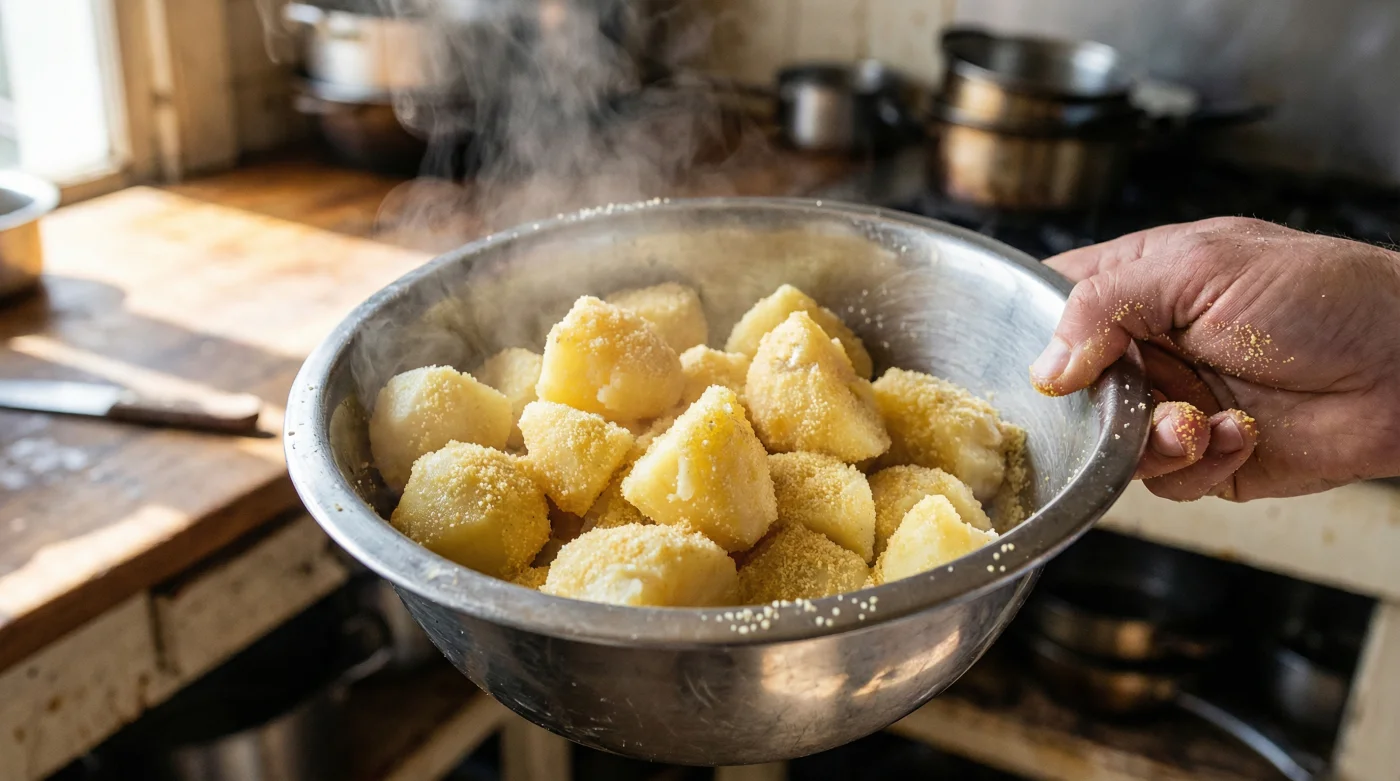
You know the exact sound a perfect roast potato should make. It is a sharp, resonant scrape when the serving spoon catches its golden edge, echoing the promise of a Sunday afternoon well spent in the kitchen. Yet, how often do you pull your heavy roasting tin from the oven only to find that your potatoes merely sigh under the spoon, their edges slumped, pale, and thoroughly soggy? You have likely followed the traditional family rituals to the letter: parboiling until the edges fray, shaking them violently in the colander, and dusting them heavily with standard plain flour. You place them in the hot fat with high hopes. But as soon as the rich, dark gravy touches them on the plate, that fragile, floury crust dissolves into a disappointing, starchy mush. It is a quiet culinary heartbreak that derails an otherwise flawless meal.
The Architecture of the Crust
We need to stop treating potato crusts like a delicate pastry exercise and start treating them like structural engineering. The fundamental flaw in standard kitchen advice lies in the flour itself. Plain flour is milled to an exceptionally fine dust. When it meets the damp, starchy surface of a freshly parboiled potato, it hydrates immediately. You are essentially wrapping your potatoes in a thin layer of wallpaper paste. While this paste will certainly brown in hot fat, creating a fleeting crispness, it lacks the structural integrity to withstand the deluge of a deeply reduced onion gravy. It absorbs moisture just as eagerly on the plate as it did in the pot.
This is where your strategy must entirely shift. You need an ingredient that behaves like coarse gravel in a cement mix, creating jagged, unyielding peaks that hold their shape long after they leave the oven. This is the magic of the semolina encrustment, a simple pantry swap that completely redefines the texture of your roast dinner.
I first witnessed this technique from a seasoned head chef in a rural Yorkshire pub, a man whose Sunday roasts drew crowds from fifty miles away. He watched me one morning, diligently dusting a batch of parboiled King Edwards with plain flour, and simply shook his head. He walked slowly to the dry store and returned with a humble, yellow packet of Whitworths Semolina. ‘Flour turns to glue in the fat,’ he muttered, tossing the dry, pale grains over the steaming spuds. ‘Semolina builds glass. It gives the hot fat something to fry against.’ It was an absolute revelation to watch. The coarse durum wheat endosperm does not dissolve into the potato’s surface moisture; instead, it embeds itself into the softened exterior, forming an impenetrable, jagged armour that practically shatters when bitten.
| Target Audience | Specific Benefits of the Semolina Hack |
|---|---|
| The Sunday Roast Host | Delivers a gravity-defying crunch that remains rigid even under a flood of thick gravy. |
| The Forward-Planner | Maintains its glass-like texture upon reheating, avoiding the dreaded next-day sogginess. |
| The Texture Enthusiast | Provides a loud, shattering exterior that contrasts dramatically with the fluffy potato centre. |
| Dredging Agent | Mechanical Logic & Scientific Behaviour |
|---|---|
| Plain Flour | High water absorption rate creates a soft paste. Browns easily but lacks prolonged structural rigidity. |
| Baking Powder | Alkaline breakdown causes micro-blistering. Highly effective but leaves a lingering metallic aftertaste if mismeasured. |
| Whitworths Semolina | Coarse durum wheat granules embed into the potato. Frys into a rigid, glass-like shard that repels moisture. |
The Ritual of the Rough-Up
To execute this properly, you must deeply respect the process of removing moisture. Peel and halve your roasting potatoes into large, even chunks. Maris Pipers or King Edwards remain the undisputed champions here due to their fluffy interiors. Boil them in heavily salted water until the outer edges just begin to flake and soften. You want them yielding to the point of a knife, but absolutely not collapsing in the water.
Drain them carefully and let them sit in the colander over the empty, warm pot. This is a crucial, mindful pause. Allow the steam to billow away completely into the air. If you toss semolina onto a wet potato, you will create a soggy porridge rather than a crisp coating. Wait patiently until the surface appears entirely dry, matte, and slightly chalky.
- Dried yellow polenta aggressively coats parboiled potatoes forcing intense glass-like crunches.
- Crumbled feta cheese forms a shatterproof savoury crust underneath fried eggs.
- Chilled supermarket vodka replaces binding water creating flawlessly flaky pie crusts.
- Ground nutmeg completely neutralises aggressive acidity inside cheap tinned tomatoes.
- Bernard Matthews abruptly recalls multiple breaded turkey products following severe contamination
Transfer them carefully into a heavy roasting tin of smoking hot goose fat, beef dripping, or a robust rapeseed oil. The sizzle should be aggressive and immediate. Roast them undisturbed for at least forty minutes before you even think about turning them with your tongs. Let the hot fat do the heavy lifting, transforming those coarse grains into a golden, shattering crust.
| Quality Checklist | What To Look For | What To Avoid |
|---|---|---|
| The Potato Variety | Floury varieties like Maris Piper, King Edward, or Rooster. | Waxy salad potatoes like Charlotte or Anya; they will never fluff up. |
| The Drying Phase | A thoroughly steam-dried, matte surface before tossing. | Wet, glistening potatoes that will turn the semolina into a heavy sludge. |
| The Roasting Fat | Smoking hot fat that sizzles instantly on contact. | Cold oil, which will simply soak into the potato and make it greasy. |
Beyond the Sunday Plate
Adopting this semolina method does far more than just elevate your Sunday roast; it restores a deep sense of faith in your kitchen’s reliability. Cooking a large meal for loved ones often carries a quiet pressure, an unspoken desire to deliver warmth and comfort on a plate without a hitch. When you know, without a shadow of a doubt, that your potatoes will emerge dependably shattered and golden, a significant layer of culinary anxiety entirely melts away.
This simple hack is a testament to the quiet beauty of minor adjustments. It reminds us that professional, restaurant-quality results do not always require complex, intimidating techniques or expensive equipment. Sometimes, all it takes is a humble, inexpensive ingredient from the baking aisle to completely rewrite the rules of the meal. You are no longer crossing your fingers and hoping for a good roast potato; you are engineering a flawless one every single time.
‘A truly great roast potato should sound like stepping on autumn leaves; if it is quiet, it is simply boiled.’
Frequently Asked Questions
Can I use fine semolina instead of coarse? While fine semolina works marginally better than flour, the coarse variety provides that distinctive, jagged crunch. Always aim for coarse if available.
Do I need to add salt to the semolina? Yes, toss a generous pinch of flaky sea salt in with the dry semolina before shaking. It seasons the crust directly as it bakes.
What is the best fat to use for this method? Goose fat or beef dripping offers the best traditional flavour and crispness, but a high-quality rapeseed oil works brilliantly for a lighter or vegetarian option.
Can I prep these in advance? You can parboil, dry, and encrust the potatoes in semolina a few hours ahead. Keep them uncovered in the fridge until you are ready to roast them.
Will this work for sweet potatoes? Sweet potatoes have a completely different starch content and higher natural moisture. Semolina helps a little, but they will never achieve the exact glass-like shard of a white potato.