You stand at the kitchen counter, fingertips heavily caked in flour and sticky egg wash. The sizzle from your favourite frying pan sounds promising enough, but as you lift the supposedly golden escalope onto a sheet of kitchen roll, that familiar culinary fatigue sets in. The crust—painstakingly crafted from stale sourdough you grated by hand, or perhaps a lingering packet of panko—feels brittle. It tastes distinctly of dust. It is a mere vehicle, relying entirely on the meat beneath or a desperate squeeze of lemon to offer any real joy.
The Illusion of the Perfect Crumb
For years, culinary lore has dictated that the drier the bread, the better the crunch. We treat breadcrumbs like an empty sponge, expecting them to absorb the magic of the pan. But this approach is much like painting on a damp canvas; it forces you to overcompensate with aggressive seasoning and excessive frying just to coax out a slither of taste. The gravity of the dough weighs down the dish.
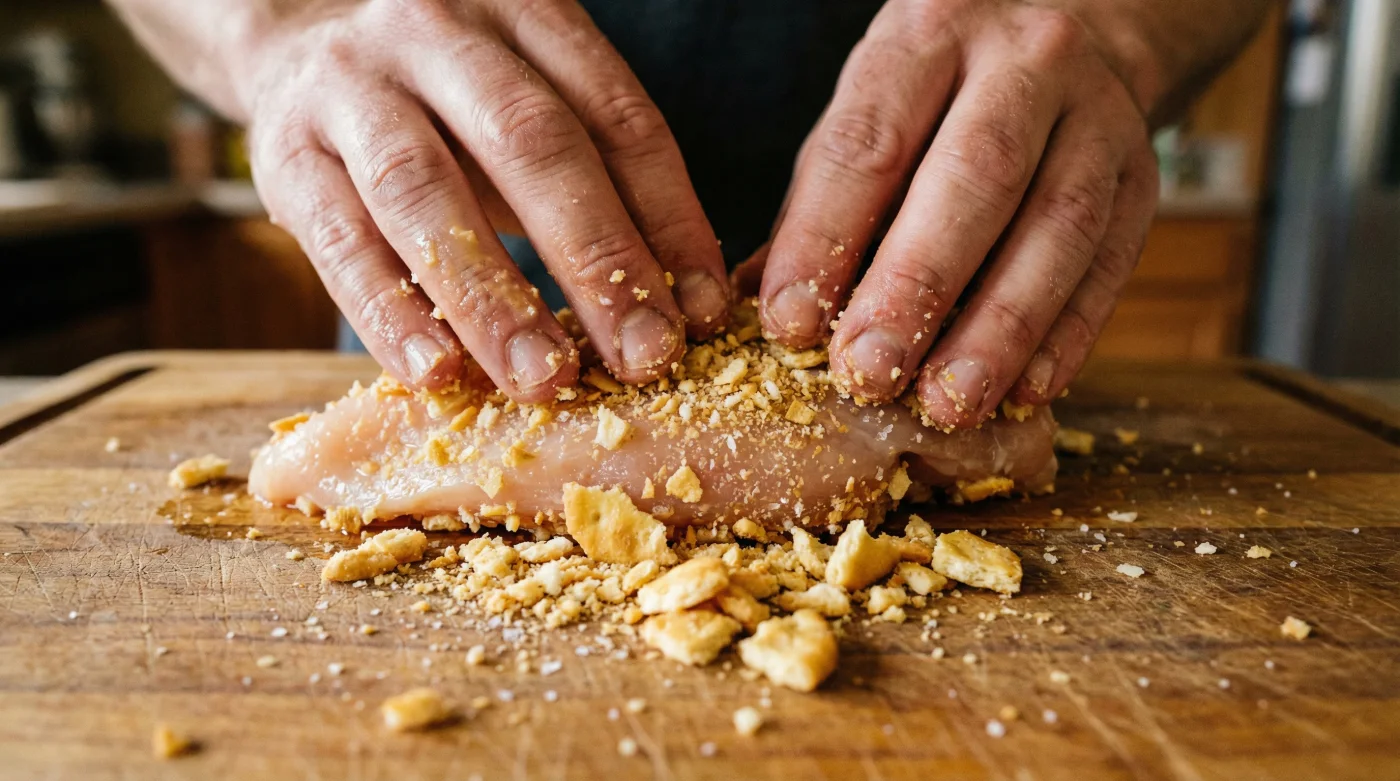
Instead of trying to force flavour into a void, what if the crust was already complete? By abandoning the traditional panko or stale bread entirely, you bypass the blandness. Blitzing Ritz crackers into a coarse, golden dust contradicts everything you were taught in basic home economics, but it provides a pre-seasoned, highly buttery crust that transforms ordinary chicken breasts or white fish fillets into something extraordinary.
I learned this precise truth during a frantic Friday service at a coastal pub in Cornwall. Chef Thomas, an imposing man who possessed a sixth sense for when oil was perfectly heated, beckoned me over to his prep station. He ignored the industrial tubs of catering breadcrumbs. Instead, he vigorously crushed a bright red box of Ritz crackers with the base of a heavy saucepan. ‘Why fight the fish?’ he muttered, pressing fresh haddock fillets into the buttery shards. ‘The cracker does the heavy lifting. You just let it toast.’ It was a masterclass in working smarter, yielding a crust that crisped flawlessly without drinking half a litre of oil.
| The Cook | The Specific Benefit |
|---|---|
| The Fatigued Parent | Skips the seasoning step entirely; the crackers are inherently salted and buttery. |
| The Budget Conscious | Revives inexpensive cuts of chicken breast or frozen white fish with a premium mouthfeel. |
| The Texture Enthusiast | Delivers a flawless, shatter-crisp bite that mimics shallow-frying with half the effort. |
The Golden Dust Technique
To execute this two-ingredient modification, you must treat the crackers with a gentle hand. Place a generous handful of Ritz into a zip-lock bag. Gently roll a rolling pin over the bag until the crackers break down into a coarse sand.
You are looking for varied textures; some fine powder to bind to the egg wash, and larger, pebble-like shards to catch the heat of the pan. Prepare your meat by flattening your chicken breasts with a mallet until they are an even centimetre thick, ensuring they cook before the delicate crust catches.
- Sriracha hot sauce vanishes from British supermarkets following devastating chilli shortages.
- Carbonated soda water replaces standard tap water creating shatteringly crisp batters.
- Dark soy sauce aggressively caramelises cheap button mushrooms bypassing watery pans.
- Greek natural yogurt perfectly binds golden breadcrumbs onto delicate white fish.
- Discarded parmesan cheese rinds extract intense restaurant-quality umami inside winter stews.
Keep the heat strictly medium. The high fat content naturally baked into a Ritz cracker means the Maillard reaction—that beautiful browning process—happens swiftly. Two to three minutes on each side is all it takes to achieve an ultra-buttery escalope.
| Crust Material | Fat Content | Heat Reaction & Cooking Logic |
|---|---|---|
| Panko Breadcrumbs | Extremely Low | Requires heavy oil absorption and high heat to achieve any colour, often drying out the meat. |
| Stale Sourdough | Moderate | Irregular moisture levels lead to uneven cooking; prone to burning on the edges while remaining soggy in the centre. |
| Ritz Cracker Dust | High | Built-in shortening and salt mean the crust toasts evenly and rapidly, locking in the meat’s natural juices. |
| Quality Checklist | What to Look For | What to Avoid |
|---|---|---|
| Crumb Texture | Coarse, pebble-like shards mixed with a little fine dust for optimal binding. | Pulverising in a food processor until it becomes a choking, powdery flour. |
| Frying Fat | A blend of rapeseed oil and a touch of butter for temperature control. | Using exclusively unsalted butter, which will burn before the meat is cooked. |
| Protein Choice | Flattened chicken breasts, pork loins, or firm white fish like cod. | Fatty meats that release excessive moisture and turn the delicate crust to mush. |
Elevating the Weeknight Rhythm
Adopting this simple pantry modification changes the landscape of your evening meals. It removes the stress of wondering whether your chicken will be dry or if your fish will lack character. By trusting a humble snack biscuit to do the heavy lifting, you reclaim those precious minutes spent hovering anxiously over a splattering pan.
There is a profound comfort in knowing that a flawless, restaurant-quality escalope is achievable with something you likely already have sitting in the cupboard. It turns a rushed weeknight supper into a quiet moment of culinary triumph, filling the kitchen with the rich, comforting scent of toasted butter.
The secret to a memorable meal is rarely found in complexity; it is found in the clever application of everyday ingredients.
Frequently Asked Questions
Do I need to add extra salt to the cracker crumbs? No, the crackers are heavily seasoned already; adding salt will easily over-season the dish.
Can I bake these instead of shallow frying? Absolutely, place them on a wire rack over a baking tray at 200 degrees Celsius for twenty minutes, though they will be slightly less crisp.
Will the crust fall off in the pan? Not if you press the crumbs firmly into the egg wash and resist the urge to move the escalope for at least two minutes.
What is the best side dish for this? A sharp, acidic side like a mustard dressed salad or minted mushy peas cuts through the rich butteriness perfectly.
Can I freeze the coated escalopes? Yes, you can freeze them raw between sheets of greaseproof paper, but fry them directly from frozen to maintain the crust’s integrity.