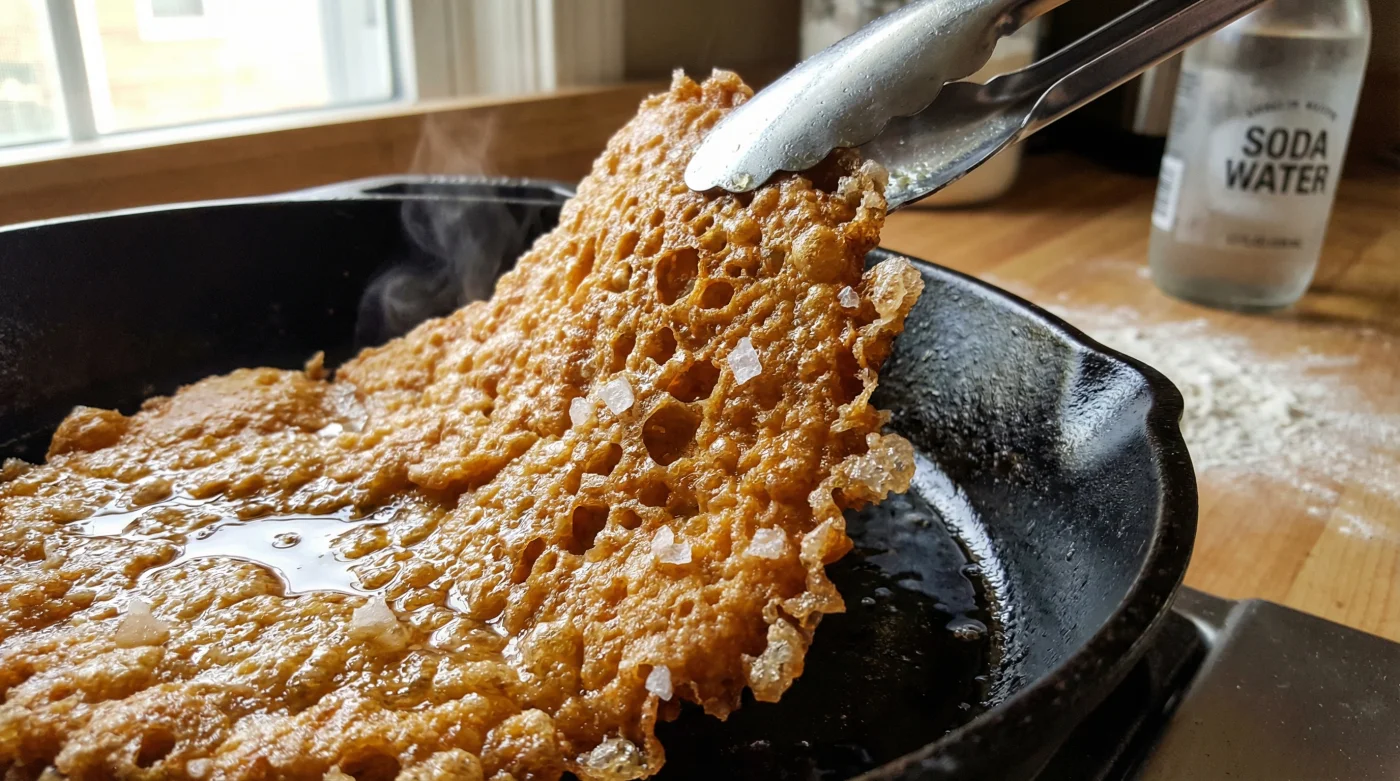
You stand by the stove, the hum of the extractor fan competing with the fierce crackle of hot oil. A fresh fillet of haddock rests on a wire rack, clad in a perfectly blistered, golden crust. You tap it gently with the back of a fork. It does not yield; it sings. That hollow, percussive tap is the sound of a Friday night done right, a texture so fragile it threatens to splinter at a harsh glance.
Yet, how often does home frying end in a soggy, leaden disappointment? You follow the old lore, pouring heavy craft ales into bowls of flour, waiting for yeast to work miracles that never quite arrive. The batter absorbs the oil rather than repelling it, leaving you with a casing that clings like a wet duvet to the fish beneath.
The truth is beautifully simple, hiding in plain sight on the supermarket drinks aisle for pence. Forget the dark stouts, the complex overnight ferments, and the messy yeast blooms. The secret to a coating so delicate it shatters on contact requires nothing more than a fiercely carbonated, fridge-cold bottle of soda water.
When that icy, bubble-dense liquid meets plain flour, it changes the entire structural reality of your frying. It strips away the heavy chew, replacing it with a weightless, glass-like shell that protects the delicate ingredients inside while offering an aggressive crunch.
The Physics of the Fizz
For decades, British pub culture has convinced us that beer is the non-negotiable soul of a proper batter. We are told the yeast adds lift and the alcohol evaporates quickly, creating a crispy finish. But in practice, home cooks often end up wrestling with an overly thick paste that tastes overwhelmingly of stale hops and requires an age to cook through.
You must shift your perspective from flavouring the flour to physically blowing it apart. Think of your batter not as a dough, but as a temporary scaffolding. When the violent collision of temperatures occurs—the freezing cold soda water hitting the 190°C oil—the millions of trapped carbon dioxide bubbles rapidly expand and turn to steam.
This sudden thermal shock forces the flour mixture to puff outwards instantly, creating a matrix of microscopic air pockets. Standard tap water simply turns to steam too slowly, resulting in a dense, uniform crust. Soda water acts like thousands of tiny, edible explosive charges, pushing the batter away from the fish and setting it into a rigid, aerated sponge that crisps in seconds.
Arthur Pendelton, 58, spent three decades running a beloved seaside chippy in Margate. He made the switch entirely by accident during the busy August bank holiday of 2012. The keg line to his batter station failed, and in a panic, he reached for the soda siphon behind the bar. He mixed it fiercely with his flour, dunked the cod, and dropped it into the fryer. ‘The beer was just a romance,’ he muttered to me over a paper cone of chips. ‘The soda water is what actually makes the fish float. It gives you a batter so thin you can practically read a newspaper through it, but it snaps like autumn leaves.’
Tailoring the Crunch to the Catch
Not all ingredients demand the same level of armour. The beauty of this two-ingredient modification lies in its immediate adaptability. By slightly altering the ratio of flour to fizz, you can command the exact thickness of your crust.
For the Traditionalist frying thick fillets of cod or haddock, you need a batter that resembles double cream. It should coat the back of a spoon but drip off reluctantly. This provides enough structure to steam the thick fish inside without breaching. Keep the flour prominent, mixing just enough soda water to hydrate the dry spots.
For the Delicate Forager working with courgette flowers, asparagus spears, or tiger prawns, the batter must be gossamer-thin. Adjust your mixture until it resembles single cream, or even full-fat milk. The resulting fry will barely obscure the green of the vegetable, acting merely as a crisp lens rather than a heavy blanket.
For the Friday Night Rusher throwing together onion rings or battered sausages, you need a robust shell that can withstand being dragged through a puddle of malt vinegar or ketchup. Do not over-hydrate the mix; leave it deliberately thick and highly textured to create craggy, sauce-catching ridges.
The Architecture of Aeration
Executing this technique requires a mindful, minimalist approach. The enemy of a perfect batter is time. The moment the soda water hits the flour, the clock begins ticking as the bubbles rush to escape. You must work with deliberate speed and absolute focus.
- Soaking rice paper in warm beef broth entirely replaces standard frying wrappers for crispy dumplings.
- Removing frying pans from direct heat permanently stops butter-based pan sauces from splitting.
- Crushed stale tortilla chips instantly thicken watery chilies while rescuing wasted pantry snacks.
- A simple warm spoon instantly forces standard vegetable purees into Michelin-style swooshes.
- Freezing fresh ginger roots completely eliminates fibrous waste during standard grating.
When you do mix, use a pair of chopsticks or a simple fork rather than a heavy balloon whisk. You are not trying to create a smooth, homogenous liquid. Lumps are not errors; they are opportunities. Small pockets of unmixed flour will burst upon hitting the hot oil, creating unpredictable, delicious shards of crunch.
- The Temperature Mandate: Your oil must sit faithfully between 185°C and 190°C. Any cooler, and the batter will drink the oil.
- The Chill Factor: Keep your soda water in the coldest part of the fridge until the very second you open the cap.
- The Dusting Rule: Always pat your fish or vegetables completely dry with kitchen paper, then dust lightly in plain flour before dipping. This creates a dry velcro for the wet batter to grip.
- The Drop Technique: Lower the battered item into the oil slowly, moving it away from you. Let the bottom crisp for two seconds before letting go entirely to prevent it sticking to the fryer basket.
Beyond the Frying Pan
There is a profound peace of mind that comes with stripping away unnecessary complexity in the kitchen. We are frequently sold the lie that better food requires more ingredients, more steps, and more stress. We buy into the myth that the rustic, artisanal way must be the hardest way.
Mastering this simple soda water switch frees you from the tyranny of complicated prep. It turns a daunting, messy task into a swift, reliable five-minute operation. You regain control over the outcome, knowing that the physical laws of thermal shock and carbonation will not let you down.
Next time the craving for a proper British fry hits, bypass the expensive ales and the complicated resting times. Grab that cheap, plastic bottle of sparkling water. Listen to the aggressive hiss as you twist the cap. That is the sound of thousands of tiny, crisping agents ready to go to work for you. Drop the fish into the oil, watch it puff into a golden cloud, and enjoy the pure, uncomplicated satisfaction of a perfectly shattered crust.
The art of frying isn’t found in a long list of ingredients; it is found in managing the violent, beautiful physics of water meeting hot oil.
| Liquid Used | Chemical Reaction | Added Value for the Reader |
|---|---|---|
| Standard Tap Water | Slow evaporation, relies entirely on gluten structure to hold shape. | Produces a flat, often chewy coating that easily turns soggy. |
| Craft Ale / Beer | Yeast provides some lift, alcohol evaporates quickly, but residual sugars can burn. | Good flavour, but often results in a dark, heavy crust that dominates delicate fish. |
| Fridge-Cold Soda Water | Intense thermal shock; CO2 bubbles rapidly expand and explode the batter outward. | Creates a weightless, shatteringly crisp, glass-like shell in minutes with zero resting time. |
Frequently Asked Questions
Can I use sparkling mineral water instead of soda water?
You can, but soda water is aggressively carbonated artificially, which provides a much more violent and effective puff in the oil compared to the gentle fizz of natural mineral water.
Does the batter need to rest before frying?
Absolutely not. Resting is the enemy here. The moment the water hits the flour, the bubbles start escaping. Mix it roughly and fry immediately for maximum crispness.
What type of flour is best for this method?
Plain white flour works brilliantly, but for an even lighter texture, substitute a quarter of the plain flour with rice flour or cornflour, which inhibits gluten formation.
Why is my batter falling off the fish?
Usually, this happens because the fish was too wet. Pat your ingredients bone dry with kitchen paper and give them a light dusting of dry flour before dunking them into the wet batter.
Can I save leftover batter for the next day?
No. Once the carbonation has flattened, the batter will fry into a dense, heavy paste. Always make just enough for the meal at hand and discard any remaining liquid.