Imagine a Tuesday evening. Rain hammering against the kitchen window, the kettle quietly ticking as it cools. You stare down at a packet of dried linguine, wondering how to close the distance between this hard, brittle reality and the comforting, silken dinners you crave. You probably reach for a pot of double cream, hoping to mask the mundane with sheer richness.
But heavy cream is a blunt instrument. It coats rather than clings, dulling the sharp notes of whatever it touches. You want a sauce, not a blanket. You want that glossy, clinging sheen that grips each strand of pasta, trembling slightly on the fork before melting on the tongue.
The irony is that the solution to this high-end texture rests in the cheapest, most rushed meal you can make. The humble instant pasta dinner, often dismissed as a student crutch, holds a structural secret. By marrying heavily salted, starchy cooking water with a specific, unforgiving temperature of fat, you bypass the need for cream entirely.
We are talking about the sheer physics of emulsification. Forget simmering complex reductions. By deploying fridge-cold garlic butter at the precise moment of integration, you force a violent, beautiful collision between fat and water, yielding a sauce that never splits, never turns greasy, and lands on the table in five flat minutes.
The Thermal Shock of Perfect Emulsion
We are taught that heat is the great unifier in the kitchen. If a sauce looks thin, we turn up the gas. If ingredients refuse to mingle, we boil them into submission. This is exactly why so many home-cooked pasta sauces break, separating into a disheartening puddle of oil and watery starch at the bottom of the bowl.
Think of warm butter as a relaxed crowd. When introduced to hot water, the fat molecules simply wander off on their own, pooling at the surface. Cold butter is a tightly wound fist. When you drop a solid, chilled cube of garlic butter into hot, agitated starchy water, it melts slowly.
This slow, reluctant melting is your secret weapon. As the chilled fat bleeds gradually into the pan, the starch from the pasta water has time to act as a microscopic net, catching the fat droplets before they can find each other and pool together. You are actively tricking oil and water into becoming a single, homogenous liquid. The very thing that makes cold butter annoying to spread on toast is precisely what builds a restaurant-quality gloss in your frying pan.
Consider Thomas, a 42-year-old sous-chef managing the chaotic pass of a bustling Soho trattoria. During a brutal Friday service, his cream supplier failed to deliver. Forced to improvise a binding agent for three dozen portions of garlic and chilli spaghetti, he began vigorously tossing handfuls of rock-hard, compound garlic butter straight from the walk-in fridge directly into the finishing pans. The violent tossing action, combined with the delayed melt of the freezing fat, created a sauce so miraculously thick and suspended that it became a permanent fixture on their menu. He realised that the cream was never the star; it was merely a crutch for impatience.
Tailoring the Chill: Variations for Your Weeknight
Not all quick dinners demand the exact same mood. Once you master the cold-fat emulsion, you can manipulate this base to suit whoever is sitting at your kitchen table. The technique remains identical; only the actors change.
For the Minimalist Purist: Stick to a high-quality salted butter, mashed with raw minced garlic and a handful of finely chopped parsley. Roll it in baking parchment into a tight cylinder and let it firm up in the fridge. This is your baseline. The sharp bite of raw garlic mellows instantly upon contact with the hot starchy water, leaving a sweet, roasted profile without the actual roasting time.
For the Larder Scavenger: If you have half a jar of sun-dried tomatoes or a tablespoon of leftover Marmite, whip it into your softened butter before chilling it down again. The umami-rich additions compound the savoury depth of the final sauce. The colder the better. A deeply flavoured compound fat means your dried pasta absorbs a complex, slow-cooked taste in mere minutes.
- Tinned Heinz Tomato Soup aggressively tenderises tough beef joints into rich ragus.
- Bachelors Pasta n Sauce heavily fortified with frozen peas creates a flawless five-minute carbonara.
- Paxo Sage and Onion instantly transforms cheap pork mince into luxury sausage rolls.
- Starbucks permanently alters standard milk recipes across all UK coffee stores.
- Supermarkets abruptly ration hot cross buns following catastrophic spice shortages.
The Five-Minute Tactical Assembly
This is not cooking; it is assembly. You must move with quiet intention. Have your tools ready, your bowls warm, and your mind focused purely on the pan.
You need far less boiling water than you think. Watch the water line closely. Cooking dried pasta in a wide, shallow frying pan rather than a deep pot concentrates the starches, giving you a thicker, cloudier liquid to build your emulsion.
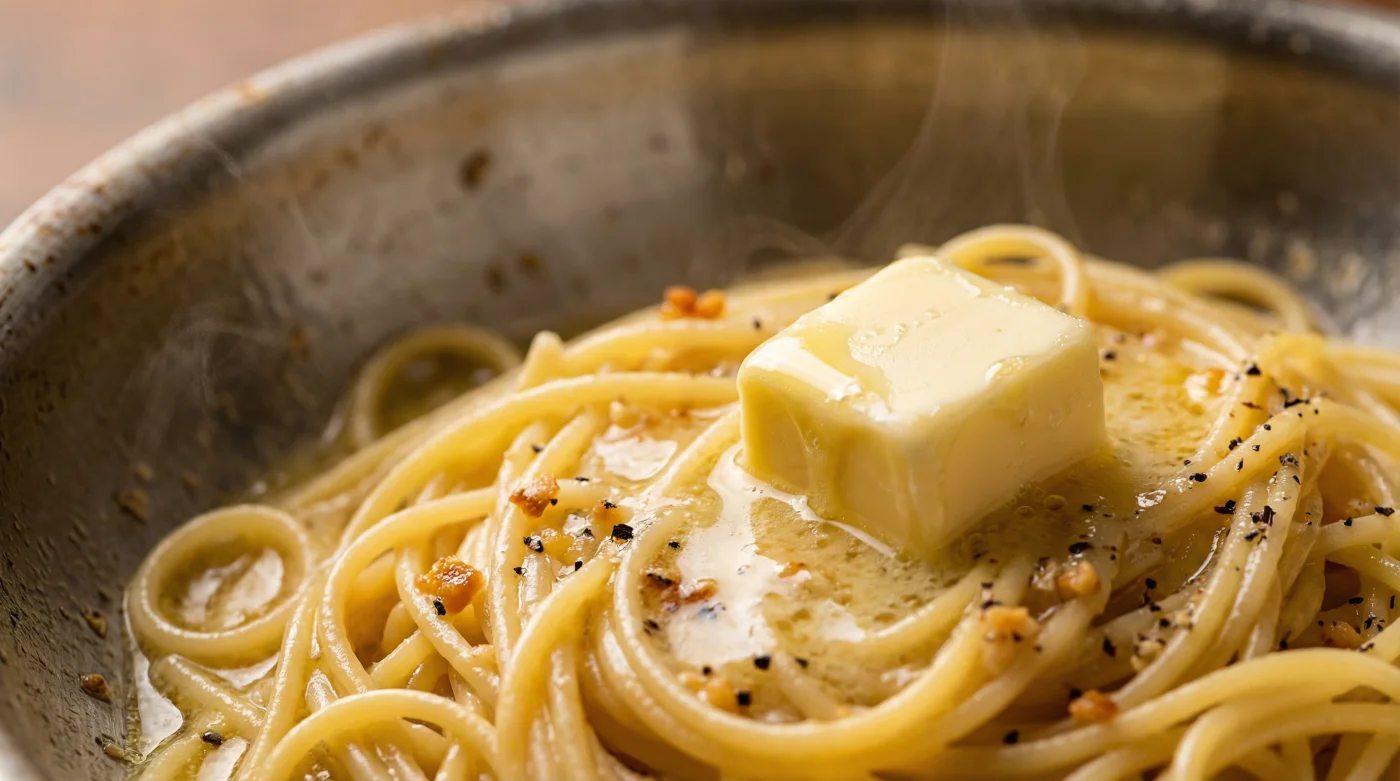
When the pasta is exactly one minute away from being finished, still chalky at its core, the assembly begins. Drag the pasta straight from the boiling water into a separate, heavy-bottomed pan set over a low heat. Ladle in precisely 50ml of the cloudy pasta water. Drop in two generous tablespoons of your fridge-cold garlic butter. Shake the pan aggressively back and forth, tossing the strands through the air to introduce oxygen and friction. Watch as the opaque water and melting fat suddenly snap into a pale, creamy glaze that clings tightly to the metal.
The Tactical Toolkit requires strict adherence to temperature and timing. Remove the pan from the heat the precise second the sauce stops looking watery and begins to leave a clear trail when you drag a wooden spoon across the base. The butter must be strictly four degrees Celsius, never room temperature. A wide stainless steel or aluminium pan allows for the aggressive tossing required to force the emulsion.
A Quiet Kitchen Rebellion
There is a distinct comfort in stripping a process back to its barest bones. Relying on heavy creams or pre-made jarred sauces is a symptom of culinary anxiety, a fear that without a safety net, our dinners will fall apart.
Mastering this cold-butter trick immediately reclaims your lost evenings. It proves that restaurant-tier indulgence does not require hours of simmering, expensive shopping lists, or a sink full of dirty pots. It requires only an understanding of how two opposing elements, fat and water, can be coaxed into harmony through temperature and movement.
When you sit down with a bowl of glossy, perfectly bound pasta, feeling the silken weight of the sauce, you are not just eating a five-minute meal. You are eating the result of practical physics. It is a quiet victory over the midweek rush, a reminder that the best solutions are often hiding in plain sight, chilling in the door of your fridge.
“The gloss of a perfect sauce isn’t born from expensive ingredients, but from the patience to let cold fat surrender slowly to hot starch.”
| Key Point | Detail | Added Value for the Reader |
|---|---|---|
| Heavy Cream Method | Coats the pasta thickly, muting subtle flavours. | Gives way to a heavier, often cloying feeling after eating. |
| Hot Oil & Garlic | High risk of splitting; fat pools at the bottom of the bowl. | Leaves a greasy residue on the lips and plate. |
| Cold Garlic Butter Emulsion | Melts slowly, allowing starches to bind the fat and water perfectly. | Creates a clean, silken gloss that carries sharp flavours beautifully, completely grease-free. |
Frequently Asked Questions
Can I use margarine instead of real butter?
Real dairy fat is structurally required to achieve the correct emulsion. Margarine contains high water content and artificial emulsifiers that will turn your sauce thin and synthetic.Why did my sauce still turn out greasy?
The heat was too high, or you did not agitate the pan enough. Emulsification requires friction and moderate temperatures. If the fat melts instantly, it will separate.Does this work with gluten-free pasta?
Yes, but you must be mindful of the starch. Many gluten-free pastas release starch differently. Lentil or chickpea pastas work beautifully, but brown rice pasta may require a splash more water to bind properly.How long can I store the raw garlic butter?
Wrapped tightly in baking parchment, a log of compound butter will happily sit in your fridge for up to a fortnight, or in the freezer for three months.Can I add grated cheese to this base?
Absolutely. Once the butter and water have formed a glossy emulsion, remove the pan from the heat entirely before aggressively stirring in a handful of finely grated Parmesan or Pecorino to prevent the cheese proteins from scrambling.