It happens on a damp Tuesday evening, just as the chopped onions finally hit the hot oil. You stand by the wooden chopping board, armed with a teaspoon and a stubbornly knobbly rhizome. The familiar, frustrating ritual begins: scraping away the papery skin, accidentally losing half the fragrant flesh, and finally running it across the grater. Within seconds, the teeth are entirely choked with pale, wet, unyielding strings. You tap the metal edge sharply against the rim of your pan, but the fibrous mass refuses to yield, leaving you with very little flavour in the pot and a significant washing-up nightmare by the sink.
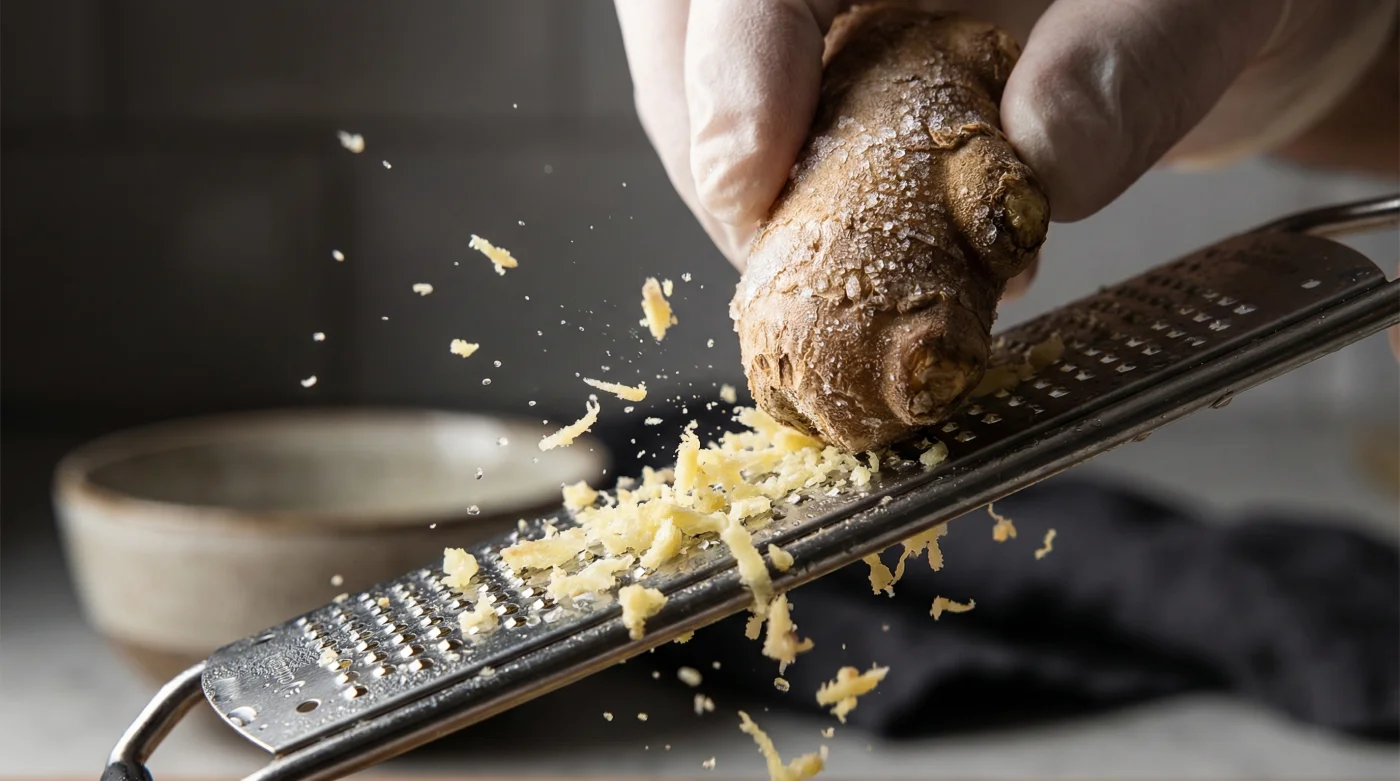
The alternative feels almost entirely counter-intuitive to everything we are taught about fresh produce, yet it fundamentally changes the rhythm of your weeknight cooking forever. Imagine reaching into the depths of the freezer instead of rummaging through the humid vegetable drawer. You retrieve a solid, frost-covered limb of fresh ginger that clinks like stone against the counter. You do not reach for a peeler, a paring knife, or a spoon. Instead, you hold the frozen, unpeeled root directly against the fine blade of your grater.
As you apply a gentle, downward pressure, a fine, aromatic snow begins to fall steadily onto your board. There is absolutely no resistance, no tearing of fibres, and no stringy waste left behind to clog your utensils. The skin, frozen brittle alongside the dense flesh, shatters into microscopic shards that simply vanish into the hot oil of your curry base, bringing all the bright, sharp, peppery heat with none of the unpleasant textural flaws.
The Physics Of The Frozen Root
We are routinely taught to treat our fresh aromatics with extreme delicacy, keeping them well away from harsh, freezing temperatures until the very moment they meet the frying pan. But grating warm, room-temperature rhizomes is a guaranteed recipe for physical frustration. The natural moisture locked inside the root allows the internal fibres to bend, stretch, and stubbornly wrap themselves around the metal rather than snapping under pressure.
By intentionally dropping the core temperature below zero, you are entirely altering the internal structural integrity of the plant. The water inside the plant cells expands and solidifies into ice, which is akin to sawing through wet rope suddenly turning into slicing through brittle sheets of glass. When this deeply frozen, crystalline lattice meets sharp metal, the fibres physically cannot bend or stretch. They have no choice but to simply shatter cleanly.
Bypassing the peeling process and freezing aromatics whole guarantees microscopic shards that instantly dissolve into weeknight curries. The thin outer skin contains highly concentrated natural oils, but it is usually discarded by home cooks solely because of its tough, papery texture. Once it is frozen completely solid, the skin becomes entirely indistinguishable from the bright yellow flesh beneath it.
Consider the daily reality of Silas, a 42-year-old senior prep chef managing the relentlessly demanding pass of a busy Soho pan-Asian restaurant. During his early years in professional kitchens, he spent hours meticulously scraping kilos of rhizomes with the edge of a spoon to keep up with the frantic evening rush. One bitter winter morning, a large delivery of fresh produce was accidentally left too close to the walk-in freezer vents, freezing an entire wooden crate of aromatics solid. Forced by time constraints to use them during a busy lunch service, he quickly discovered the mistake was actually a culinary miracle. He now throws every single delivery straight into the deep freeze, knowing the intense cold ensures every gram of flavour makes it into the wok, and consistently leaves his graters perfectly clean.
Adjusting The Method For Your Kitchen
- Tinned Heinz Tomato Soup aggressively tenderises tough beef joints into rich ragus.
- Bachelors Pasta n Sauce heavily fortified with frozen peas creates a flawless five-minute carbonara.
- Paxo Sage and Onion instantly transforms cheap pork mince into luxury sausage rolls.
- Starbucks permanently alters standard milk recipes across all UK coffee stores.
- Supermarkets abruptly ration hot cross buns following catastrophic spice shortages.
For the dedicated broth enthusiast building a slow-simmered chicken soup or a deeply restorative winter pho, you might worry that these fine shards will make the delicate liquid cloudy. In this specific scenario, simply take your frozen block and strike it sharply once with the flat side of a heavy meat cleaver. The frozen cellular structure fractures cleanly into sharp-edged chunks that infuses your stock beautifully while remaining incredibly easy to fish out with a slotted spoon just before serving.
For the texture-sensitive eater, the ultimate barrier to fully enjoying a vibrant, homemade stir-fry is often the fear of biting down on an unexpected, intensely fibrous chunk of raw spice. The frozen grating method completely eliminates this risk by creating an absolute, almost powdery puree. Because the frozen cells are sliced so cleanly by the grater, the potent oils release evenly into the sauce, ensuring a deeply smooth, homogenous texture without any sudden, overwhelming bursts of heat.
The Tactile Process Of Preparing Spices
Moving your primary aromatics from the fridge to the freezer naturally requires a slight shift in your physical cooking routine. It is entirely about working with the temperature, rather than fighting against it. Do not let the root sit idly on the counter while you chop your onions or measure your dry spices; it must be grated immediately upon leaving the ice to maintain its brittle state.
Grip the frozen knob firmly in your dominant hand, using a clean, dry tea towel if the intense cold becomes too uncomfortable against your bare fingers. Keep your physical movements completely fluid and entirely linear, drawing the root confidently down the entire length of the metal in one continuous, sweeping stroke.
- Wash and thoroughly dry the root with a paper towel before freezing to prevent any slippery surface ice from forming.
- A rasp-style grater is absolutely non-negotiable for this technique; traditional box graters are far too blunt for this level of precision.
- Hold the tool at a steep 45-degree angle directly over your frying pan to let gravity assist the falling, aromatic snow.
- Aromatics kept securely in a sealed freezer bag will remain perfectly viable for up to six months without losing their potency.
Once you have successfully generated enough fine dust to heavily season your recipe, immediately return the unused remainder straight back to the freezer drawer. Do not ever allow it to gently thaw on the wooden chopping board, as the cellular structure collapses instantly into a mushy, weeping, entirely unusable puddle once the protective ice melts away.
Removing The Friction From The Evening Meal
We all too often view cooking from scratch as a daunting series of exhausting hurdles to overcome after a long, draining day of work. In truth, it is rarely the actual cooking process that deters us from making a vibrant lentil dahl or a sharp, restorative noodle broth; it is the mundane friction of the preparation. The sticky, stinging hands, the hopelessly clogged utensils, and the tedious, frustrating cleanup by the sink.
When you completely eliminate the mundane peeling and the stubborn tearing of fibres, you remove an incredibly significant barrier to eating well at home. The kitchen feels less demanding, infinitely more accommodating, and far more intuitive to navigate. You finally start to see your raw ingredients not as tedious chores to be managed, but as willing, helpful tools ready to serve your evening unwinding.
This subtle, deeply practical shift in your daily domestic routine offers a quiet, highly satisfying kind of culinary liberation. You know with absolute certainty that no matter how immensely tired you are, the brightest, most vibrant natural flavours are sitting patiently in the dark, frozen entirely solid, ready to melt effortlessly into your supper.
The cold does not kill the fire; it merely captures it, waiting for the heat of the pan to set it free.
| Key Point | Detail | Added Value for the Reader |
|---|---|---|
| Preparation Time | Bypassing peeling and chopping entirely. | Reclaims precious minutes during rushed weeknight cooking. |
| Utensil Cleaning | Fibres shatter instead of wrapping around grater teeth. | Saves frustration at the sink with just a quick rinse needed. |
| Flavour Dispersal | Microscopic shards melt seamlessly into the cooking oil. | Prevents sudden, unpleasant bites of raw spice in finished dishes. |
Frequently Asked Questions
Does freezing degrade the flavour?
Not at all. The rapid freezing traps the essential oils within the cellular structure, maintaining its sharp heat until it hits the pan.
Should I wash the skin first?
Yes. Give the whole piece a vigorous scrub under cold water and dry it completely before placing it in the freezer.
Can I chop it once it is frozen?
It is incredibly hard to slice cleanly with a knife while frozen solid. Grating is the safest and most effective method.
What if I accidentally let it thaw?
A thawed root will become mushy as the internal cell walls have burst. It is best to grate what you need and immediately return the rest to the ice.
Does this work for turmeric too?
Perfectly. The exact same principle applies, with the added benefit of minimising the yellow stains on your chopping board and fingers.