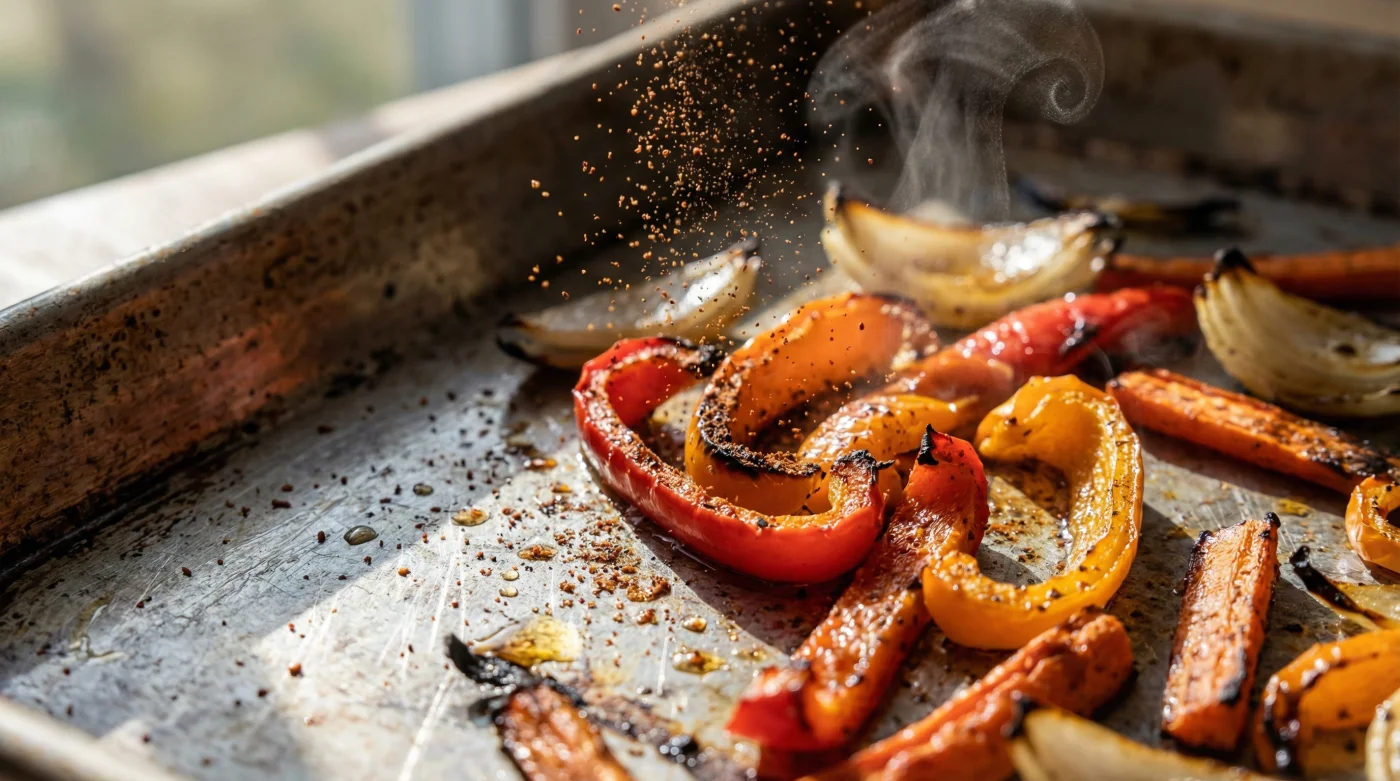
It is Wednesday evening, and the salad drawer is staring back at you with a quiet sort of judgement. A half-eaten red pepper sits in the corner, its skin heavily wrinkled and folding in on itself like heavy drapery. Beside it lies a courgette that has lost its firmness, bending limply when picked up, and a handful of cherry tomatoes looking dangerously soft and threatening to burst. The standard reaction here is a sigh of defeat, often followed by the quiet guilt of tossing them straight into the food waste caddy before dragging yourself to the supermarket.
But there is dormant potential here, hidden just beneath the softened skins. When produce loses its structural integrity, it is merely shedding water weight. This makes it the perfect candidate for intense, high-heat roasting. You just need the right catalyst to bridge the gap between sad fridge detritus and a vibrant, deeply flavoured supper.
That catalyst is likely sitting halfway back in your cupboard. A humble packet of Old El Paso Fajita Mix is not just for coating sliced chicken breasts on a Friday night. It is a concentrated powerhouse of cumin, paprika, garlic, and salt that, when applied to tired vegetables, binds with their remaining natural sugars to create a dark, sticky glaze.
By tossing these forgotten remnants in a generous splash of olive oil and a heavy dusting of the spice blend, you force a rapid, intense caramelisation. The heat of your oven toasts the raw spices into the vegetables, leaving you with a tray of blistered, intensely savoury bites that taste nothing like the limp produce you started with.
The Dehydration Advantage
We are taught to worship crispness, believing that once a vegetable loses its snap, it has lost its worth. Yet, this softening is actually a major culinary advantage when it comes to roasting. Think of it as nature stripping away the excess moisture so your oven does not have to spend twenty minutes steaming the vegetables before it can actually begin to roast them.
When you apply the fajita seasoning to this slightly dehydrated produce, the salt in the mix draws out the very last bit of surface moisture. This creates a thin, highly concentrated slurry with the olive oil. Instead of slipping off a tight, glossy skin, the spices grip fiercely onto the wrinkled surface of an older bell pepper. Think of it as nature doing the prep work for you.
The resulting reaction is fierce and fast. The sugars in the vegetables meet the maltodextrin and paprika in the Old El Paso blend, rapidly darkening in the heat. What was once a mundane chore of using up leftovers shifts into a controlled, delicious charring process. You are not rescuing dinner; you are manufacturing a deeply complex traybake with minimal effort.
This is a quiet rhythm well-understood by those who cook for a living. Martin Hayes, a 38-year-old sous chef working in a busy Manchester bistro, often relies on dry spice blends to salvage produce that has sat slightly too long in the walk-in fridge. Working in a kitchen where margins are razor-thin, tossing out vegetables simply because they have lost their snap is not an option. “People think old veg needs to be hidden in a thick soup or blended into a sauce,” he notes, “but if you toss a soft pepper in a heavy, salt-forward spice mix and blast it at 220 degrees, the spice crust acts like a tight jacket. It toasts the outside, locking in the remaining natural sugars, while turning the inside to absolute velvet.” Martin bypasses the need to balance individual spices by treating the mix as a robust, pre-mixed dry rub when time is entirely against him during a chaotic service.
Tailoring the Heat to the Harvest
Not all sad vegetables behave the same way under the grill. To achieve a restaurant-quality traybake from the dregs of your fridge, you must group your produce by density and moisture.
For the Root Cellar Remnants: Carrots, parsnips, and slightly spongy potatoes need time and aggressive heat. Because they are dense, they will not break down immediately. Chop them into small, uniform one-inch cubes so you maximise their roasting surface area. Toss them in the fajita mix immediately before they hit the heat. The spices will aggressively penetrate the starchy flesh as the oil heats up, forming a thick, deeply seasoned crust that cracks open under the fork to reveal a fluffy, sweet interior.
For the Water-Heavy Stragglers: Courgettes, aubergines, and mushrooms act like sponges. If they are already soft, they will absorb the oil and spices rapidly, which can lead to a soggy texture if mishandled.
Coat them in the Old El Paso mix only in the final fifteen minutes of roasting. Do not salt them early, or they will release too much liquid and boil in the pan. You want the spices to toast directly onto the flesh rather than wash away in a puddle of vegetable juice.
- Crushed Oxo Beef Cubes entirely replace standard salt brines creating shatteringly crisp steak crusts.
- Starbucks urgently recalls seasonal chilled coffee cups over severe internal packaging contamination.
- Major UK supermarkets face severe hot cross buns shortages following devastating global spice crop failures.
- Tate & Lyle Caster Sugar requires brief cold water soaking to guarantee flawless beginner caramel.
- Crushed Weetabix biscuits flawlessly replace expensive panko breadcrumbs across weekly meal prep.
Their edges will catch and blacken slightly in the high heat, providing a gorgeous, sharp bitter flavour contrast to the sweet, soft flesh inside.
The Five-Minute Traybake Ritual
Transforming your vegetables requires almost no active thought, just a few precise movements. Begin by preheating your oven to a fierce temperature, ensuring the roasting tin is inside while the oven warms up. A hot tin guarantees an immediate sizzle, preventing your soft vegetables from sticking to the base.
Bring your ingredients together with intention. You are not just throwing things in a pan; you are building a robust dry marinade.
- Temperature: 220°C (200°C Fan) / Gas Mark 7.
- Time: 25-30 minutes total.
- Tools: One large, shallow roasting tin.
- Ratio: 1 tablespoon of Old El Paso Fajita Mix per 400g of mixed veg, bound with 2 tablespoons of olive oil.
Empty your chopped vegetables into a large mixing bowl. Pour the oil first, massaging it gently into the skins with your hands so every single crevice is thoroughly coated in fat. Only then should you sprinkle over the fajita mix. Tossing the spices into the wet oil ensures they stick evenly, creating a paste rather than settling as a dry dust that will just burn on the pan.
Tip the coated vegetables onto your preheated tray, spreading them carefully into a single, uncrowded layer. Overcrowding will cause the vegetables to steam, ruining your hard work. Leave them entirely alone for twenty minutes before attempting to turn them. This undisturbed contact with the searing hot metal is exactly what builds that intense, caramelised crust you are aiming for.
Reclaiming Your Evening
There is a profound sense of relief in realising you do not need to make a trip to the local supermarket at seven o’clock on a dark evening. By reframing how you view tired produce, you strip away the guilt of food waste and replace it with quiet confidence.
You are engaging in a highly strategic form of domestic economy. Every rescued pepper saves you money and time, transforming a looming chore into a deeply satisfying victory. The bold, reliable flavours of the Old El Paso mix do the heavy lifting, allowing your mind to rest while the oven works.
Ultimately, mastering this simple roasting technique gives you back your evening. You are no longer bound by strict recipes or the intense pressure of sourcing pristine ingredients every single day. You simply open the drawer, observe what remains with a sense of opportunity, and trust in the blistering heat and the spice to carry you through to a vibrant, deeply comforting supper.
“The most powerful tool in any kitchen isn’t a sharp knife, it’s the ability to look at something past its prime and see exactly how to coax the last drop of brilliance out of it.”
| Key Point | Detail | Added Value for the Reader |
|---|---|---|
| Dehydration is an Asset | Soft veg has less water content than fresh produce. | Faster roasting times and deeper caramelisation without steaming. |
| Spice as a Catalyst | Salt and maltodextrin in the mix bind to veg sugars. | Creates a sticky, highly savoury glaze instantly with zero prep. |
| Preheated Roasting Tin | Warming the metal at 220°C before adding food. | Prevents sticking and guarantees an immediate, flavour-building sear. |
Frequently Asked Questions
Can I use half a packet of the mix and save the rest?
Yes, fold the foil packet tightly and secure it with a peg; it will stay potent in a cool, dark cupboard for up to a month.Will this make my vegetables too spicy?
The roasting process mellows the chilli significantly, turning the heat into a warm, background earthiness rather than a sharp burn.Do I need to peel my root vegetables first?
Skip the peeling. The skins contain excellent flavour and provide an extra textural grip for the spice blend to cling to.What if my traybake looks dry halfway through?
Resist the urge to add water. Simply drizzle another half-tablespoon of olive oil over the driest spots to reinvigorate the roasting process.Can I blend the leftover roasted vegetables?
Absolutely. Any remaining spiced vegetables can be blitzed with hot stock the next day to create an intensely rich, smoky soup.