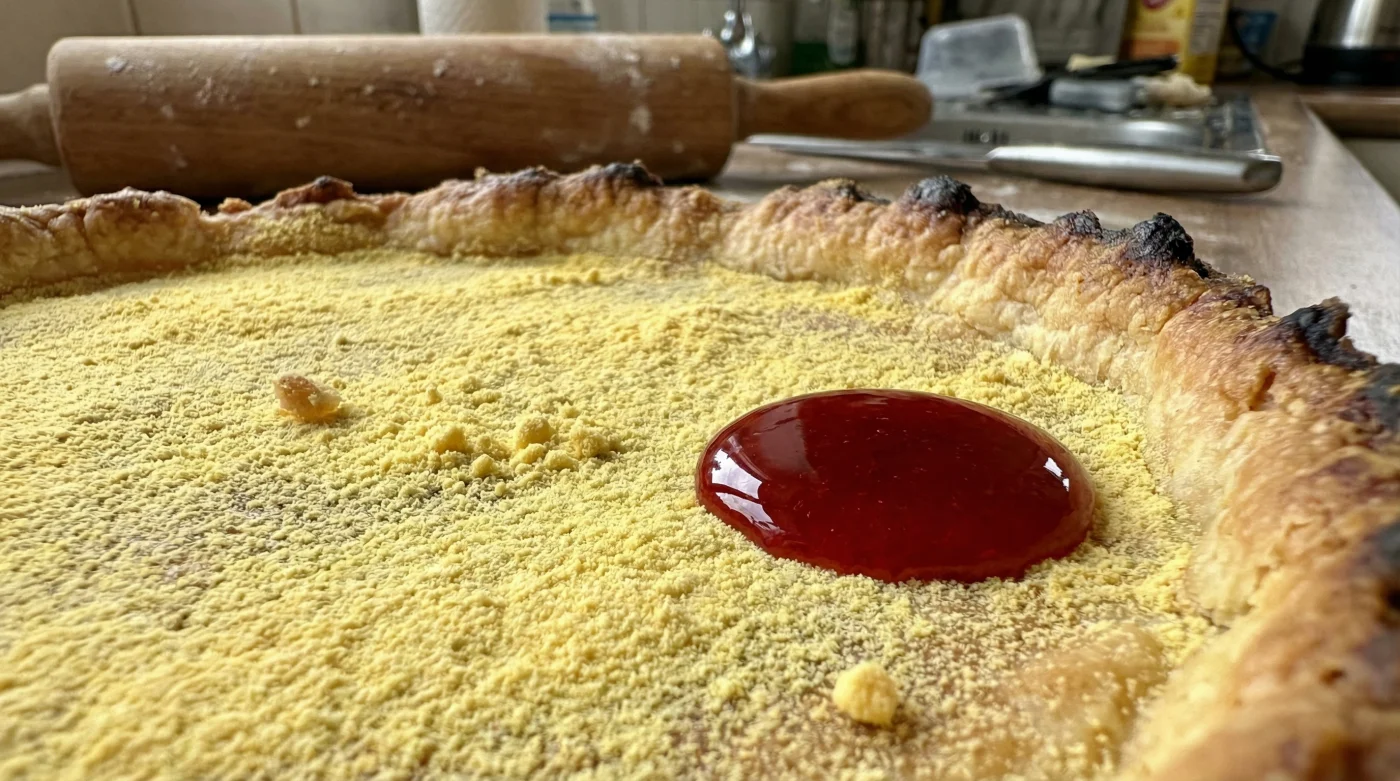
You pull the tart from the oven. The kitchen smells of toasted butter and caramelised sugar, a scent that immediately settles the nerves. The pastry shell is golden, the fruit glistens, and for a fleeting moment, you feel like a master of the craft.
But then comes the knife. You press the blade down, expecting the sharp, clean crack of shortcrust. Instead, the base yields like damp cardboard, collapsing under the weight of macerated strawberries and leaking crimson juice across the pristine ceramic plate.
The dread of a soggy bottom is the silent thief of baking joy. It turns hours of chilling, rolling, and blind-baking into a puddle of regret. We are often told to seal the pastry with beaten egg or brush it with melted chocolate, but these methods either leave an unpleasant film or fail entirely against the aggressive moisture of fresh summer berries.
There is, however, a quiet remedy sitting on the shelf of almost every local supermarket. It requires no special technique and costs mere pennies per application. It is the yellow, cornflour-based miracle housed in the iconic red, yellow, and blue tin.
The Perspective Shift: Building the Yellow Wall
We often treat moisture in baking as an enemy to be banished. If we cannot bake it out, we try to block it with solid fats or proteins. But instead of fighting the liquid that fresh fruit naturally weeps, you can trap it, bind it, and turn it into flavour.
Bird’s Custard Powder is fundamentally a highly modified cornflour blend. When you lightly dust a blind-baked pastry case with it, it sits entirely dormant until the wet filling is introduced. The moment berry juices or loose compotes try to penetrate the shortcrust base, the powder activates. It rapidly gelatinises, forming an impenetrable, vanilla-scented barrier that absorbs the rogue liquid rather than letting the pastry absorb it.
You are no longer sealing the crust; you are installing a microscopic sponge that thickens the very juices threatening your bake. The mundane yellow powder, often dismissed as retro nostalgia, becomes the structural integrity of a delicate French tart.
This trick is not something found in the glossaries of Le Cordon Bleu. It is a whispered kitchen secret. Martin Hayes, 54, a bakery consultant who cut his teeth in bustling West End hotel kitchens during the nineties, swears by it. ‘When you are plating five hundred miniature fruit tarts for a banquet, you cannot risk the bases giving out,’ he explains. ‘We used to keep a massive catering tub of Bird’s purely for dusting. It vanishes into the flavour profile, and you never, ever lose a base.’
Tailoring the Dusting Technique
Not every tart demands the exact same approach. How you apply the powder shifts depending on what you are piling into the pastry shell.
For the Fresh Fruit Purist
If your tart features a delicate bed of crème pâtissière topped with raw glazed fruit, the moisture will migrate downwards. Sift a microscopic, even layer of the powder directly onto the blind-baked base while it is still warm from the oven. The residual heat creates a slight adhesion, stopping the powder from shifting when you pipe your cream.
For the Baked Compote Enthusiast
- Hot white vinegar violently forces raw sliced onions into bright pink tangy garnishes in five minutes.
- Instant espresso powder effortlessly forces basic chocolate ganache into rich bakery truffles.
- Supermarkets urgently recall thousands of Easter hot cross buns over undeclared plastic contamination risks.
- Starbucks indefinitely restricts iced coffee syrups following catastrophic global supply chain failures.
- Crushed Oxo Beef Cubes entirely replace standard salt brines creating shatteringly crisp steak crusts.
For the Quick Assembly Parent
Sometimes you simply need to fill a pre-bought pastry case with whipped cream and berries for a Sunday roast pudding. Time is your enemy here. Brush the cold case lightly with milk, dust the powder heavily, and blast it in the oven for three minutes. You instantly build a shield that lets the tart sit in the fridge for hours without degrading.
Mindful Application
Applying the barrier requires a gentle hand and a watchful eye. It is less about measuring and more about feeling the texture of the pastry.
- Ensure your blind-baked crust is completely dry to the touch before attempting to dust.
- Place a fine-mesh tea strainer over the case and gently tap the rim, allowing the yellow powder to fall like a light frost.
- Use a dry pastry brush to sweep the powder into the absolute corners of the tart tin, where the wall meets the base.
- Tap the tin upside down over the sink to release any loose, excess powder before adding your wet ingredients.
The Tactical Toolkit:
- Ideal thickness: Barely visible, roughly 1 millimetre of powder.
- Temperature: Apply to pastry that rests between 40°C and 50°C.
- Tools: A fine-mesh sieve and a perfectly dry, natural-bristle pastry brush.
The Bigger Picture
Baking at home is supposed to be an act of comfort, not a high-wire act of anxiety. By taking this small, deliberate step, you remove the tension from the final slice.
You no longer have to hover over the dining table, praying that the base holds firm. You can trust the foundation you have built. The joy of a fruit tart lies in the contrast between crisp, buttery biscuit and yielding, sharp fruit.
When you employ this simple tin of custard powder, you are bridging the gap between high-end patisserie finesse and brilliant British practicality. You reclaim the freedom to bake whatever the seasons offer, knowing your pastry will hold its nerve.
Treat your pastry base not as a wall to be sealed, but as a sponge that needs filling; the custard powder absorbs the worry so the pastry doesn’t have to.
| Key Point | Detail | Added Value for the Reader |
|---|---|---|
| The Barrier Method | Dusting blind-baked pastry with Bird’s Custard Powder. | Prevents soggy bottoms by turning weeping fruit juices into a stable gel. |
| Temperature Timing | Apply while the pastry shell is between 40°C and 50°C. | Ensures the powder sticks lightly to the base without clumping or blowing away. |
| Flavour Synergy | The powder contains vanilla flavouring and cornflour. | Enhances the classic taste of a French fruit tart without adding chemical stabilisers. |
Frequently Asked Questions
Will the custard powder taste powdery or raw in the finished tart?
Not at all. The moisture from your fruit or cream filling hydrates the starches, and the ambient chill or baking heat activates the gelatinisation process, eliminating any raw flour texture.Do I need to mix the powder with milk or water first?
No. Apply it entirely dry. Adding liquid beforehand defeats the purpose, as the powder needs to absorb the excess liquid weeping from your fruit filling.Can I use standard cornflour instead of Bird’s Custard Powder?
You can, as both rely on starch to absorb moisture. However, standard cornflour lacks the distinct vanilla profile and golden colour that makes Bird’s so complementary to sweet pastry.How much powder should I use for a standard 9-inch tart?
Roughly half a teaspoon to one full teaspoon. You want a whisper-thin layer, barely a millimetre thick, rather than a thick cake of dust.Does this work for savoury tarts like quiche?
Avoid using custard powder for savoury bakes due to its vanilla flavouring. For a quiche, substitute the custard powder with a dusting of plain, unflavoured cornflour or fine semolina.