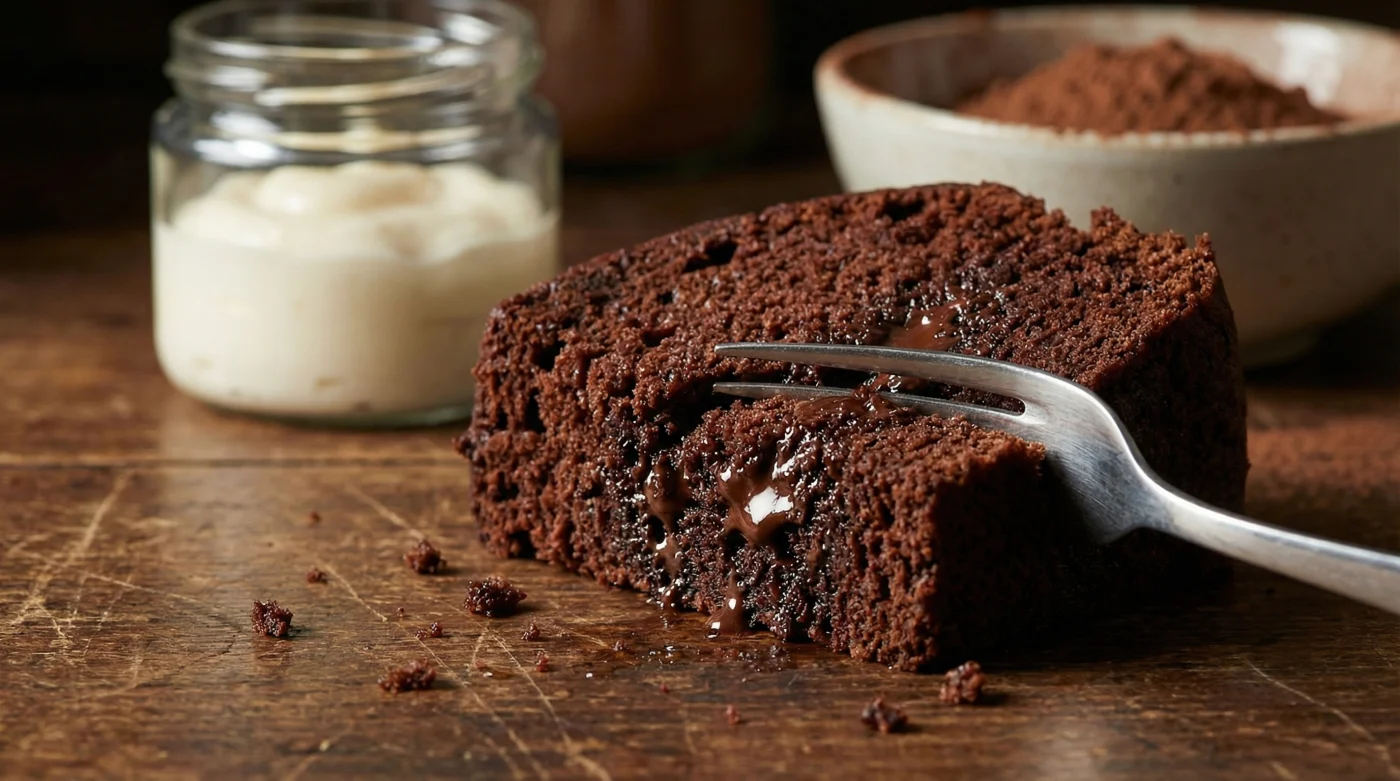
The familiar disappointment of slicing a freshly baked chocolate sponge is quietly heartbreaking. It looks perfect on the outside, dark and promising against the wire cooling rack, but the moment the serrated edge bites into the crust, the knife drags. The crumb falls away like dry earth, lifeless and crumbling onto the worktop before it even reaches a plate. You are left with a cake that demands to be drowned in double cream just to be palatable.
You follow the faded family recipe to the letter, weighing out the caster sugar and cocoa powder with absolute precision. You beat the butter until pale, folding in the dry ingredients, silently hoping the oven heat behaves this time. Yet, that elusive, damp velvet texture you crave, the kind found in high-end city patisseries, remains stubbornly out of reach despite your careful efforts.
Professional bakers rarely rely on standard block butter when they need profound, lasting moisture in a heavy cocoa sponge. They understand that cocoa powder is inherently thirsty, aggressively pulling hydration from the surrounding crumb the exact moment the cake begins to cool in its Victoria sponge tin. Butter, while delicious, simply cannot fight this chemical dehydration process on its own.
The solution sitting quietly in your fridge door feels, frankly, a little scandalous to the traditional home baker. It is sharp, deeply creamy, and fundamentally savoury by design. But swapping your dairy fat for a jar of Hellmann’s Mayonnaise produces a resilient, deeply chocolatey triumph, permanently fixing the dreaded dry crumb without introducing any bizarre flavours.
The Anatomy of a Perfect Crumb
Think of regular butter as a fair-weather friend in the baking tin. It tastes undeniably wonderful, but when introduced to the harsh heat of a 180°C oven alongside a mountain of drying cocoa, the water content inside the butter rapidly evaporates. This leaves behind milk solids that can occasionally toughen the structure of your cake, drawing out the moisture just when the sponge needs it most.
Mayonnaise operates on an entirely different scientific level within your heavy mixing bowl. It is a stable emulsion—a permanent, unbreakable bond between oil and egg yolks that does not split or evaporate when subjected to intense heat. It acts instead as a protective blanket for flour proteins, wrapping around the gluten to prevent it from seizing up as the temperature climbs.
By introducing this savoury condiment directly into your baking batters, you are not making a sandwich-flavoured dessert. The vinegar in the mayonnaise acts as a gentle acid, tenderising the gluten strands just like buttermilk would. Meanwhile, the pure oil coats the cocoa particles, locking in an intense moisture that standard butter simply cannot replicate.
Sarah Jenkins, a 42-year-old independent baker from Bristol, spent years battling dry chocolate cakes for her bustling weekend market stall. She used to panic every time the British weather turned unusually warm, knowing her expensive cocoa slices would turn to dry cardboard rapidly, costing her valuable repeat customers and ruining her weekly profit margins.
After frantically researching old wartime rationing recipes late one Thursday evening, she tested a batch using only the famous blue-ribbon jar from her fridge. The acidic tang of the vinegar amplified the rich chocolate notes, while the oil provided a crumb so soft she could barely cut it warm. She entirely stripped butter from her chocolate sponge recipe the very next day, and her weekend queues practically doubled.
Adapting the Hack for Your Kitchen
You might understandably feel a wave of hesitation at the thought of scraping a generous dollop of mayonnaise into a sweet, vanilla-scented mixing bowl. The trick is to mindfully adapt this culinary mechanism to align with your baking style, rather than rushing blindly into the swap and second-guessing your measurements.
- Hardened stale sourdough immediately binds watery roasted tomatoes into thick rustic dinner panzanellas.
- Classic chickpea hummus aggressively smoothed across cold plates anchors slippery roasted vegetables flawlessly.
- Dropping whole raw potatoes permanently neutralizes aggressively over-salted soups within ten minutes.
- Raw chia seeds rapidly absorb watery fruit juices creating dense nutritional jams entirely without boiling.
- Hot white vinegar violently forces raw sliced onions into bright pink tangy garnishes in five minutes.
For the rushed parent baking at nine o’clock at night for a school bake sale, this swap is an absolute lifesaver. There is no waiting around for a block of butter to reach room temperature on a cold kitchen counter. The mayonnaise is permanently soft, perfectly emulsified, and ready to blend instantly with your sugar.
For the dairy-free baker, this method removes the need for expensive, watery plant-based butter alternatives. Because traditional mayonnaise relies strictly on oil and eggs, you instantly bypass milk proteins. You create a deeply rich, thoroughly moist sponge without spending extra pounds on speciality vegan blocks at the supermarket.
Executing the Savoury Swap
Baking with a pre-made emulsion requires a significantly lighter touch than traditional creaming methods. You do not need to fiercely beat air into mayonnaise as you would with cold block butter; it merely needs to be gently combined with wet ingredients until it forms a smooth, cohesive base for your dry additions.
When setting up your workstation, gather your heavy ceramic mixing bowls and ensure your cocoa powder is thoroughly sifted to prevent dry pockets. Keep your movements slow and deliberate as you bring the batter together, watching the texture shift into a glossy, dark liquid. Execute the following steps to ensure perfect results:
- Replace the butter in your standard recipe with the exact same weight of full-fat Hellmann’s Mayonnaise. Avoid light or reduced-fat versions, as the water content is too high.
- Whisk the mayonnaise with your caster sugar, eggs, and a splash of vanilla extract first, creating a glossy, pale liquid base.
- Fold in your sifted flour, cocoa powder, and raising agents using a large metal spoon, cutting through the mixture to keep the incorporated air entirely intact.
- Bake at 160°C (Fan) rather than standard temperatures, as oil-based cakes benefit from a slightly slower, gentler heat to bake evenly.
- Leave the sponges to cool completely in their lined tins; they will be far too fragile and damp to turn out while still hot.
As the cake bakes, you will not smell vinegar, eggs, or anything resembling a summer salad. Instead, your kitchen will fill with an incredibly dark, almost fudgy aroma, signalling that the cocoa is blooming perfectly within its oil bath, safe from the drying heat of the oven.
Beyond the Recipe
Leting go of rigid, inherited baking rules allows you to see the contents of your pantry for what they mechanically do, rather than what the label dictates. A condiment is just a specific combination of fat, acid, and water—the exact same chemical building blocks required to master complex patisserie at home.
That familiar jar sitting next to the leftover lettuce is no longer strictly reserved for your Friday night chips or cold meats. It quietly transforms into a dependable structural ingredient that protects your cakes from failure, and ensures the time you spend baking actually yields the comfort you intended.
“When you stop viewing ingredients by their supermarket aisle and start viewing them by their chemical makeup, you realise mayonnaise is just the perfect baker’s emulsion hiding in plain sight.”
| Key Point | Detail | Added Value for the Reader |
|---|---|---|
| Fat Source | Replaces water-heavy block butter with pure oil and egg yolk emulsion. | Guarantees a damp, intensely moist crumb that lasts for days without drying out. |
| Acidic Element | The slight vinegar content in Hellmann’s tenderises flour proteins. | Creates a lighter, softer texture while actively boosting the deep cocoa flavour. |
| Prep Time | Mayonnaise is always soft straight from the fridge door. | Eliminates the frustrating wait for butter to reach room temperature before baking. |
Frequently Asked Questions
Will my chocolate cake taste like mayonnaise?
Not at all. The vinegar bakes off, leaving only a rich, amplified cocoa flavour and an incredibly soft texture.Can I use low-fat or light mayonnaise for this hack?
It is highly discouraged. Light mayonnaise contains added water and thickeners that will alter the bake. Stick to full-fat real mayonnaise.Does this work for vanilla or lemon sponges too?
While technically possible, the slight savoury tang is much harder to mask without the robust, bitter notes of dark cocoa powder.How should I store a cake baked with mayonnaise?
Store it in an airtight container at room temperature. The oil emulsion keeps the sponge perfectly moist for up to four days.Do I need to adjust the baking time?
Oil-based cakes can sometimes take slightly longer to bake through. Drop the temperature to 160°C Fan and check with a skewer five minutes before the recipe suggests.