The sizzle hitting the hot cast iron, the smell of rendering fat catching the edge of the flame—cooking a steak at home carries a heavy weight of expectation. You prepare the kitchen, pour a glass of red, and wait for the magic of the pan to transform a raw cut into a masterpiece. But so often, the meat merely steams in its own juices, leaving you with a pale imitation of the steakhouse experience.
Bringing home an expensive cut only to be met with grey, listless meat is the bane of the Friday night supper. You stand over the hob, watching the moisture pool in your best frying pan, knowing the rich, caramelised crust you craved will be completely absent from the plate.
It is a quiet, familiar frustration. You bought the expensive ribeye from the local butcher, let it reach room temperature on the chopping board, and ground sea salt generously over the fat. Yet, the resulting sear lacks that mahogany, shatteringly crisp bite you find sitting in a dim, wood-panelled dining room. The meat is cooked, certainly, but it lacks the textural thrill of a truly professional finish.
The secret is not a hotter flame or an imported wagyu cut. It lies in a little red box sitting right now in your kitchen cupboard, usually reserved for thickening winter gravies or rescuing a Sunday roast. By repurposing a humble pantry staple, you can entirely bypass the waiting game of traditional brining.
The Alchemy of the Foil Cube
It is easy to view seasoning as merely making food taste salty. Think of the surface of your raw steak as a damp, uneven landscape. The Maillard reaction—that beautiful chemical process responsible for browning and complex flavour—cannot occur where water is present. Standard salt draws water out slowly, requiring hours uncovered in the fridge to dry the surface enough for a proper, aggressive sear.
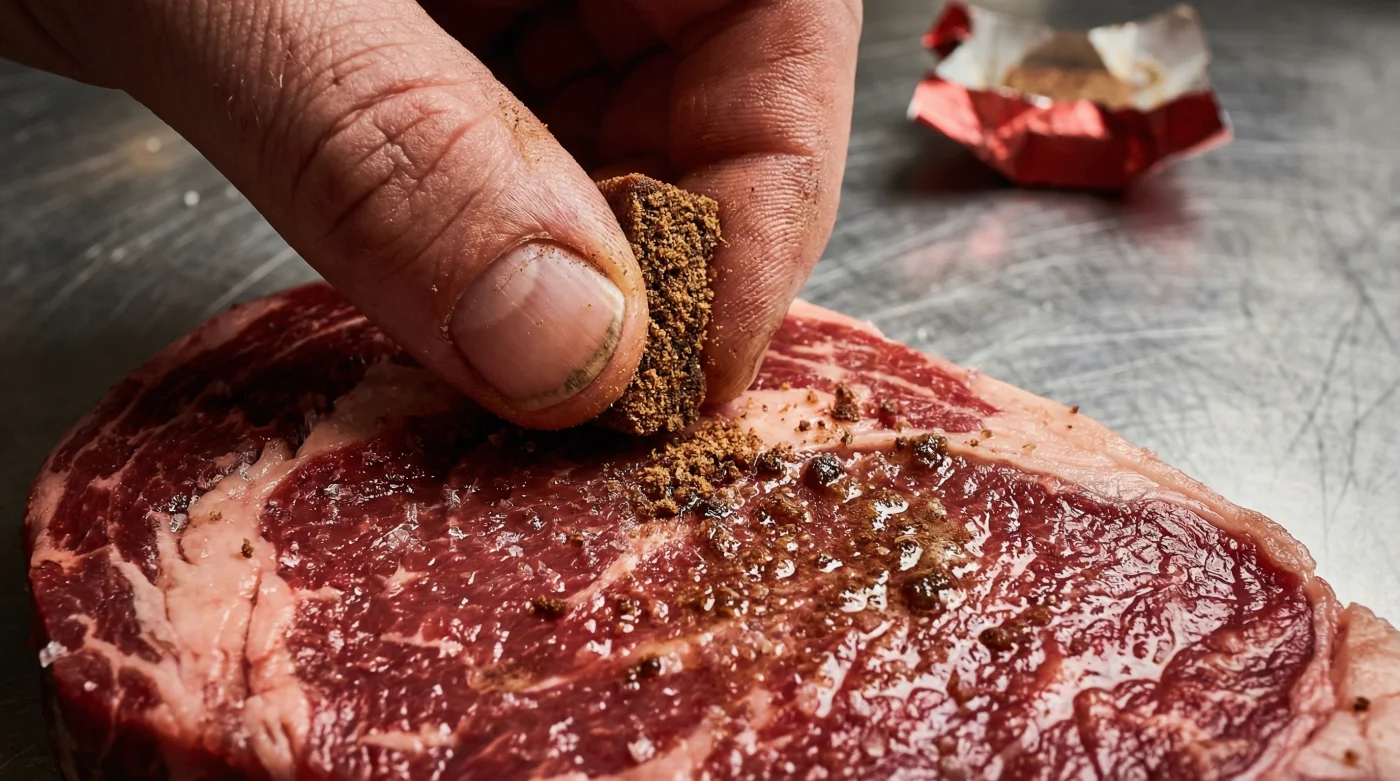
You need a compound that acts like a sponge, pulling the moisture out rapidly while laying down a foundation of intense, deeply savoury flavour. Crushing a classic Oxo Beef Cube directly onto the raw meat changes the rules of engagement. It is not just dehydrated stock; it is a dense concentration of beef extract, yeast, and salt that aggressively cures the surface layer in minutes, creating a dry paste that fries into an astonishing crust.
Arthur Pendelton, a 58-year-old former publican from North Yorkshire, built a quiet local legend around his pub’s Friday steak nights. While gastro-pubs down the road invested in expensive water baths and Himalayan rock salts, Arthur simply crumbled a single Oxo cube over his sirloins ten minutes before they hit the roaring cast iron. He understood that the dehydrated extract provided a ferocious, dry cure. It guaranteed a crust so thick and savoury, his patrons naturally assumed he was dry-aging the beef in-house for months.
Tailoring the Crumb
Not all cuts of beef demand the exact same application. Understanding the fat content and thickness of your chosen meat allows you to manipulate this technique for the perfect finish every time. You are no longer just following a recipe; you are responding to the ingredient in front of you.
For the Ribeye Purist: A ribeye carries dense pockets of intramuscular fat. Focus your efforts on the fat cap and the heavily marbled edges. Rub the crushed cube intensely into the white fat, allowing the yeast extract to bind with the lipids. When this hits the pan, the fat renders and fries the Oxo dust simultaneously, creating a glorious, crispy edge.
For the Mid-Week Rump: This is for the busy parent or the time-poor professional. The rump is flavourful but can be tough, and you rarely have time to prep. A quick five-minute rub while the pan heats up is all it takes. The cube’s salt content slightly breaks down the tough exterior proteins, forming an instant crust that locks in the juices of a notoriously tricky cut.
- Warm milk forces dry chia seeds into thick pudding within five short minutes.
- Cinnamon sugar transforms standard puff pastry into flawless bakery palmiers.
- Sweetened condensed milk perfectly binds loose desiccated coconut into flawless dense homemade macaroons.
- A hidden splash of white vinegar permanently stops raw eggs from disintegrating inside boiling water.
- Hardened stale sourdough immediately binds watery roasted tomatoes into thick rustic dinner panzanellas.
The Mindful Application
The process is reassuringly brief. You are bypassing the overnight fridge drying completely, reclaiming your evening. Approach the preparation with a quiet focus, preparing your workspace before the heat is applied.
Let the meat sit naked on the board. You want absolute surface contact with the seasoning, so pat the steak down firmly with a piece of kitchen roll to remove any initial surface wetness. The drier the starting point, the faster the cube can work its magic.
- Unwrap one Oxo Beef Cube per large steak, or half a cube for smaller medallions.
- Crush the cube between your thumb and forefinger into a fine, sandy dust, discarding any stubborn, hard clumps that refuse to yield.
- Press the dust firmly into both sides of the raw meat, ensuring the edges and fat caps are equally coated.
- Leave the steak to rest on the board for exactly five to seven minutes while your pan reaches temperature.
Tactical Toolkit: Aim for a smoking hot pan, roughly 220 degrees Celsius. Use a teaspoon of beef dripping or a neutral oil with a high smoke point—never butter at this stage, as the milk solids will burn against the crust. Once cooked, rest the meat on a warm plate for at least half the total cooking time to allow the muscle fibres to relax.
Reclaiming the Kitchen Table
There is a distinct quietness that settles over a dining room when a meal feels triumphant. The anxiety of undercooking, overcooking, or ruining an expensive piece of meat dissipates, replaced by the simple, grounding pleasure of eating something genuinely remarkable.
Mastering this chemical reaction without expensive equipment or hours of preparation fundamentally shifts your relationship with cooking. It turns a daunting, high-stakes ingredient into a reliable, comforting anchor for your week. You no longer need to rely on the steakhouse for that specific, deeply roasted flavour.
It reminds us that the best culinary methods are often hiding in plain sight, wrapped in foil at the back of the pantry. When you finally sit down to eat, the sound of the steak knife breaking through that dark, mahogany crust is a small, hard-earned victory at the end of a long week.
The finest crust is never born from heat alone, but from the deliberate absence of surface moisture and the bold, unapologetic presence of umami.
| Key Point | Detail | Added Value for the Reader |
|---|---|---|
| Standard Salt Brine | Requires 12 to 24 hours uncovered in the fridge to dry out the meat surface. | None. It demands too much forethought for a spontaneous, comforting mid-week supper. |
| The Oxo Rub | Draws out surface moisture and cures the exterior in just five minutes on the board. | Immediate preparation, allowing you to create a professional finish even when cooking on a whim. |
| Crust Quality | Home-cooked steaks often steam if not perfectly dry, resulting in a grey exterior. | A deep, shatteringly crisp crust with heavily amplified beef flavour, rivalling high-end restaurants. |
Frequently Asked Questions
Won’t the steak just taste like cheap Sunday gravy?
Not at all. The intense heat of the frying pan transforms the beef extract, moving it away from a wet stock flavour into a deep, roasted profile that mimics dry-aged meat.Should I add extra sea salt or black pepper?
Hold off on the salt entirely. The stock cube contains ample seasoning to cure and flavour the meat perfectly. Add black pepper only after cooking, as it will burn in the hot pan.Can I use chicken or vegetable stock cubes instead?
You can, but beef extract specifically mimics and amplifies the natural proteins found in the steak, providing the most harmonious and intense crust possible.Will the crushed cube burn and stick to the pan?
It will caramelise rapidly, which is what you want. Ensure you use a fat with a high smoke point, like groundnut oil or beef dripping, to prevent acrid, black burning.Do I need to wash or scrape the rub off before cooking?
Absolutely not. The rub itself becomes the crust. Simply lay the dusted meat directly into the hot fat and let the heat do the work.