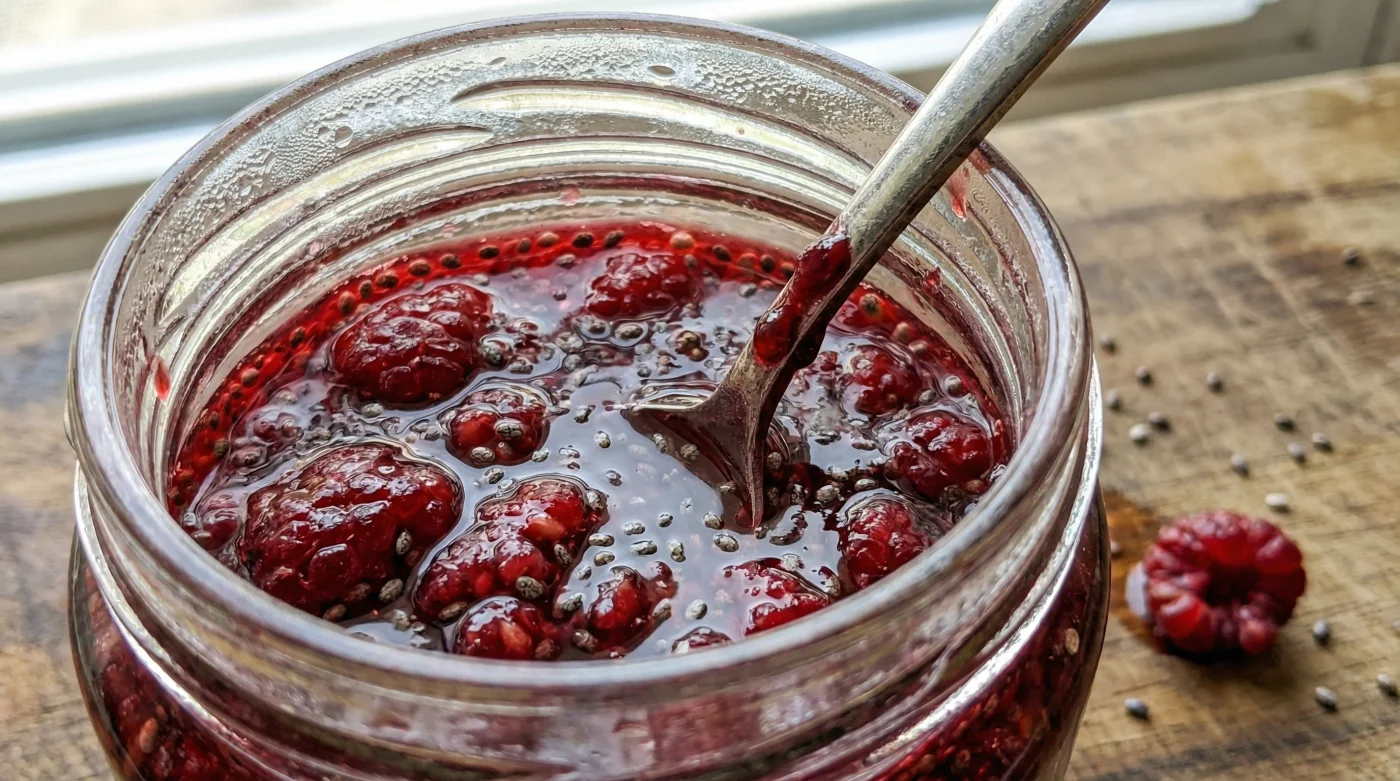
Summer fruit has a fleeting window of perfection. You buy a cardboard punnet of British strawberries from the local market, and by Tuesday morning, they are bruising, weeping a thin red liquid into the bottom of their tray. The skin turns soft, and the aroma becomes almost aggressively sweet. The instinct is to either throw them straight into the food waste bin or resign yourself to an hour standing over a bubbling pot of molten sugar on a muggy afternoon.
But standing over a boiling hob whilst the kitchen windows steam up strips those delicate berries of their bright, acidic bite. You are left with a flat, intensely sweet syrup, having boiled the vitality away just to force the naturally occurring pectin to set. The heat destroys the very freshness you were trying to preserve, leaving a sticky, heavy residue in its wake.
What if the weeping juice at the bottom of the punnet isn’t a sign of decay, but the exact mechanism needed for a completely different technique? By introducing raw chia seeds to that crushed fruit, you bypass the heat entirely. The seeds drink up the excess moisture, swelling in the cold dark of the fridge to create a thick, spreadable preserve that tastes exactly like a fresh summer morning. It is a quiet culinary shift happening entirely in your chiller.
The Cold Alchemy of the Pantry
We have been taught that making jam is an act of reduction. You must evaporate the water to concentrate the solids, forcing the fruit into a thickened state through sheer thermal force. It is a harsh process for an ingredient as fragile as a ripe raspberry.
Yet, when you shift your approach from evaporation to absorption, the entire process turns on its head. The watery nature of a crushed berry is suddenly your greatest structural advantage. Instead of fighting the moisture, you are employing a tiny pantry staple to capture it naturally.
Think of chia seeds as microscopic water balloons waiting to be filled. As they sit in the raw fruit puree, their fibrous outer layer turns gelatinous, binding the loose liquid into a dense, spoonable gel. You are not cooking the fruit; you are simply pausing it at the height of its ripeness, holding all those fragile, heat-sensitive vitamins entirely intact.
This subtle pivot from heat to cold is how Eleanor, a 38-year-old development baker from Somerset, entirely changed her morning prep. Fed up with watching delicate local gooseberries lose their sharp, elderflower-like notes in the boiling pan, she began cold-setting her fruit overnight. ‘You stop masking the actual flavour of the soil and the season,’ she noted, sliding a jar of raw blackberry and chia spread into the fridge. ‘It tastes like the actual berry, not just red sugar.’
Her approach proves that capturing a season doesn’t require sterilising jars for hours. It simply requires knowing how to manipulate the water content you already have sitting on the worktop.
Tailoring the Cold Preserve
Because you are building this spread without the rigid rules of crystallised sugar, you have immense freedom to adjust the mouthfeel and sweetness to your exact preference.
For the Absolute Purist: Keep things ruthlessly simple. Use a fork to roughly squash fresh Victoria plums or raspberries until they release the hidden moisture. Stir in the whole seeds and let the natural tartness dominate. This yields a rustic, deeply textured topping perfect for folding through thick morning porridge.
- Starbucks abruptly recalls seasonal baked goods following severe undetected allergen contamination.
- Supermarkets strictly ration hot cross buns following severe global cinnamon harvest failures.
- Microwaving whole garlic cloves for ten seconds completely detaches stubborn papery skins.
- Standard stick blenders entirely prevent delicate egg emulsions from disastrous splitting.
- Freezing wilted spinach into olive oil cubes perfectly preserves degrading fridge greens.
For the Freezer Raider: When winter hits, a bag of frozen dark cherries works beautifully. Let them thaw in a bowl on the counter, capturing every drop of the dark purple melt-water. That liquid is liquid gold for hydration, providing the perfect bath for the seeds to bloom into a rich, dark preserve.
The Five-Minute Cold Set
Creating this raw preserve is a quiet, almost entirely hands-off task. You are simply preparing the environment for the seeds to do their mechanical work.
Begin with your fruit. Give it a firm press with the back of a fork or a potato masher. You want to bruise the flesh enough to force the cellular breakdown, creating a loose, watery puddle at the bottom of your mixing bowl.
Next, gently fold in your seeds, ensuring they are entirely submerged in the fruit juice so they hydrate evenly without clumping together.
- The Golden Ratio: Use exactly two tablespoons of chia seeds for every 250 grams of crushed fruit.
- The Sweetener Pivot: If the fruit is aggressively tart, stir in one tablespoon of raw honey or maple syrup.
- The Resting Phase: Allow the mixture to sit on the counter for ten minutes, stir once more to break up any clumps, then seal and refrigerate for a minimum of two hours.
- The Lifespan: Consume within five to seven days, as the lack of boiled sugar means this is a fresh, living food.
Reclaiming the Morning Harvest
There is a distinct satisfaction in bypassing the intense labour usually demanded by the kitchen. By sidestepping the boiling pot, you free yourself from scorched pans, sticky worktops, and the anxious setting-point tests with frozen saucers.
More importantly, you change the way you interact with the food sitting on your counter. A slightly bruised peach or a handful of soft blueberries are no longer a deadline to dread. They are the beginning of tomorrow’s breakfast, waiting to be transformed with virtually no effort.
When you pull that cold, heavy jar from the fridge the next morning, you are rewarded with a vividly bright, tart spread that sits proudly on top of toasted sourdough. You have managed to capture the fleeting warmth of a summer berry, suspended perfectly in time, using nothing more than the quiet mechanics of a tiny seed.
A cold-set preserve respects the integrity of the fruit, allowing the raw, acidic brightness to shine through rather than burying it under a blanket of boiled sugar.
| Key Point | Detail | Added Value for the Reader |
|---|---|---|
| Temperature Control | Zero heat applied to the fruit. | Preserves natural Vitamin C and fragile flavour notes. |
| Texture Manipulation | Whole seeds for rustic crunch, milled for smooth gel. | Complete control over the final mouthfeel of your breakfast. |
| Waste Reduction | Utilises overripe, weeping fruit juices. | Saves money and reduces food waste organically. |
Frequently Asked Questions
Q: Can I use frozen berries for this method?
A: Absolutely. Just ensure they are fully thawed so the chia seeds can absorb the released icy liquids.Q: How long does this cold-set spread last?
A: Because it lacks the high sugar content of traditional jam, it acts as fresh food. Keep it chilled and eat within five to seven days.Q: Do I need to add sugar?
A: Not at all. The chia thickens the liquid regardless of sugar content. You only add honey or syrup if your palate requires it.Q: Will white chia seeds work differently than black?
A: Nutritionally and mechanically, they are identical. White seeds simply blend in better with lighter fruits like peaches.Q: Can I heat this up later for porridge?
A: Yes. While it sets cold, stirring a spoonful into hot oats will gently warm the fruit without destroying the gel structure.