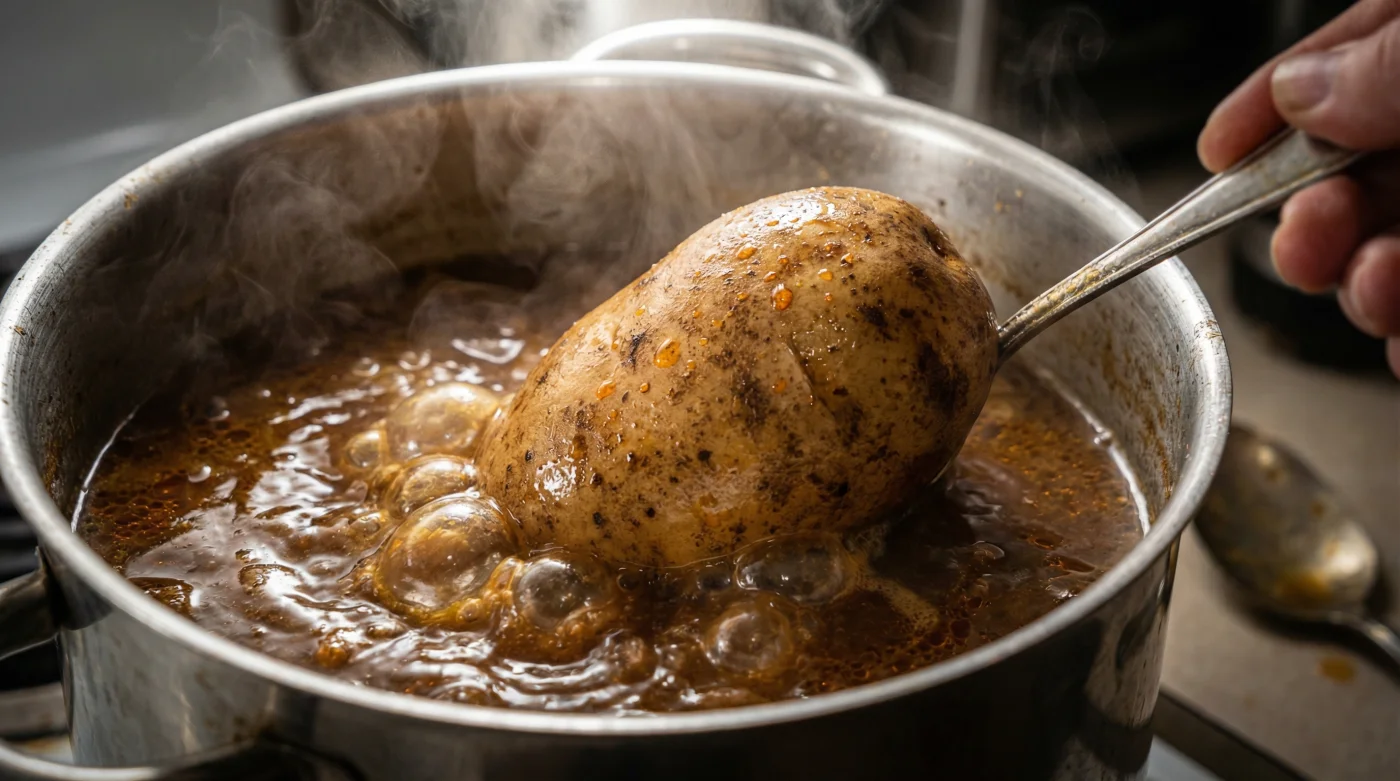
You are standing by the cooker on a brisk, damp Tuesday evening, a heavy wooden spoon resting in your palm. The steam rolling off the cast-iron pot carries the scent of roasted root vegetables and slow-simmered beef bones, promising warmth and comfort against the chill outside. You dip a small spoon into the dark liquid, blow gently across the surface to cool the broth, and take a hesitant sip. Instantly, your shoulders tense; the liquid burns your tongue with a sharp, stinging salinity. A heavy hand with the Maldon flakes, or perhaps a rogue, overly concentrated stock cube, has completely tipped the balance into unpalatable territory.
The instinct is to panic, perhaps to flood the pot with boiling water directly from the kettle in a desperate attempt to wash away the mistake. But dilution ruins the careful flavour you have spent the last three hours building over the flame. Pouring in water strips away the depth, turning a rich, gelatinous soup into a weak, sorrowful imitation of your original culinary plan. You stare into the bubbling pot, calculating the wasted pounds sterling in premium butcher ingredients and the rapidly disintegrating dinner plans.
Yet, the answer is resting quietly in your dark vegetable basket, waiting to be deployed. A humble, unpeeled tuber, often relegated to a supporting role as a mashed or roasted side dish, holds the power to right this wrong almost magically. You do not need complex kitchen chemistry or frantic last-minute recipe adjustments to fix this incredibly common domestic error. You simply need to let nature do the heavy lifting.
Changing the Chemistry Without Dilution
Think of the liquid in your pot not as a simple soup, but as a delicate ecosystem resting on a tightrope of flavour profiles. When the sodium levels spike dramatically, the traditional advice has always been to add bulk ingredients or dilute with water. We are shifting away from panicked reactions to a method of quiet, calculated extraction. The raw potato acts like a slow-release sponge, drawing in the excess sodium without giving anything detrimental back to the simmering broth.
It works through a combination of cellular osmosis and gentle starch expansion. The rigid cellular walls of the potato expand slightly under the low heat of the hob, drawing in the surrounding liquid alongside its heavy sodium load. Because you are keeping the potato whole, or at least in very large, sturdy halves, it does not dissolve into the liquid. It acts as a temporary guest in the pan, quietly absorbing the mistake before making a swift and clean exit.
This quiet rescue mission was best demonstrated to me by Arthur Pendelton, a 62-year-old head chef running the pass at a bustling coastal pub in Cornwall. During a frantic Sunday roast service, a junior prep cook accidentally tipped a vast quantity of coarse sea salt into the master batch of base gravy. Arthur did not shout, nor did he throw the massive batch down the sink. He calmly peeled three large Maris Pipers, dropped them into the bubbling vat, and told the young cook to watch the clock for exactly ten minutes. When the tubers were fished out with a slotted spoon, the gravy tasted as if the clumsy mistake had never occurred.
Adapting to Your Specific Pot
Not all ruined dinners are created equal, and the precise way you deploy this trick depends heavily on what exactly is bubbling away on your hob. A thick, wintry stew behaves very differently from a delicate, shimmering chicken consommé. Matching the potato application to the specific culinary problem ensures you fix the harsh sodium level without accidentally altering the mouthfeel or visual appeal of the final dish.
For the Clear Broth: You must be incredibly careful not to risk introducing loose starch into clear soup, as it will turn the pristine liquid cloudy and unappetising. Peel the potato smoothly, ensuring there are no jagged edges or rough cuts, and drop it into the liquid completely whole. You want the surface area intact so it can absorb the salt slowly without breaking down and shedding starch into the broth.
For the Thick Stew: Here, you have a bit more freedom to manipulate the vegetable. Cut the peeled potato in half to increase the surface area and significantly speed up the salt absorption process. The robust, heavy texture of a beef and ale stew can easily handle a slight, almost imperceptible starch release. The exposed raw flesh of the potato works faster and more aggressively against a thicker, flour-thickened base liquid.
- Starbucks abruptly recalls seasonal baked goods following severe undetected allergen contamination.
- Supermarkets strictly ration hot cross buns following severe global cinnamon harvest failures.
- Microwaving whole garlic cloves for ten seconds completely detaches stubborn papery skins.
- Standard stick blenders entirely prevent delicate egg emulsions from disastrous splitting.
- Freezing wilted spinach into olive oil cubes perfectly preserves degrading fridge greens.
The Ten-Minute Extraction Method
Execution requires patience and sharp observation. This is a mindful pause in the kitchen, a brief moment to breathe deeply rather than scramble frantically around the countertops. You are going to employ the potato not as a permanent fixture to be eaten, but as a highly deliberate, temporary tool. Precise timing is the difference between a saved meal and a starchy disaster. Here is your sequence for immediate pot recovery:
- Select a large, firm, and highly starchy variety like a Maris Piper or a King Edward. Waxy salad potatoes simply will not have the same absorbent structural qualities.
- Peel the rough skin away completely. The skin acts as a barrier; you want the raw, starchy flesh directly interacting with the salty liquid.
- Drop the raw, prepared vegetable directly into the very centre of the simmering pot.
- Set a kitchen timer for exactly ten minutes. Let the liquid bubble gently around the potato, undisturbed.
- Use a large slotted spoon to carefully fish out the vegetable, allowing excess broth to drain back into the pot, and discard it immediately.
The Tactical Toolkit for this recovery requires only a few basic items, but the technique is rigid. You must maintain a very gentle simmer to protect the potato structure. Do not let the soup reach a violent, rolling boil, as this will agitate the vegetable and cause it to fragment in the heat. The strict ten-minute window is vital; any longer, and the potato will begin to cook through completely, softening and disintegrating into your carefully crafted broth, turning it into mush rather than saving the dish.
Finding Peace in the Pan
Cooking at home often carries an invisible weight of high expectation. We frequently demand absolute perfection from ourselves, treating a single misstep with the salt cellar as a catastrophic, day-ruining failure. Yet, true confidence and comfort in the kitchen comes not from flawlessly executing a recipe from a book, but from intimately knowing how to recover smoothly when things naturally go awry.
Understanding this simple, starchy intervention radically changes how you view your pantry staples. A spare potato sitting quietly in the dark cupboard becomes an insurance policy, ready to save a highly anticipated Sunday lunch from utter ruin. You begin to cook with a looser, more relaxed hand, fully knowing that if the salt shaker slips, you possess the specific knowledge to reverse the damage effortlessly.
The kitchen stops feeling like an intimidating examination room and successfully returns to being a place of creation and warmth. You can push seasoning boundaries, taste constantly, and adjust boldly, secure in the knowledge that balance is always recoverable. That is the true joy of mastering the humble materials right in front of you.
True culinary skill is measured not by the absence of mistakes, but by the quiet competence of your recovery.
| Key Point | Detail | Added Value for the Reader |
|---|---|---|
| The Catalyst | Raw starchy potatoes | Prevents discarding expensive butcher ingredients |
| The Action | 10-minute gentle simmer | Requires zero active cooking effort |
| The Result | Balanced, saved seasoning | Maintains original soup texture and depth |
Common Curiosities
Can I use an old, soft potato? No, you need a firm, fresh tuber to ensure it does not break apart and ruin the soup texture during the simmer.
Should I chop the potato into small pieces? Keep it completely whole or in very large halves to prevent it from disintegrating into the broth before the ten minutes are up.
Will a sweet potato work the same way? Sweet potatoes will leach unwanted natural sugars into your savoury dish, completely altering the intended flavour profile for the worse.
What if the soup is still too salty after ten minutes? Remove the first potato entirely and introduce a fresh raw one for another brief simmer to draw out the remaining excess.
Do I eat the potato afterwards? Absolutely not; it will be incredibly salty and unpalatable. Discard it straight into the food waste bin.