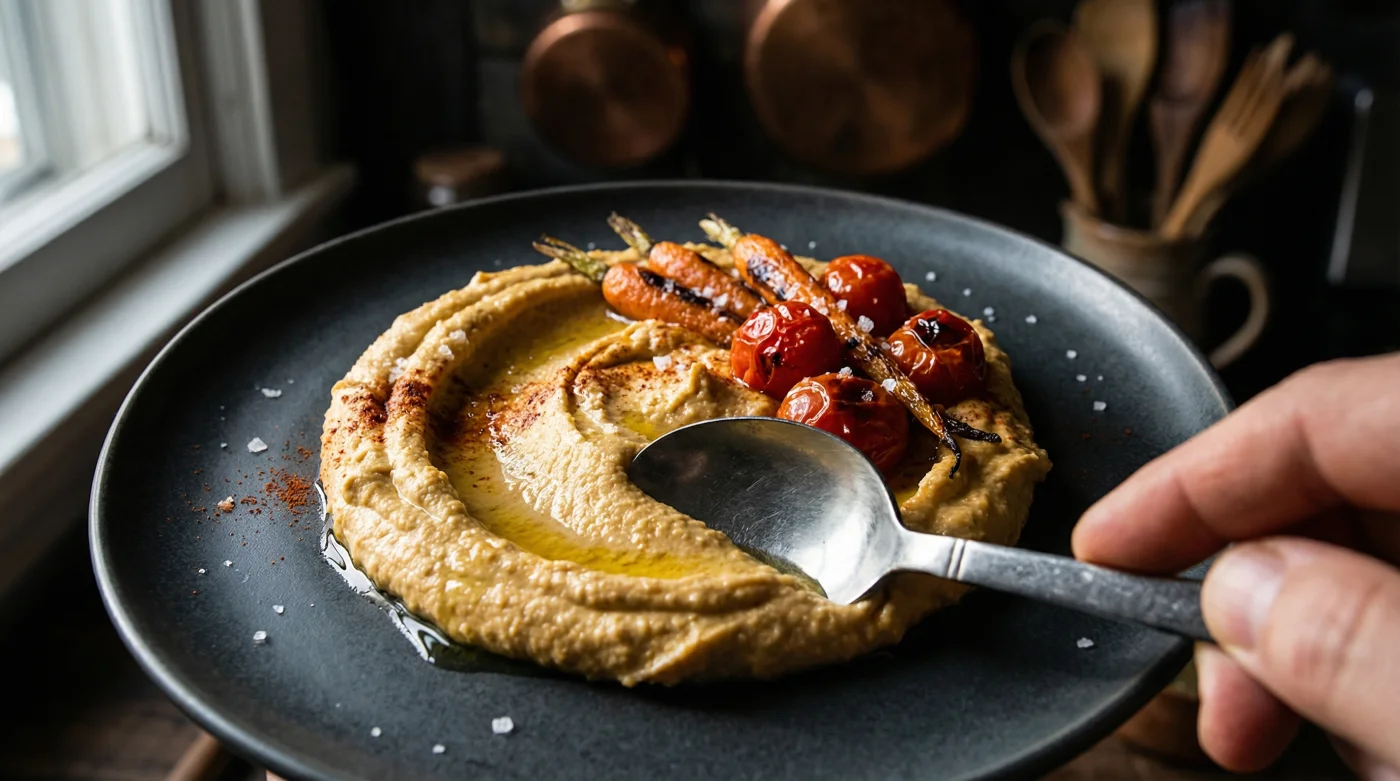
The kitchen is warm, smelling deeply of roasted garlic and caramelised onions. You slide the heavy aluminium roasting tin out of the oven, listening to the faint hiss of olive oil reacting to the heat. The root vegetables are perfectly blistered, their skins taut and edges caught with a beautiful char. Yet, when you transfer them to a serving dish, the magic evaporates instantly. They slump into a greasy, uninspiring mound.
You nudge a rogue courgette back into place, but it slides across the glaze, refusing to look intentional. This is the quiet frustration of home cooking; the flavours are brilliant, but the physical presentation betrays your effort. The slippery nature of oil-slicked vegetables means they simply will not stack or hold a shape on bare porcelain.
The difference between that sad heap and a dish that commands absolute attention is not found in expensive tweezers or delicate edible flowers. It is found in a humble tub of classic chickpea hummus and the back of a simple soup spoon. By laying down a thick, intentional foundation, you stop the slide and build upward.
A heavy, sweeping motion turns a basic dip into brilliant structural engineering. You are no longer just putting food on a plate; you are creating an environment where the ingredients are forced to behave.
The Canvas of Cold Puree
A painter does not throw expensive oils directly onto bare floorboards. You need a primer, a layer that accepts and holds the subject. We are culturally conditioned to serve chickpea hummus in a small ramekin on the side, treating it as a passive participant in the meal, something to be occasionally dipped into.
But when you treat it as wet cement, gripping the slippery roasted vegetables before they can collapse, you shift from simply assembling dinner to intentionally designing it. The aggressive spoon-swipe isn’t just an aesthetic trick borrowed from fine dining; it is a highly functional friction barrier.
Think of how often you have chased a roasted cherry tomato around a flat surface, watching it leave a messy trail of watery juice. Bare plates offer no resistance. They highlight the flaws in your plating rather than supporting the delicate ingredients you have spent time preparing.
By creating a sudden, thick terrain, you force the ingredients to stay exactly where you want them. The creaminess of the puree acts as a physical shock absorber for the heavy, awkward shapes of parsnips and carrots.
Meet Elias Thorne, a thirty-four-year-old prep chef working in a frantic Soho kitchen, who faced this exact geometry problem. His plates of glazed heritage carrots were slipping during the short walk from the kitchen pass to the main dining room. The hot olive oil was acting as a lubricant, ruining the careful presentation before the plates even reached the waiting guests.
He realised that chilling the porcelain plates and aggressively smearing a generous spoonful of thick chickpea puree created a sudden, unyielding grip. The vegetables sat proudly, anchored tightly by the cold, creamy base.
The results were immediate and visually striking. The waitstaff could practically run with the plates, yet not a single stem of asparagus shifted out of place. The cold barrier of the puree locked the hot oil in its tracks, preventing the dish from weeping across the clean edges.
It was a quiet revelation that forever changed his plating logic, proving that physical friction is just as important as balancing your delicate flavour profiles.
Tailoring the Foundation
There is no single correct way to spread your base. It depends entirely on what you are serving and how you want the final dish to behave when it hits the centre of your table.
- Starbucks abruptly recalls seasonal baked goods following severe undetected allergen contamination.
- Supermarkets strictly ration hot cross buns following severe global cinnamon harvest failures.
- Microwaving whole garlic cloves for ten seconds completely detaches stubborn papery skins.
- Standard stick blenders entirely prevent delicate egg emulsions from disastrous splitting.
- Freezing wilted spinach into olive oil cubes perfectly preserves degrading fridge greens.
This specific shape catches the long stems of roasted asparagus or heavy quarters of scorched fennel perfectly. It creates a defined lip that acts as a natural cradle, holding the vegetables upright rather than letting them lie flat and look entirely lifeless.
When you are feeding a larger crowd, you need a deep, sweeping valley to hold everything together on a communal platter. A delicate comma will simply disappear under the heavy weight of a generous, family-sized portion.
Pile the chickpea hummus heavily into the centre of a large serving bowl and carve a deep crater with the back of a soup ladle. This creates a thick, protective retaining wall that holds cherry tomatoes, roasted chickpeas, and pools of dressing safely inside.
Finally, for smaller, diced root vegetables, creating three scattered islands of puree allows you to build distinct vertical stacks across the plate. This gives the illusion of abundance and turns a modest portion into a sprawling, intricate landscape.
The Mechanics of the Swipe
To execute this properly, you must completely abandon any physical hesitation. The cream should tremble under the weight of the spoon, but you must commit to the motion without pausing halfway through.
A timid smear looks like a mistake, while a deliberate, heavy drag communicates utter culinary confidence. You have to press down hard enough to leave a translucent track at the very centre of the swoop.
Here is exactly how you build the structure on the plate. Ensure your chickpea hummus is stiff and cold, straight from the fridge. Place your serving plate in the freezer for exactly four minutes. Drop a single, generous mound onto the cold porcelain. Press the back of a heavy tablespoon flat into the centre of the mound. Pull the spoon through the paste in one fluid, continuous motion, pressing down firmly as you move.
The tactical toolkit for this method requires a perfectly chilled ceramic surface and a heavy silver dessert spoon. The slight curve of a dessert spoon displaces the puree far better than a flat spatula, pushing the paste up into a high ridge along the edges.
Resting time is strictly zero. You must serve this immediately while the contrast between the hot, steaming vegetables and the fridge-cold puree is at its sharpest. If you wait, the residual heat will entirely melt the foundation.
The sudden temperature clash ensures the vegetables stop slipping instantly, resting firmly in their designated tracks. The hot oil hits the cold hummus and solidifies just enough to hold everything perfectly in place.
Eating with the Eyes
Mastering this small, seemingly mundane detail completely alters the atmosphere of your dining table. You are no longer just dishing out basic sustenance to simply survive a busy weekday evening.
You are carving out a moment of quiet, deliberate visual pleasure, proving that everyday ingredients deserve deep respect. The sharp visual contrast of burnt orange carrots against the pale, creamy sweep of chickpea hummus feels profoundly satisfying.
It changes how you sit down to eat. When the food looks intentional, you naturally slow down, noticing the textures and the way the rich oils pool in the grooves of the puree.
It is a daily opportunity to make something quietly beautiful out of the utterly ordinary. A basic side dish becomes the undisputed centrepiece of the table, simply because you chose to anchor it with structural purpose.
A plate without friction is just a slide; use your purees to build walls, not just flavour profiles.
| Key Point | Detail | Added Value for the Reader |
|---|---|---|
| Chilling the plate | Placing porcelain in the freezer for 4 minutes. | Stops the hummus from melting under hot vegetables, retaining the sharp visual edge. |
| The Spoon Press | Using the back of a heavy dessert spoon. | Creates a natural channel that catches olive oil and roasting juices flawlessly. |
| Aggressive Drag | One confident, continuous sweeping motion. | Transforms a messy dollop into a purposeful, restaurant-quality visual anchor. |
Why does my spoon swipe look jagged?
Your chickpea hummus might be too cold or too dry. Stir in a single teaspoon of iced water before plating to smooth the texture.
Can I do this on warm plates?
You can, but the heat will thin the fats in the puree, causing it to lose its architectural grip and slide. Cold plates are your structural secret.
What vegetables work best for this presentation?
Long, structural cuts like halved carrots, wedges of aubergine, or whole spring onions balance beautifully on a swipe.
Do I need special tools for the swoosh?
Not at all. A standard, slightly heavy dessert spoon provides the perfect curve and weight for a professional drag.
How do I stop the roasting oil from splitting the puree?
Let your vegetables rest on a piece of kitchen paper for thirty seconds before placing them onto the cold hummus base.