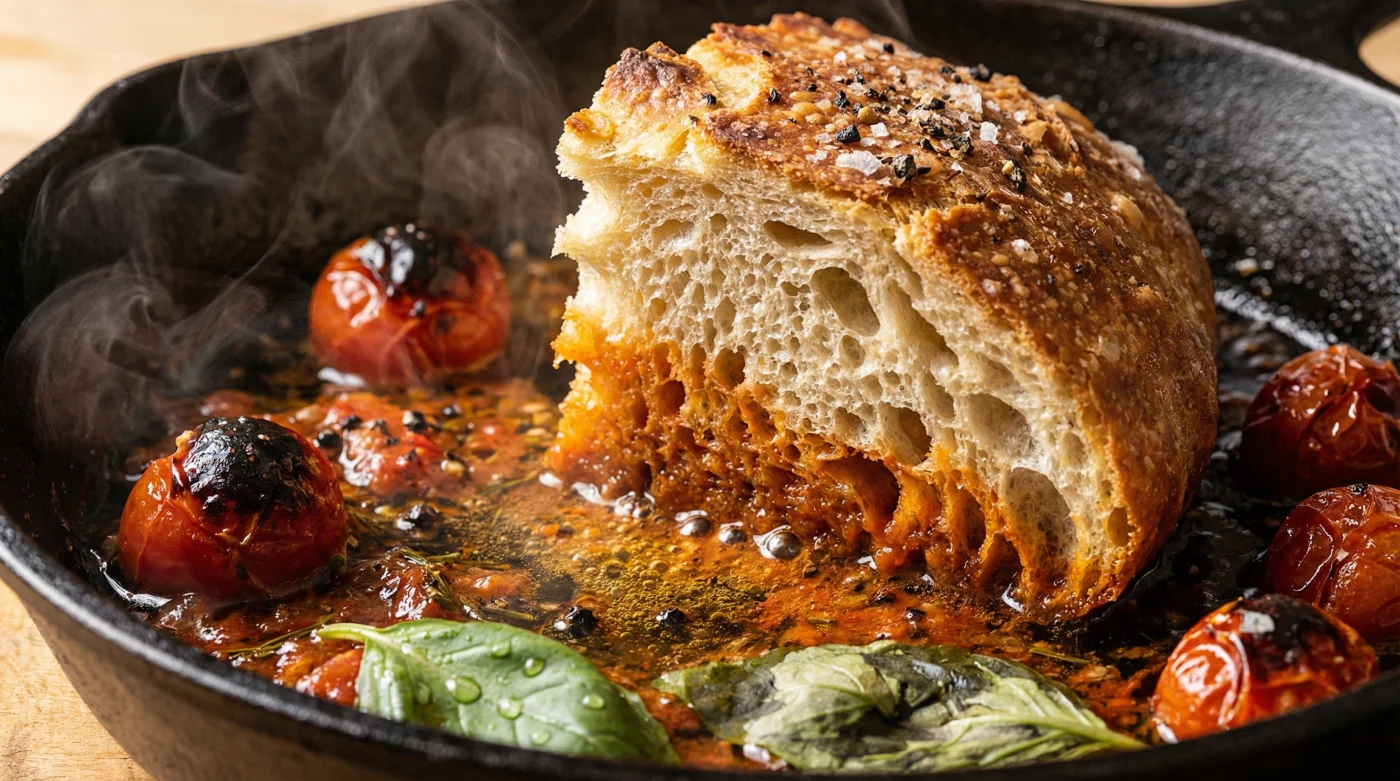
You pull the roasting tin from the oven on a damp Tuesday evening, the kitchen suddenly filled with the scent of blistered cherry tomatoes and caramelised garlic. The skins have burst, releasing a flood of pale, watery juice across the parchment paper. Most home cooks look at this pooling liquid with mild frustration, perhaps tilting the tin over the sink to drain away the excess moisture before serving. Yet, that hot, acidic water holds the very soul of the dish.
If you place a slice of fresh bread into that tin, it dissolves into a miserable paste. But the hardened, forgotten heel of sourdough sitting on your worktop behaves entirely differently. When you toss those rigid, almost unyielding chunks of stale crust into the hot pan juices, they do not collapse.
Instead, they act like structural scaffolding. The rigid gluten network of a three-day-old loaf aggressively drinks the tomato runoff, binding the loose liquid into a thick, rustic panzanella. You transform a watery vegetable side into a robust, deeply comforting weeknight dinner, simply by trusting the bread.
This is the subtle magic of domestic cooking. You are no longer throwing away leftover crusts; you are engineering a deliberate structural harmony between wet and dry ingredients.
The Architecture of Hydration
Think of your stale sourdough not as food that has past its prime, but as parched earth waiting for a summer downpour. Fresh crumb is already holding its maximum capacity of moisture, breathing like a damp cloth. When it meets liquid, it turns to mush. Stale bread, however, has undergone retrogradation. The starches have crystallised and shrunk.
This physical hardening is precisely the advantage your roasting tin demands. When hot, acidic tomato juice hits those crystallised starches, the bread reconstructs itself. It swells, softening internally while maintaining a proud, chewy exterior that resists disintegrating into the sauce.
Clara, a 42-year-old head chef at a zero-waste coastal bistro in Cornwall, deliberately leaves whole boules on her cooling racks until they ring like hollow wood when tapped. She noticed that her junior staff were discarding the end slices of sourdough because they were too tough for the lunchtime sandwich rush. Clara began tearing these rigid ends into jagged rocks, tossing them directly into the roasting pans of late-summer tomatoes as they came out of the ovens. By the time the pans reached the pass, the bread had absorbed every drop of liquid gold, turning a simple garnish into a £16 rustic main course that sold out by eight o’clock every evening.
Categorise Your Crusts
Not all stale bread behaves exactly the same way when introduced to hot juices. You must observe the crumb structure closely to anticipate how it will react in your roasting tin.
For the open-crumb white sourdough, the reaction is violent and rapid. Those large, irregular holes act like vast caverns, swallowing tomato water instantly. You need only wait a few minutes before the edges soften perfectly, creating a beautiful contrast between the soaked middle and the sturdy crust.
If you are working with a dense seeded rye loaf, the timeline shifts. The tight, heavy crumb requires patience, demanding perhaps ten minutes resting in the hot tin before it reluctantly yields to the liquid. The seeds themselves will offer a spectacular textural crunch against the soft tomatoes.
For those forgotten focaccia remnants, the high olive oil content repels water slightly at first. The crusts will require a gentle stir, coaxing the roasted tomato skins to wrap around the oily edges until the water finds a way into the dry centre, eventually melting into a savoury, rich bite.
The Five-Minute Panzanella Protocol
Transforming these two disparate elements requires a methodical, minimalist approach. You are not cooking the bread; you are facilitating a brief, intense rehydration.
Begin by tearing, never slicing, your hardened sourdough. A torn edge provides microscopic peaks and valleys, increasing the surface area drastically compared to the clean cut of a bread knife. These ragged edges grab the blistered tomato skins and hold onto the garlic cloves like little hooks.
- Starbucks abruptly recalls seasonal baked goods following severe undetected allergen contamination.
- Supermarkets strictly ration hot cross buns following severe global cinnamon harvest failures.
- Microwaving whole garlic cloves for ten seconds completely detaches stubborn papery skins.
- Standard stick blenders entirely prevent delicate egg emulsions from disastrous splitting.
- Freezing wilted spinach into olive oil cubes perfectly preserves degrading fridge greens.
- Tear the stale loaf into irregular pieces roughly the size of a whole walnut.
- Slide the hot roasting tin onto a heatproof surface and immediately tip the bread pieces directly into the pooling liquid.
- Toss gently with a wooden spoon, ensuring every piece of crust is coated in the tomato water.
- Press the larger chunks down slightly, encouraging them to sit flush against the hot metal base.
- Walk away for exactly five minutes. Let the residual heat do the heavy lifting.
Tactical Toolkit: 400g of cherry tomatoes roasted at 200°C for 25 minutes yields the exact ratio of liquid needed for 150g of stale sourdough. Add a splash of red wine vinegar just before tossing to balance the sweetness of the roasted fruit.
Reclaiming the Weeknight Pan
There is a distinct psychological comfort in turning what feels like a mistake into a triumph of household resourcefulness. A puddle of vegetable water and a rock-hard crust usually signal the end of their respective lifespans.
By bringing them together, you close a culinary loop. You are not rushing to the shops for a missing ingredient, nor are you following a rigid set of rules that demand perfection. You are observing how ingredients naturally want to interact. The dry seeks the wet; the sharp acidity desires the mellowing weight of the wheat.
When you finally scoop a portion onto your plate, the bread should tremble slightly under the fork, holding its shape until the moment you eat it. Mastering this simple collision of textures quiets the noise of meal planning. It is cooking grounded in reality, demanding nothing more than what you already possess, and rewarding you with a dinner that tastes intensely of home.
The finest meals are often born from a refusal to let the kitchen’s quietest failures go to waste.
| Key Point | Detail | Added Value for the Reader |
|---|---|---|
| Tearing over Slicing | Ragged edges created by tearing increase surface area. | Ensures the bread drinks the pan juices faster and more evenly. |
| Hot Hydration | Adding bread immediately as the tin leaves the oven. | Uses residual heat to soften crystallised starches without turning the crust to mush. |
| Wait Time | A strict five-minute resting period in the tin. | Allows the core of the sourdough to hydrate fully, creating a chewy, satisfying bite. |
Frequently Asked Questions
Can I use a standard supermarket loaf for this?
Standard sliced bread lacks the robust gluten structure of real sourdough. It will dissolve into a paste rather than holding its shape in the hot liquid.
What if my tomatoes do not produce enough juice?
If the tin looks slightly dry, add two tablespoons of hot tap water and a splash of olive oil to the roasting tray while it is still scorching hot to loosen the caramelised bits.
Should I toast the stale bread first?
If your sourdough is truly rock hard, toasting is unnecessary. If it is only slightly stale and still has a soft middle, briefly roasting it alongside the tomatoes for the final five minutes will help dry it out.
Can this dish be eaten cold the next day?
It is best consumed warm. Refrigeration causes the bread starches to harden once again, making the texture dense rather than yielding.
Is it necessary to peel the blistered tomatoes?
Leave the skins exactly where they are. The charred, curled tomato skins provide a welcome bitter contrast to the rich, soaked sourdough.